This is a legacy page. Please click here to view the latest version.
Fri 3 Jul 2009, 09:27 GMT

PMSA fails in court bid to prevent clean fuel regulations


Court ruling says pollution from ships is 'substantial' and 'beyond any reasonable doubt'.


The Pacific Merchant Shipping Association (PMSA) has failed in its attempt to prevent new clean fuel regulations from being implemented in California this week following a court ruling by the Eastern District of California.

The court's decision means shipowners operating within the 24-mile zone will be required to burn either marine gas oil (MGO), with a maximum of 1.5% sulphur, or marine diesel oil (MDO), with a maximum of 0.50% sulfur in their main engines, auxiliary engines or boilers.

Thereafter, beginning January 1, 2012, vessel operators will be required to use MGO or MDO with a maximum 0.10% sulphur in their main and auxiliary engines.

In its lawsuit, PMSA argued that the Submerged Lands Act of 1953 precluded California from regulating vessels beyond its territorial boundaries.

In denying PMSA’s motion, however, Judge Morrison C. England, Jr. of the Eastern District of California concluded “There is no indication in either the [Submerged Lands Act] itself, or within its legislative history, to suggest that Congress intended the [Submerged Lands Act] to prevent coastal states like California herein from regulating offshore air pollution from ocean-going vessels . . . the effects on California from ocean-going vessels pollution are both substantial and beyond any reasonable doubt.”

California is the first state to adopt clean fuel requirements for ocean-going vessels, requiring ships to switch to cleaner fuels within 24 miles of the coast. The California Air Resources Board (CARB) adopted the rules at issue in July 2008. This is the second time PMSA has challenged fuel requirements proposed by the CARB.

Commenting on the court's decision, Melissa Lin Perrella, Staff Attorney for the Natural Resources Defense Council (NRDC) said: “The Court’s ruling is a victory for public health. Studies confirm offshore diesel particulate pollution from ships is carried for miles inland and we know from the billions we spend on healthcare-related costs attributed to air pollution that those emissions find permanent homes in our lungs. Our children, friends and families can no longer subsidize use of this cheaper, toxic fuel with their lives.

“Requiring ships to use clean-burning fuel within 24 miles of our coast will save 3,500 lives during the next six years that would otherwise be cut short by particulate pollution. Complying with these regulations will cost less than one percent of a typical trans-Pacific voyage’s total cost and will reduce diesel particulate emissions by nearly 75 percent."


Capital Clean Energy Carriers Corp. (CCEC) and CMA CGM logos. Capital Clean Energy Carriers and CMA CGM form joint venture to build $82.8m LNG bunkering vessel  

The 20,000-cbm dual-fuel vessel is due for delivery in the third quarter of 2028.

Hong Kong flag. Hong Kong launches port dues and vessel registration incentives to boost green fuel bunkering  

Two new schemes offer financial concessions to attract green fuel vessels and grow the Hong Kong fleet.

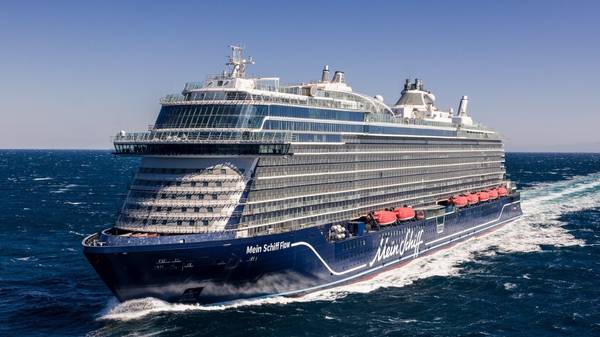
Mein Schiff Flow vessel. Fincantieri delivers LNG-ready cruise ship Mein Schiff Flow to TUI Cruises  

The 160,000 gross-tonne vessel is the second of two InTUItion-class dual-fuel ships.

Monjasa logo. Monjasa seeks trader for Fredericia-based Northwest Europe desk  

Bunker firm is recruiting a trader to join its Northwest Europe team.

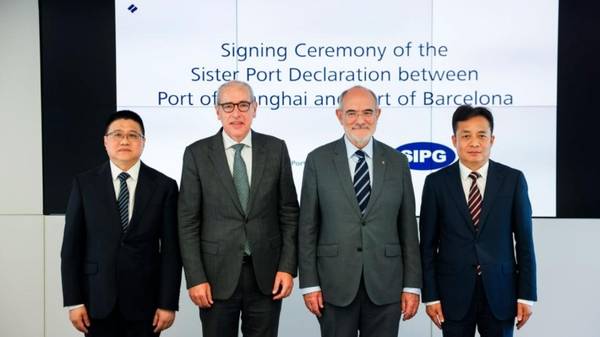
Port of Barcelona and Port of Shanghai signing ceremony. Barcelona and Shanghai sign strategic port cooperation agreement targeting green fuels and digital corridors  

Ports formalise a 'sister ports' relationship covering green shipping, digitalisation and intermodality.

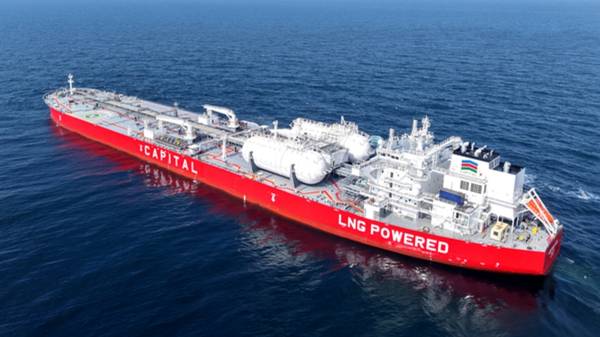
Capital's LNG-powered vessel. Chinese shipbuilder delivers 155,500-dwt LNG dual-fuel crude oil tanker  

Vessel handed over to Capital Ship Management Corp in China.

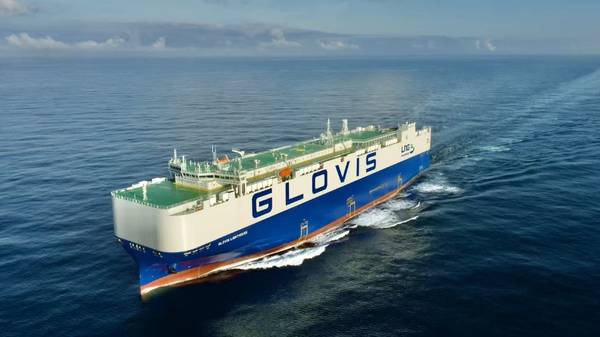
Glovis Lighthouse vessel. Seaspan takes delivery of first 10,800-ceu dual-fuel LNG car carrier  

Glovis Lighthouse enters service as one of a handful of vessels globally to exceed 10,000 CEU capacity.

Port of Rotterdam, Maersk, Core Power and Lloyd's Register logos. Rotterdam study maps pathway for nuclear-powered commercial ship port calls  

A joint study by Lloyd's Register, the Port of Rotterdam, Core Power and Maersk examines the feasibility of nuclear vessel port calls.

Hakata waterfront. Kinkai Yusen conducts first biofuel demonstration on domestic ro-ro vessel at Hakata Port  

Japanese shipping company to trial B24 biofuel blend aboard the vessel Nanotsu on 16 June.

Norwegian Energy Trading (NET) AS logo. Norwegian Energy Trading renews ISCC certification for biofuel trading  

Norwegian bunker trader says renewal reflects growing biofuel volumes and commitment to verifiable sustainability standards.


↑  Back to Top


 Recommended