This is a legacy page. Please click here to view the latest version.
Thu 2 Jul 2009, 09:29 GMT

Schwarzenegger welcomes clean fuel regulation


Governor applauds new requirement for ships to burn distillate fuel in Californian waters.


California's Governor Arnold Schwarzenegger has welcomed the implementation of a new state regulation which requires shipowners operating within 24 miles of the California coastline to use clean-burning distillate fuel.

Beginning yesterday, shipowners operating within the 24-mile zone will be required to burn either marine gas oil (MGO), with a maximum of 1.5% sulphur, or marine diesel oil (MDO), with a maximum of 0.50% sulfur in their main engines, auxiliary engines or boilers.

Commenting on the new requirement, Governor Schwarzenegger said "This new measure will help coastal residents breathe easier and reduce pollution in our oceans and waterways at the same time."

The regulation, adopted in 2008, will annually affect nearly 2,000 ocean-going vessels, both U.S. flagged and foreign-flagged, visiting California.

"This comparatively simple switch for ships will have huge benefits for Californians," said California Air Resources Board (ARB) Chairman Mary D. Nichols. "People living along the coast will see benefits overnight: cleaner air and better health."

"Using the cleaner fuels will be phased in, but significant emission reductions will be immediate," the ARB said in a statement. Initially, 13 tons-per-day of toxic particulate matter emitted from the vessels' diesel engines will be eliminated. Reductions will increase as the fuel sulphur content is progressively lowered through the regulation's phase-in.

Yesterday's switch will eliminate around 75 percent of the diesel particulate matter (PM), over 80% of the sulphur oxides and 6 percent of the nitrogen oxides. In 2012, when the very low sulfur fuel is required, reductions of diesel particulate matter will be 15 tons daily, an 83 percent reduction compared to uncontrolled emissions. Sulphur oxides will be reduced by 140 tons daily, a 95 percent reduction and nitrogen oxides will be reduced by 11 tons per day, a 6 percent reduction.

According to the ARB, reducing ship exhaust will eliminate an estimated 3,600 premature deaths between 2009 and 2015 and lower the cancer risk by over 80 percent. In addition, the emission reductions will assist the South Coast Air Quality Management District meet its 2014 federal clean air requirements for fine particulate matter. The reductions are also needed for the ARB to achieve its targeted 85 percent reduction of diesel PM by 2020.

Air board representatives explain that the regulation is extremely cost effective. The fuel is readily available and complying with the regulation would typically add $30,000 to a California port visit, roughly one percent of the typical fuel costs for a vessel crossing the Pacific Ocean.

The shipping industry maintains that a typical voyage for a container vessel from Asia to U.S. west coast costs a company two to three million dollars. "For a container ship with consumer products, this cost increase equates to an extra 12.5 cents in the cost of a plasma TV. For a cruise ship passenger, using industry's numbers, this would add about $15 to a fare," the ARB said.

In 2000, the ARB developed its Diesel Risk Reduction Plan that set the goal of cutting diesel emissions by 85 percent by 2020. The plan includes a series of measures designed to achieve that goal. As part of that plan the Board has adopted measures that require the use of low sulfur diesel fuel in most applications statewide, tighter tailpipe limits on in-use diesel trucks and buses and to control emissions from port equipment and ships operating in California waters


Capital Clean Energy Carriers Corp. (CCEC) and CMA CGM logos. Capital Clean Energy Carriers and CMA CGM form joint venture to build $82.8m LNG bunkering vessel  

The 20,000-cbm dual-fuel vessel is due for delivery in the third quarter of 2028.

Hong Kong flag. Hong Kong launches port dues and vessel registration incentives to boost green fuel bunkering  

Two new schemes offer financial concessions to attract green fuel vessels and grow the Hong Kong fleet.

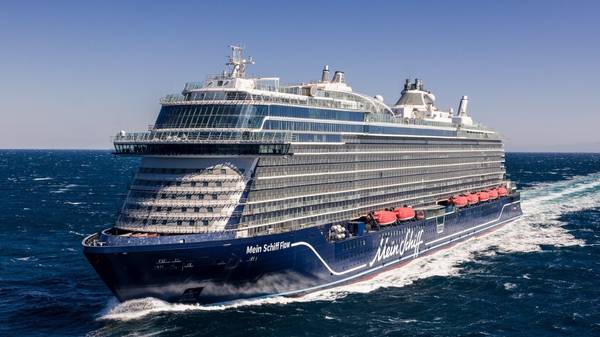
Mein Schiff Flow vessel. Fincantieri delivers LNG-ready cruise ship Mein Schiff Flow to TUI Cruises  

The 160,000 gross-tonne vessel is the second of two InTUItion-class dual-fuel ships.

Monjasa logo. Monjasa seeks trader for Fredericia-based Northwest Europe desk  

Bunker firm is recruiting a trader to join its Northwest Europe team.

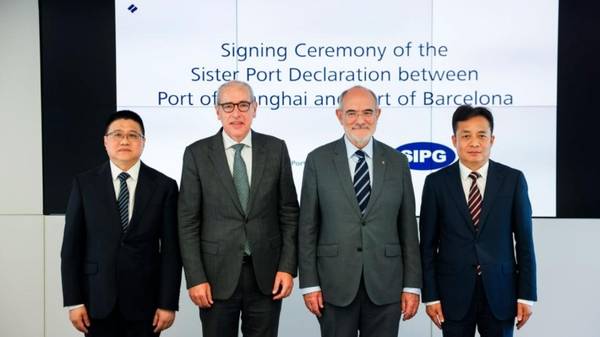
Port of Barcelona and Port of Shanghai signing ceremony. Barcelona and Shanghai sign strategic port cooperation agreement targeting green fuels and digital corridors  

Ports formalise a 'sister ports' relationship covering green shipping, digitalisation and intermodality.

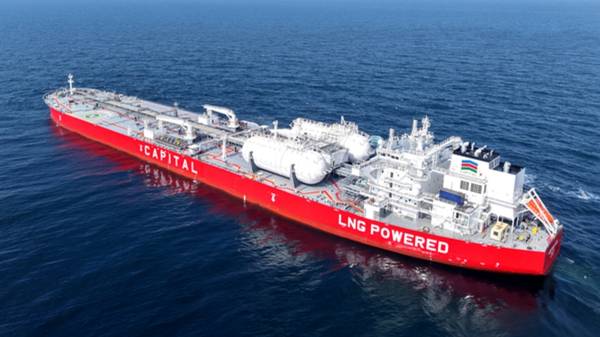
Capital's LNG-powered vessel. Chinese shipbuilder delivers 155,500-dwt LNG dual-fuel crude oil tanker  

Vessel handed over to Capital Ship Management Corp in China.

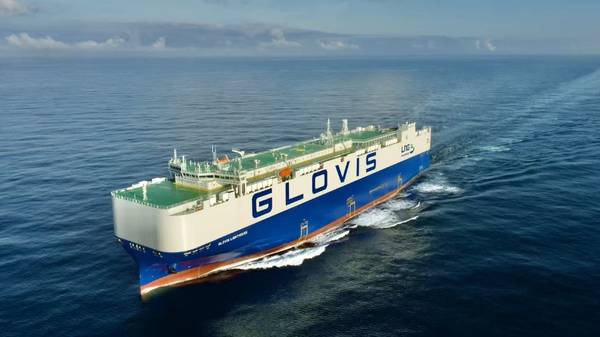
Glovis Lighthouse vessel. Seaspan takes delivery of first 10,800-ceu dual-fuel LNG car carrier  

Glovis Lighthouse enters service as one of a handful of vessels globally to exceed 10,000 CEU capacity.

Port of Rotterdam, Maersk, Core Power and Lloyd's Register logos. Rotterdam study maps pathway for nuclear-powered commercial ship port calls  

A joint study by Lloyd's Register, the Port of Rotterdam, Core Power and Maersk examines the feasibility of nuclear vessel port calls.

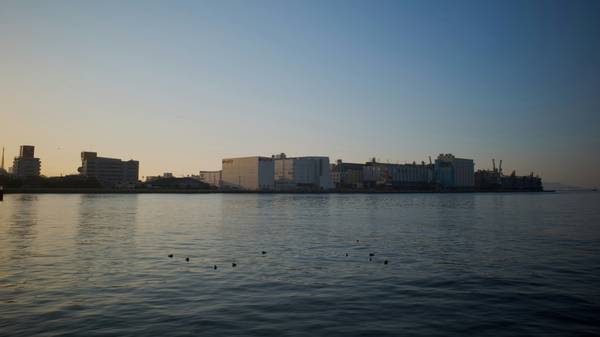
Hakata waterfront. Kinkai Yusen conducts first biofuel demonstration on domestic ro-ro vessel at Hakata Port  

Japanese shipping company to trial B24 biofuel blend aboard the vessel Nanotsu on 16 June.

Norwegian Energy Trading (NET) AS logo. Norwegian Energy Trading renews ISCC certification for biofuel trading  

Norwegian bunker trader says renewal reflects growing biofuel volumes and commitment to verifiable sustainability standards.


↑  Back to Top