This is a legacy page. Please click here to view the latest version.
Wed 24 Jun 2009, 10:08 GMT

EU report: 'No major bunker spills' in 2008


New study says there were no major spill incidents involving marine fuel last year.


The bunker and oil tanker industries kept a clean record in 2008 with no major bunker spills or oil pollution disasters in and around EU waters, according a report published this month by the European Maritime Safety Agency (EMSA).

Although there were a significant number of oil tanker accidents, the EMSA said that there were no major spill incidents involving marine fuel or other 'highly significant' pollution events. However, EMSA’s daily research still recorded a number of smaller spills of different sizes.

"When taking into consideration these smaller events, while not having details of the much larger number of very small spills, a reasonable estimate for the total amount of oil spilled accidentally in and around EU waters in 2008 would be in the region of 2-3,000 tonnes, in comparison to the estimated 7-8,000 tonnes in 2007," the EMSA said.

In previous years, major individual oil spills have include the Haven (144,000 tonnes of Italy in 1991), the Sea Empress (72,000 tonnes off Wales in 1996), the Erika (20,000 tonnes off France in 1999 and the Prestige (63,000 tonnes off Spain in 2002).

With no 'major' oil spill incidents reported in 2008, the EMSA concluded: "It can clearly be seen that the situation has radically improved in recent years."

The move towards ensuring that all oil tankers have double hulls was said to be one of the most significant drivers behind improvements in the region.

The EMSA’s CleanSeaNet system was said to be progressively providing a clearer picture of the position on both accidental and illegal pollution, and significant numbers of potential slicks are being spotted on a daily basis. As it is believed that deliberate discharges account for a progressively greater proportion of pollution than accidental events, this has now become a major issue to be addressed, the EMSA said.

Following the grounding and break-up of the 36000 gt bulk carrier Fedra (carrying over 500 tonnes of fuel and other oil) off Europa Point, Gibraltar, on 10th October, and the grounding of the 24,600 gt bulk carrier Tawe (carrying over 200 tonnes of fuel oil other oil) nearby in Algeciras Bay, Spain, in the same storm, several hundred tonnes of oil were spilled into the sea, with some ending up on beaches and along the coast. Spill estimates were around 300 tonnes for the Fedra and much less for the Tawe. Soon after the accidents, oil slicks were spotted drifting in the bay and EMSA was called in to provide pollution response services.

The EMSA contracted oil pollution response vessel Bahia Tres was quickly mobilised and began collecting oil from the sea surface, while the EMSA CleanSeaNet system provided satellite images of the area.

Around 400 tonnes of fuel oil was reported to have been spilled in and around the Loire estuary, western France, and began washing up on estuary beaches after a pipe ruptured during the loading of an oil tanker at the Total Donges refinery on the night of 16th March. The pollution is reported to have occurred in a sensitive wetland area.

The response operations involved local rescue teams, floating dams, skimmers and a 200-person clean-up team, with chunks of solidified oil washing up on beaches and fuel floating along 20 kilometres of the river.

The 58,000 gt crude oil tanker Minerva Helen was reported to have spilled around 200 tonnes of oil into the sea at the Provestenen oil terminal, Copenhagen, Denmark, during the transfer of oil from an oil deposit on land on 18th January.

The accident happened due to a defective hose and the oil immediately began to drift north along the coast of Oresund between Denmark and Sweden. Danish pollution response vessels were sent to the scene and, as much of the oil began lumping together, it had to be recovered lump by lump.

Following the sinking of the 6500 gt general cargo ship Ice Prince in gale force winds off Portland Bill, southern UK, on 15th January, an unspecified amount of the over 400 tonnes of fuel oil on board leaked from the wreck, but very little reached the coastline, the EMSA said.


TMS Tankers logo. Lloyd’s Register delivers fleet-wide energy transition roadmap for TMS Tankers  

LR Advisory maps vessel-level compliance risk and decarbonisation pathways across the Greek owner’s tanker fleet.

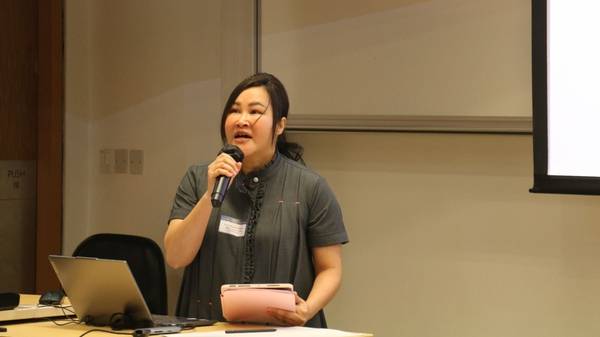
Dr Prapisala Thepsithar, GCMD. GCMD shares biofuel assurance and green finance insights at Hong Kong shipping decarbonisation forum  

The Global Centre for Maritime Decarbonisation presented pilot findings on biofuels and energy efficiency financing.

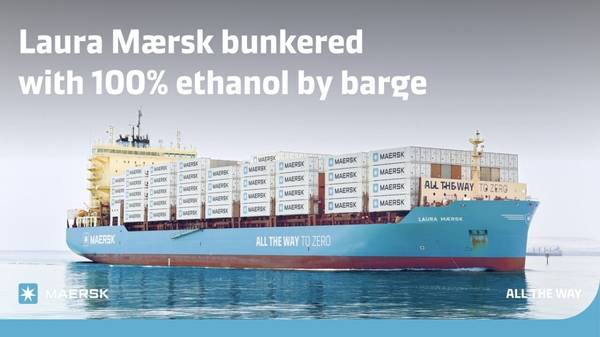
Laura Maersk ethanol bunkering graphic. Maersk conducts large-scale ethanol bunkering trial on Laura Maersk in Rotterdam  

A.P. Moller – Maersk has conducted a barge-delivered ethanol bunkering operation as part of ongoing fuel trials.

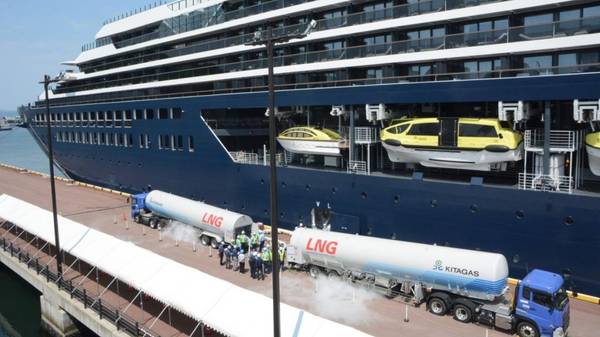
Luminara vessel truck-to-ship bunkering. MOL Techno-Trade completes first LNG bunkering for international cruise ship in Hokkaido  

Truck-to-ship LNG operation at Hakodate marks first such supply to an international cruise vessel in Hokkaido.

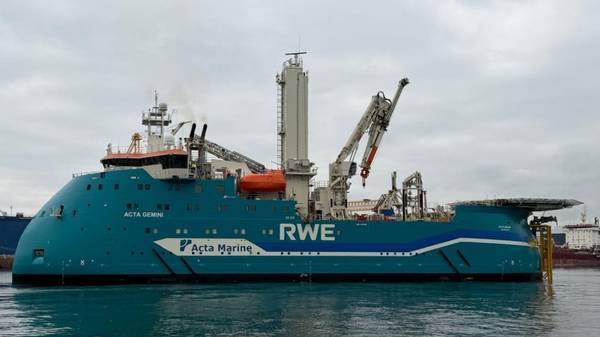
Acta Gemini vessel. Acta Marine takes delivery of methanol dual-fuel CSOV Acta Gemini for RWE wind farm charter  

The vessel will support operations at the Sofia Offshore Wind Farm at Dogger Bank.

Yeva Wood and Kirsten Møller Jørgensen. Malik Supply expands Danish team with bunker trader and finance hire  

Danish bunker supplier Malik Supply adds two new staff across its Fredericia and Aalborg offices.

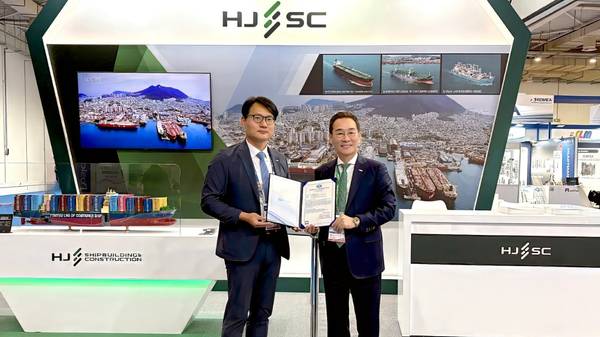
AiP award ceremony for a 10,000-teu biofuel-powered container ship. HJSC wins AiP for 10,000-teu biofuel-powered container ship design  

South Korean shipbuilder HJ Shipbuilding & Construction receives classification society approval for its biofuel vessel design at Posidonia.

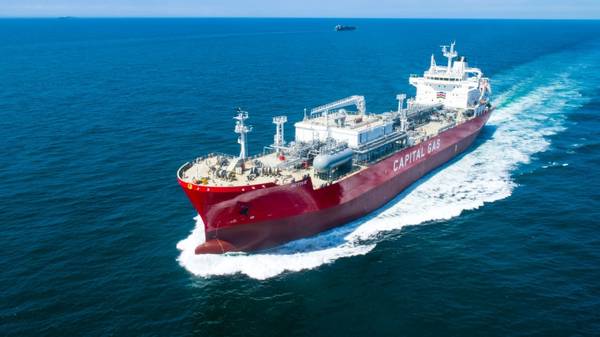
Active vessel. Capital Clean Energy Carriers takes delivery of LNG carrier and dual-fuel gas carrier, secures five new charters  

Athens-based CCEC expands its fleet and pushes contracted revenue backlog to $3.1bn.

VPS logo. Fuel quality management for vessels in extended idle: Arabian Gulf, Gulf of Oman and adjacent anchorages | Rahul Choudhuri, VPS  

Managing fuel quality deterioration following the closure of the Strait of Hormuz.

Person signing a document. Agastya Green Fuels signs 250,000 t/yr e-methanol offtake deal with Sri Lanka’s SAR Group  

Indian producer and Sri Lankan maritime firm agree long-term green methanol supply partnership.


↑  Back to Top