This is a legacy page. Please click here to view the latest version.
Thu 18 Jun 2009, 08:26 GMT

Greek council opposes bunker tax


GSCC Chairman says studies show emissions from ships have a net cooling effect.


The Greek Shipping Co-operation Council (GSCC) has reiterated its opposition to a bunker tax or market-based instrument on shipping emissions, options which are due to be evaluated at the forthcoming United Nations Framework Convention on Climate Change(UNFCCC) meeting in Copenhagen in December.

Commenting on the issue, GSCC chairman Epaminondas Embiricos said "The maritime sector, on the basis tonne miles of cargo carried, is by far the most fuel efficient means of transport and produces the least harmful atmospheric emissions of any mode of transport. Emissions from ships are different from those typical of other industry sectors. They are not of the same nature nor do they have the same impact on the environment, as those from other industrial sources and modes of transport."

"A number of eminent scientific studies show that this is the case and that emissions from ships have a net cooling effect," he claimed. "This is due to the fact that vessels' emissions include aerosols such as OC and SO4, which seed clouds, reflect solar radiation and cause cooling. In fact the cooling effect of SO4 is 200,000 times greater than the warming effect of CO2. Ships burn fuel containing sulphur, when on the high seas and away from populated coastal areas. Indeed reducing these emissions on the high seas would be counter-productive. Shipping's global cooling effect has been accepted by the IMO Study Group, which considered the matter."

"The purported aim of a tax on shipping emissions is to create an incentive upon shipowners to improve their CO2 emissions performance. However, such economic measures should rather be directed at those interest groups responsible for a rise in emissions through increased trade. Shipping would clearly be wrongly targeted as it is not the root cause of any emissions increase but has only reacted and increased its activities in response to world demand for increased globalisation and trade. If any economic instrument is to be introduced to reduce carbon emissions from ships, it would need to target changes in behaviour on the part of consumers, who presently demand an ever wider choice of imported goods in competition with domestic products. Proposals for changes in behaviour by the public are of course not the most politically popular."

"However the IMO would do a disservice to the public interest if it allowed the misconception to gain ground that the desired changes can be achieved without any involvement on the part of the consumers, and simply by regulation of the maritime industry. The only likely effect of such measures would be to distort competition between shipping and other modes of transport in a manner which could increase, rather than reduce, emissions from transportation as a whole."

Greece 

TMS Tankers logo. Lloyd’s Register delivers fleet-wide energy transition roadmap for TMS Tankers  

LR Advisory maps vessel-level compliance risk and decarbonisation pathways across the Greek owner’s tanker fleet.

Dr Prapisala Thepsithar, GCMD. GCMD shares biofuel assurance and green finance insights at Hong Kong shipping decarbonisation forum  

The Global Centre for Maritime Decarbonisation presented pilot findings on biofuels and energy efficiency financing.

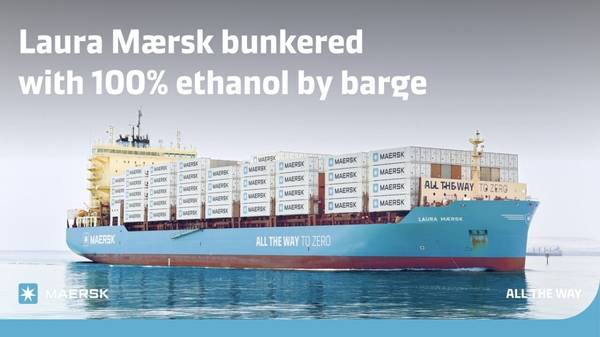
Laura Maersk ethanol bunkering graphic. Maersk conducts large-scale ethanol bunkering trial on Laura Maersk in Rotterdam  

A.P. Moller – Maersk has conducted a barge-delivered ethanol bunkering operation as part of ongoing fuel trials.

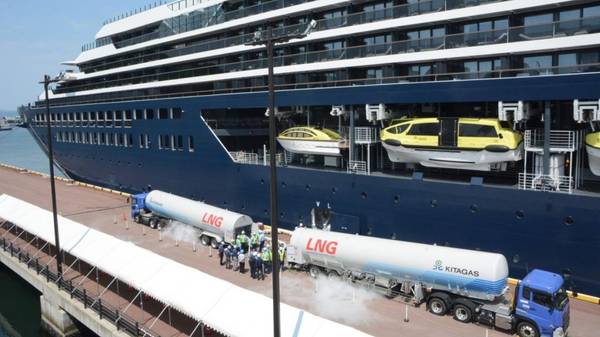
Luminara vessel truck-to-ship bunkering. MOL Techno-Trade completes first LNG bunkering for international cruise ship in Hokkaido  

Truck-to-ship LNG operation at Hakodate marks first such supply to an international cruise vessel in Hokkaido.

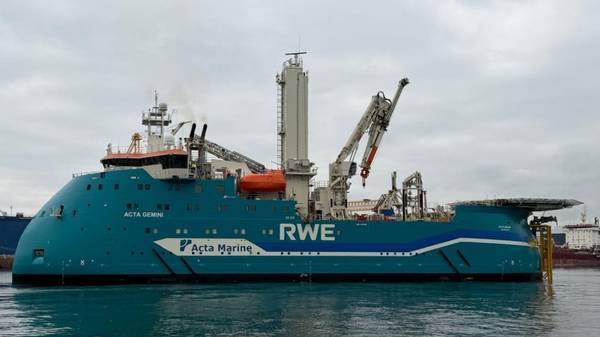
Acta Gemini vessel. Acta Marine takes delivery of methanol dual-fuel CSOV Acta Gemini for RWE wind farm charter  

The vessel will support operations at the Sofia Offshore Wind Farm at Dogger Bank.

Yeva Wood and Kirsten Møller Jørgensen. Malik Supply expands Danish team with bunker trader and finance hire  

Danish bunker supplier Malik Supply adds two new staff across its Fredericia and Aalborg offices.

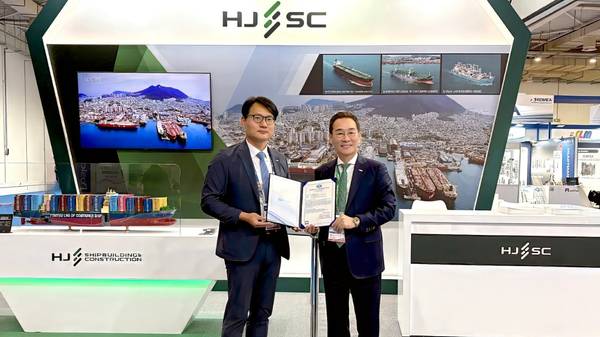
AiP award ceremony for a 10,000-teu biofuel-powered container ship. HJSC wins AiP for 10,000-teu biofuel-powered container ship design  

South Korean shipbuilder HJ Shipbuilding & Construction receives classification society approval for its biofuel vessel design at Posidonia.

Active vessel. Capital Clean Energy Carriers takes delivery of LNG carrier and dual-fuel gas carrier, secures five new charters  

Athens-based CCEC expands its fleet and pushes contracted revenue backlog to $3.1bn.

VPS logo. Fuel quality management for vessels in extended idle: Arabian Gulf, Gulf of Oman and adjacent anchorages | Rahul Choudhuri, VPS  

Managing fuel quality deterioration following the closure of the Strait of Hormuz.

Person signing a document. Agastya Green Fuels signs 250,000 t/yr e-methanol offtake deal with Sri Lanka’s SAR Group  

Indian producer and Sri Lankan maritime firm agree long-term green methanol supply partnership.


↑  Back to Top