This is a legacy page. Please click here to view the latest version.
Wed 10 Jun 2009, 09:51 GMT

GL examines fuel-saving options


Executive comments on fuel efficiency and new range of services.


"How to make ships more efficient?" This was the key question posed yesterday by Germanischer Lloyd (GL) at the Nor-Shipping trade fair in Oslo.

At a press conference, the classification society and technical assurance and consulting company informed about its green initiatives, current market developments as well as new design and fuel-saving options.

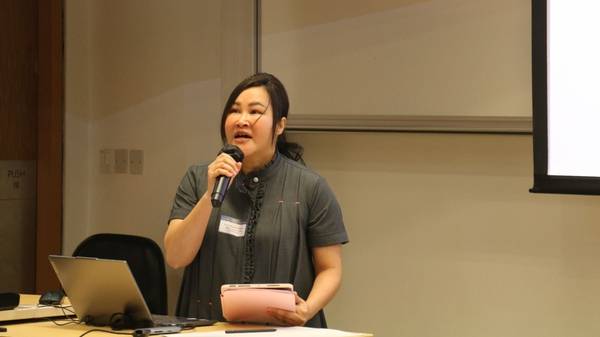
"Reducing the environmental impact of shipping in order to upgrade its image as an environmentally friendly mode of transportation, is one of the most important topics for the maritime industry," Dr Hermann J. Klein [pictured], Member of the GL Executive Board, said at the press conference.

"We understand that the commercial pressures for ship owners will continue to rise in particular due to a number of regulatory requirements. Therefore, energy efficiency continues to gain in importance." To prepare for such challenges, GL established its new subsidiary "FutureShip".

FutureShip offers a range services with a common objective: optimizing ships, both those in operation and those yet to be built.

Dr Klein said "To streamline our energy efficiency offerings Germanischer Lloyd has integrated the expertise of its recently-acquired subsidiary Friendship Consulting, Germany, into the FutureShip pool of resources."

Services included in GL's FuelSaver programme are CO2-analysis (ECO-Patterns) and operational fuel consumption analysis (ECO-Practices) services.

Greatest savings during design phase

While there are significant savings from operational and low-level technical changes, the greatest savings generally can be achieved when engineering optimisations are taken into account, GL said.

"Most ships were designed for operating conditions that are no longer valid. For example, a ship with a design speed of 25 knots might be operated at 18 knots in today's environment. Since its bulbous bow is not optimised for this speed, the generated wave patterns cause the water resistance to increase. As a result, fuel costs rise."

But hull lines and bulbous bows alone are not the only determinants of resistance. That is why FutureShip's ECO-Chances is designed to provide a holistic evaluation of a ship. Utilising advanced software tools, such as FutureShip's dedicated flow simulation/optimisation tools and powerful parametric modelling software, experts assess the ship from top to bottom to identify the most promising focus areas for optimisation. A typical evaluation might result in a series of five to six engineering options that offer significant fuel savings. These are presented with estimates of expected savings as well as estimated return on investment.

Some of the suggested options may require additional engineering before implementation. However, hydrodynamic optimisations, for example, often require detailed studies by experienced engineers with advanced software tools in order to optimise results. For these situations, FutureShip offers the services of their engineering experts and partners in the form of its ECO-Solutions service.

A vision for a new container vessel

GL said the drive for more energy efficiency in shipping calls for optimised ship designs.

"It is also time to think about an even more sophisticated container vessel," Torsten Schramm, COO and Executive Vice President Europe/Middle East/Africa, said at the press conference. He introduced the company's vision of a future baby post-Panamax vessel. The vessel is wider than the Panama canal locks, offers a TEU capacity similar to the latest Panamax (max) designs but would operate at significantly lower costs and needs less ballast.

"Exploring the design space for container vessels beyond the Panama canal limit leads to promising design concepts," Torsten Schramm concluded. "A baby post-Panamax design offers greatly reduced operating costs. These benefits increase even further with lower service speeds."


TMS Tankers logo. Lloyd’s Register delivers fleet-wide energy transition roadmap for TMS Tankers  

LR Advisory maps vessel-level compliance risk and decarbonisation pathways across the Greek owner’s tanker fleet.

Dr Prapisala Thepsithar, GCMD. GCMD shares biofuel assurance and green finance insights at Hong Kong shipping decarbonisation forum  

The Global Centre for Maritime Decarbonisation presented pilot findings on biofuels and energy efficiency financing.

Laura Maersk ethanol bunkering graphic. Maersk conducts large-scale ethanol bunkering trial on Laura Maersk in Rotterdam  

A.P. Moller – Maersk has conducted a barge-delivered ethanol bunkering operation as part of ongoing fuel trials.

Luminara vessel truck-to-ship bunkering. MOL Techno-Trade completes first LNG bunkering for international cruise ship in Hokkaido  

Truck-to-ship LNG operation at Hakodate marks first such supply to an international cruise vessel in Hokkaido.

Acta Gemini vessel. Acta Marine takes delivery of methanol dual-fuel CSOV Acta Gemini for RWE wind farm charter  

The vessel will support operations at the Sofia Offshore Wind Farm at Dogger Bank.

Yeva Wood and Kirsten Møller Jørgensen. Malik Supply expands Danish team with bunker trader and finance hire  

Danish bunker supplier Malik Supply adds two new staff across its Fredericia and Aalborg offices.

AiP award ceremony for a 10,000-teu biofuel-powered container ship. HJSC wins AiP for 10,000-teu biofuel-powered container ship design  

South Korean shipbuilder HJ Shipbuilding & Construction receives classification society approval for its biofuel vessel design at Posidonia.

Active vessel. Capital Clean Energy Carriers takes delivery of LNG carrier and dual-fuel gas carrier, secures five new charters  

Athens-based CCEC expands its fleet and pushes contracted revenue backlog to $3.1bn.

VPS logo. Fuel quality management for vessels in extended idle: Arabian Gulf, Gulf of Oman and adjacent anchorages | Rahul Choudhuri, VPS  

Managing fuel quality deterioration following the closure of the Strait of Hormuz.

Person signing a document. Agastya Green Fuels signs 250,000 t/yr e-methanol offtake deal with Sri Lanka’s SAR Group  

Indian producer and Sri Lankan maritime firm agree long-term green methanol supply partnership.


↑  Back to Top