This is a legacy page. Please click here to view the latest version.
Thu 21 May 2009, 08:13 GMT

Borg: Agreed cold ironing standard is 'close'


EU Commissioner optimistic that there will soon be an agreed standard for shore-side electricity.


European Commissioner Joe Borg has said he is optimistic that there will soon be an agreed standard for plug-in shoreside power within the European Union.

Speaking this week at the European Cruise Council 2009 Industry Conference, Borg said “I am pleased to be addressing your annual conference during European Maritime Day 2009. This is, of course, more than a happy coincidence. It proves that the cruise industry has embraced the guiding principles of the EU's Integrated Maritime Policy, devised in response to the needs of maritime stakeholders such as you. The Integrated Maritime Policy and the cruise industry alike can only succeed if they tackle opportunities and challenges in an integrated, cross-sectoral way.”

Borg said the Integrated Maritime Policy contains a number of 'tools' of relevance, of which he mentioned three:

- Firstly, the promotion of shore-side electricity is an effective way to tackle local pollution concerns. I am optimistic that we will soon get the required impetus for investments to make shore-side electricity a reality in many ports, including in neighbouring countries in the southern Mediterranean. The Commission will address the issue of taxation, and the relevant standardisation bodies are close to an agreed standard for the ship-to-shore connections. This is not about imposing a technological option, but rather about moving forward on a very particular problem facing the cruise industry.

- Secondly, maritime spatial planning helps public authorities and stakeholders coordinate their actions and thus optimises the use of marine spaces to benefit both economic development and the environment. Cruising needs state-of-the-art port facilities and it derives a huge profit from unspoilt natural sites. Maritime spatial planning is, therefore, of great importance to the cruise industry.

- Thirdly, the current economic crisis also provides an opportunity for Europe to deploy its world-leading innovative capabilities to emerge after the downturn with new class of environmentally friendly ships. The Commission is therefore exploring the possibility of launching a "Clean ship" initiative. I would like to invite all of you to consider your possible involvement in such an initiative which aims at implementing new technologies to dramatically increase the environmental performance of all shipping activities, including of course also cruising.

Borg also referred to the issue of cruise ship tourism in polar waters, which has been in the spotlight recently following the decision by a number of operators to drop the Antarctic from their schedules as a result of a proposed ban on the use and carriage of heavy fuel by the International Maritime Organization (IMO).

Borg said "Binding international requirements for cruise ships navigating in polar waters are not yet in place. Moreover, as cruise vessel traffic in the polar regions increases, surveillance and rescue infrastructure, along with passenger safety needs, have become a growing concern.

"Encouraging developments are underway here – not least the work of the Cruise Ship Safety Forum and the environmental and safety guidelines adopted unilaterally by many cruise ship companies operating in the polar regions.

"But we must do more. We need to pursue our work on the relevant IMO guidelines. And we would urge cruise ship operators to pre-empt any general standards and to develop and share best practice."


TMS Tankers logo. Lloyd’s Register delivers fleet-wide energy transition roadmap for TMS Tankers  

LR Advisory maps vessel-level compliance risk and decarbonisation pathways across the Greek owner’s tanker fleet.

Dr Prapisala Thepsithar, GCMD. GCMD shares biofuel assurance and green finance insights at Hong Kong shipping decarbonisation forum  

The Global Centre for Maritime Decarbonisation presented pilot findings on biofuels and energy efficiency financing.

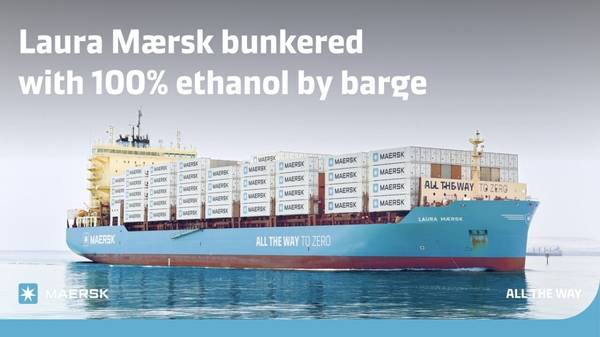
Laura Maersk ethanol bunkering graphic. Maersk conducts large-scale ethanol bunkering trial on Laura Maersk in Rotterdam  

A.P. Moller – Maersk has conducted a barge-delivered ethanol bunkering operation as part of ongoing fuel trials.

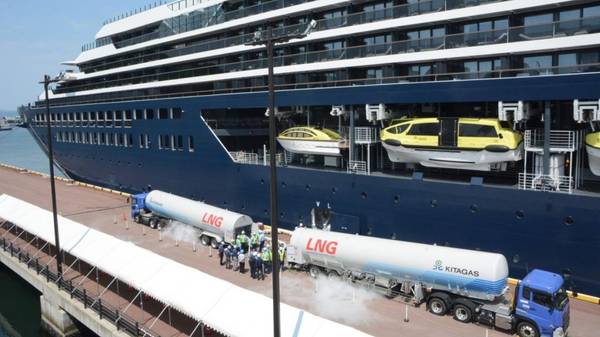
Luminara vessel truck-to-ship bunkering. MOL Techno-Trade completes first LNG bunkering for international cruise ship in Hokkaido  

Truck-to-ship LNG operation at Hakodate marks first such supply to an international cruise vessel in Hokkaido.

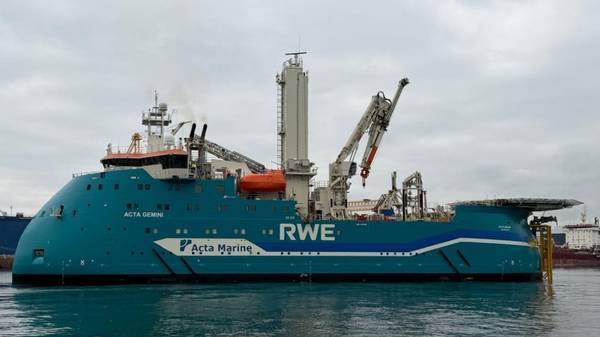
Acta Gemini vessel. Acta Marine takes delivery of methanol dual-fuel CSOV Acta Gemini for RWE wind farm charter  

The vessel will support operations at the Sofia Offshore Wind Farm at Dogger Bank.

Yeva Wood and Kirsten Møller Jørgensen. Malik Supply expands Danish team with bunker trader and finance hire  

Danish bunker supplier Malik Supply adds two new staff across its Fredericia and Aalborg offices.

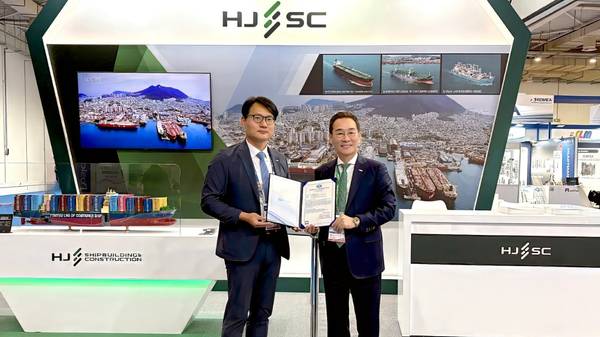
AiP award ceremony for a 10,000-teu biofuel-powered container ship. HJSC wins AiP for 10,000-teu biofuel-powered container ship design  

South Korean shipbuilder HJ Shipbuilding & Construction receives classification society approval for its biofuel vessel design at Posidonia.

Active vessel. Capital Clean Energy Carriers takes delivery of LNG carrier and dual-fuel gas carrier, secures five new charters  

Athens-based CCEC expands its fleet and pushes contracted revenue backlog to $3.1bn.

VPS logo. Fuel quality management for vessels in extended idle: Arabian Gulf, Gulf of Oman and adjacent anchorages | Rahul Choudhuri, VPS  

Managing fuel quality deterioration following the closure of the Strait of Hormuz.

Person signing a document. Agastya Green Fuels signs 250,000 t/yr e-methanol offtake deal with Sri Lanka’s SAR Group  

Indian producer and Sri Lankan maritime firm agree long-term green methanol supply partnership.


↑  Back to Top