This is a legacy page. Please click here to view the latest version.
Wed 29 Apr 2009, 08:21 GMT

New terminal provides shore power to two ships at once


Facility offers new 'cold ironing' options to cruise ships during the 2009 season.


The 2009 cruise season is now underway in Seattle following the arrival of Holland America Line's MS Amsterdam at the new Smith Cove Terminal on April 24th.

A record 211 vessels are expected this season, bringing an estimated 801,000 passengers to Seattle.

"Seattle's cruise industry demonstrates that economic growth and environmental protection are compatible, achievable goals," said Port of Seattle CEO Tay Yoshitani. “We are proud today to be opening the only cruise terminal in the world that can provide shore power to two ships at once.”

As per an agreement between the port and the cruise lines, all cruise ships that homeport in Seattle will use shore power or low-sulfur fuel while docked, eliminating the need to run ship engines to generate onboard electricity. That agreement is similar to one between the cruise lines, the Port, and the Washington State Department of Ecology that governs wastewater discharges.

Seattle’s cruise industry is responsible for more than 3,700 jobs, $312 million in annual business revenue, and $16 million in state and local tax revenues.

“The cruise business means local jobs - every cruise ship that comes in contributes over $1.7 million to the local economy,” said Port Commissioner Gael Tarleton. “And this new season will bring a much-needed boost to our local travel and tourist businesses."

The new 143,000 square foot Smith Cove passenger terminal was completed in time for this year’s season at a cost of $72 million and will house Holland America, Princess Cruises, and Royal Caribbean. It was relocated from its former temporary home at Terminal 30, which is being returned to cargo container use. The two-story facility offers mobile gangways and shore power at each 1200- foot berth.

The Port's cruise business has grown steadily from just six ships and 6,600 passengers in 1999. In 2008, Seattle hosted 210 vessels and a record 886,000 passengers, nearly all destined for Alaska’s pristine wilderness. The 2008 season marks the first time Seattle surpassed Vancouver, BC in passenger numbers.

Homeport cruise lines and destinations in 2009 include the following:

* Celebrity Cruises offers 7-day Alaska cruises on the Celebrity Infinity; and 3 and 4-day Pacific Northwest cruises from Seattle on the Celebrity Mercury. Both vessels depart from Bell Street Pier Cruise Terminal.

* Holland America Line offers 7-day cruises from Seattle to Alaska on the ms Zaandam, ms Westerdam and the ms Amsterdam. Sailings depart Friday, Saturdays and Sundays from Smith Cove Cruise Terminal.

* Norwegian Cruise Line offers 7-day cruises from Seattle to Alaska on the NCL Star and the NCL Pearl. Sailings depart Saturdays and Sundays from the Bell Street Pier Cruise Terminal.

* Princess Cruises offers 7-day cruises from Seattle to Alaska on the Golden Princess and Star Princess. Sailings depart Saturdays and Sundays from Smith Cove Cruise Terminal. The Pacific Princess will offer 14-day Alaska sailings every other Thursday from Smith Cove Cruise Terminal.

* Royal Caribbean offers 7-day cruises to Alaska on the Rhapsody of the Seas departing Smith Cove Cruise Terminal every Friday.

Bunker sales at the port are currently estimated to be around 1.5 million tonnes per annum. The main suppliers are Conoco Phillips, Tesoro Corporation and Rainier Petroleum.

Next year, Carnival has already confirmed that it will operate a schedule of seven-day Alaska round-trip cruises from Seattle beginning in May 2010, a move which is set to be a further boost to bunker sales at the West Coast port. Carnival Cruise Lines’ 2,124 passenger Carnival Spirit [pictured] will depart on Tuesdays from May 11th to August 31st 2010.


Capital Clean Energy Carriers Corp. (CCEC) and CMA CGM logos. Capital Clean Energy Carriers and CMA CGM form joint venture to build $82.8m LNG bunkering vessel  

The 20,000-cbm dual-fuel vessel is due for delivery in the third quarter of 2028.

Hong Kong flag. Hong Kong launches port dues and vessel registration incentives to boost green fuel bunkering  

Two new schemes offer financial concessions to attract green fuel vessels and grow the Hong Kong fleet.

Mein Schiff Flow vessel. Fincantieri delivers LNG-ready cruise ship Mein Schiff Flow to TUI Cruises  

The 160,000 gross-tonne vessel is the second of two InTUItion-class dual-fuel ships.

Monjasa logo. Monjasa seeks trader for Fredericia-based Northwest Europe desk  

Bunker firm is recruiting a trader to join its Northwest Europe team.

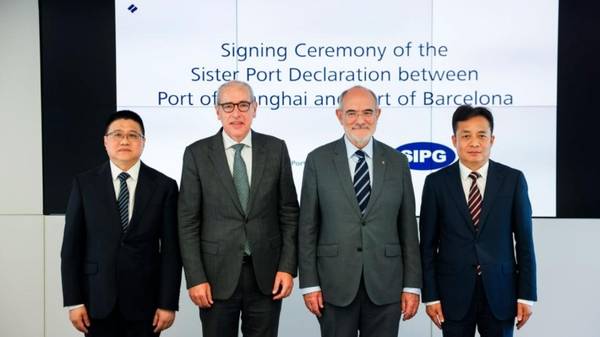
Port of Barcelona and Port of Shanghai signing ceremony. Barcelona and Shanghai sign strategic port cooperation agreement targeting green fuels and digital corridors  

Ports formalise a 'sister ports' relationship covering green shipping, digitalisation and intermodality.

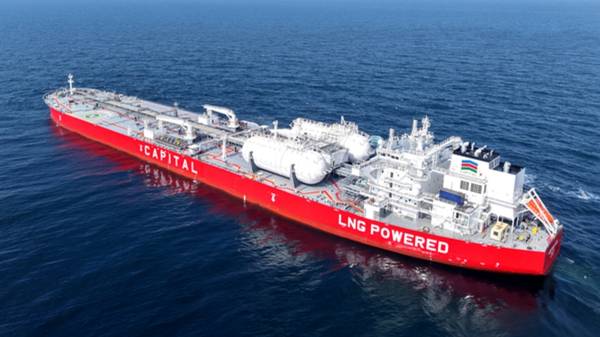
Capital's LNG-powered vessel. Chinese shipbuilder delivers 155,500-dwt LNG dual-fuel crude oil tanker  

Vessel handed over to Capital Ship Management Corp in China.

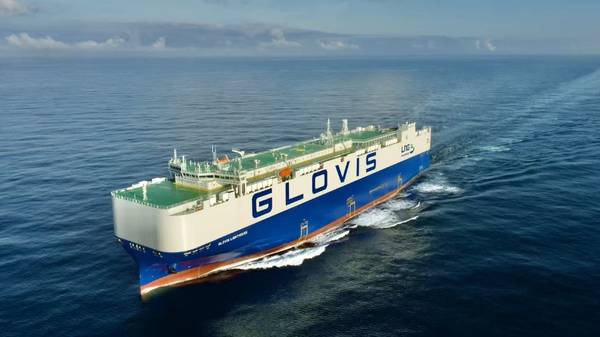
Glovis Lighthouse vessel. Seaspan takes delivery of first 10,800-ceu dual-fuel LNG car carrier  

Glovis Lighthouse enters service as one of a handful of vessels globally to exceed 10,000 CEU capacity.

Port of Rotterdam, Maersk, Core Power and Lloyd's Register logos. Rotterdam study maps pathway for nuclear-powered commercial ship port calls  

A joint study by Lloyd's Register, the Port of Rotterdam, Core Power and Maersk examines the feasibility of nuclear vessel port calls.

Hakata waterfront. Kinkai Yusen conducts first biofuel demonstration on domestic ro-ro vessel at Hakata Port  

Japanese shipping company to trial B24 biofuel blend aboard the vessel Nanotsu on 16 June.

Norwegian Energy Trading (NET) AS logo. Norwegian Energy Trading renews ISCC certification for biofuel trading  

Norwegian bunker trader says renewal reflects growing biofuel volumes and commitment to verifiable sustainability standards.


↑  Back to Top