This is a legacy page. Please click here to view the latest version.
Wed 22 Apr 2009, 08:11 GMT

Study reveals effect of ships on ground-level ozone


Shipping may be responsible for over 25% of the ground-level ozone in a number of coastal areas, says report.


New research claims to show that emissions generated by ships increase acid rain on shore and may be responsible for over 25 percent of the ground-level ozone in a number of coastal areas. The research results were recently published in the journal Atmospheric Chemistry and Physics.

Past studies have shown that 70 percent of shipping occurs within 400 kilometres of land. Taking this research further, Professor Stig B. Dalsøren, from the Centre for International Climate and Environmental Research at the University of Oslo in Norway, and his team, investigated the amount of pollution generated by ships and located the affected sites. The researchers evaluated data that was collected globally in 2004.

According to Professor Dalsøren, in 2004 the global merchant fleet comprised more than 90 000 ships. The researchers split the ships into 15 categories in order to compute the pollution they emitted. Each category was subdivided into seven weight ranges. The team then estimated the emissions they believed would be generated whilst the ship was at sea or in port.

Information about the routes sailed by more than 30 000 ships during that period was used by the researchers to establish the location of the generated emissions. 'The ships burned around 217 million metric tonnes of fuel in 2004 and 5 percent of this was consumed while in port,' Professor Dalsøren explained.

The study says the majority of the fuel burnt was 'sulphur-rich', leading to emissions containing over 16 million tonnes of sulphur dioxide. 'That gas, plus the various nitrogen oxides (NOx), gases in the engine exhaust, reacts with moisture in the air to produce acid rain,' Dalsøren said.

On a global scale, the team calculated that ships are responsible for more than 10 percent of acid rain due to NOx emissions, and almost 5 percent of acid rain due to sulphur dioxide emissions.

According to the data, around 15 percent of the sulphur dioxide in the air at the port of Singapore is generated by ships. Just as interesting is the fact that a number of coastal areas (e.g. the Nordic region) that lack industrial activity but that have ships passing close by, report that almost 50 percent of the acid rain is potentially caused by ship emissions.

Professor Dalsøren remarked that ships are also responsible for the substantial amounts of ground-level ozone, triggered when the sun stimulates chemical reactions in emissions-rich air. The 5-15 percent ground-level ozone reported in some parts of western Europe are sparked by ship emissions, he added.

Dr David Stevenson from the University of Edinburgh said the new findings demonstrate 'the important influence of ship emissions on air quality in busy ports'.

For his part, Professor James Corbett from the University of Delaware said: 'What's really cool about this study is that the results are converging with data now being compiled by the International Maritime Organization (IMO), which is responsible for improving maritime safety and preventing pollution from ships.'

Professor Corbett added that these latest research results will help scientists and policymakers estimate the effects of proposed regulations on the different kinds of ships more effectively.

IMO  

TMS Tankers logo. Lloyd’s Register delivers fleet-wide energy transition roadmap for TMS Tankers  

LR Advisory maps vessel-level compliance risk and decarbonisation pathways across the Greek owner’s tanker fleet.

Dr Prapisala Thepsithar, GCMD. GCMD shares biofuel assurance and green finance insights at Hong Kong shipping decarbonisation forum  

The Global Centre for Maritime Decarbonisation presented pilot findings on biofuels and energy efficiency financing.

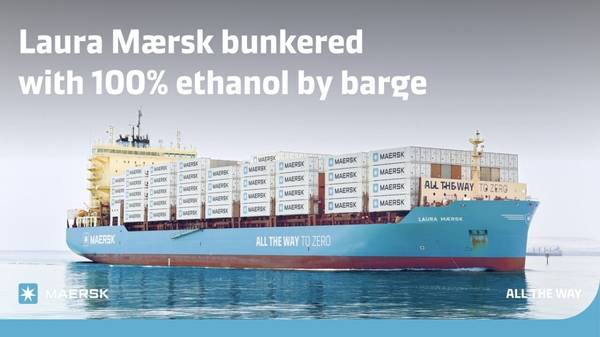
Laura Maersk ethanol bunkering graphic. Maersk conducts large-scale ethanol bunkering trial on Laura Maersk in Rotterdam  

A.P. Moller – Maersk has conducted a barge-delivered ethanol bunkering operation as part of ongoing fuel trials.

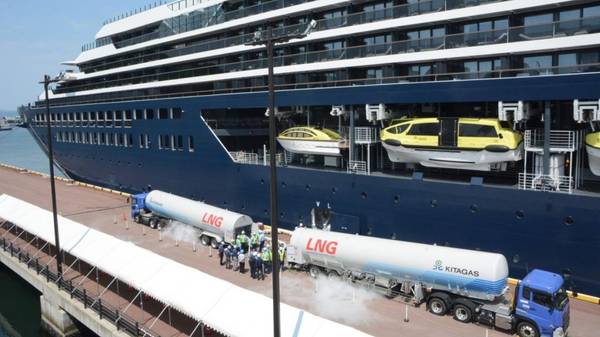
Luminara vessel truck-to-ship bunkering. MOL Techno-Trade completes first LNG bunkering for international cruise ship in Hokkaido  

Truck-to-ship LNG operation at Hakodate marks first such supply to an international cruise vessel in Hokkaido.

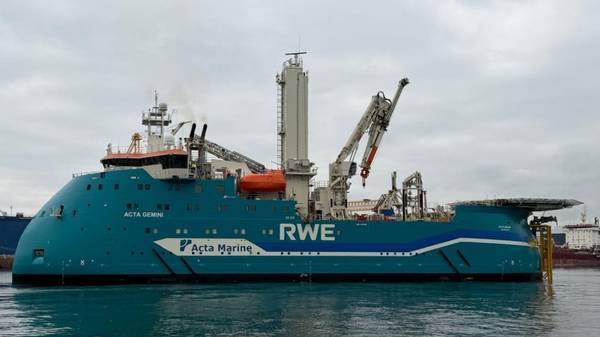
Acta Gemini vessel. Acta Marine takes delivery of methanol dual-fuel CSOV Acta Gemini for RWE wind farm charter  

The vessel will support operations at the Sofia Offshore Wind Farm at Dogger Bank.

Yeva Wood and Kirsten Møller Jørgensen. Malik Supply expands Danish team with bunker trader and finance hire  

Danish bunker supplier Malik Supply adds two new staff across its Fredericia and Aalborg offices.

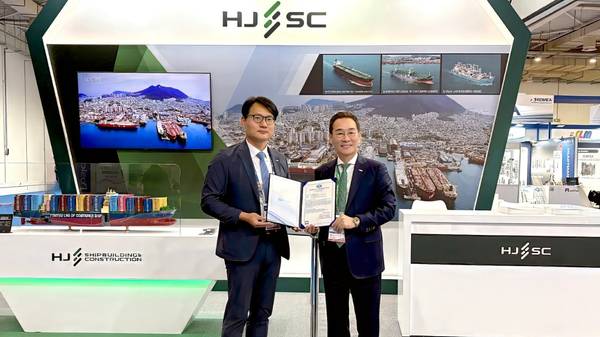
AiP award ceremony for a 10,000-teu biofuel-powered container ship. HJSC wins AiP for 10,000-teu biofuel-powered container ship design  

South Korean shipbuilder HJ Shipbuilding & Construction receives classification society approval for its biofuel vessel design at Posidonia.

Active vessel. Capital Clean Energy Carriers takes delivery of LNG carrier and dual-fuel gas carrier, secures five new charters  

Athens-based CCEC expands its fleet and pushes contracted revenue backlog to $3.1bn.

VPS logo. Fuel quality management for vessels in extended idle: Arabian Gulf, Gulf of Oman and adjacent anchorages | Rahul Choudhuri, VPS  

Managing fuel quality deterioration following the closure of the Strait of Hormuz.

Person signing a document. Agastya Green Fuels signs 250,000 t/yr e-methanol offtake deal with Sri Lanka’s SAR Group  

Indian producer and Sri Lankan maritime firm agree long-term green methanol supply partnership.


↑  Back to Top