This is a legacy page. Please click here to view the latest version.
Fri 10 Apr 2009, 13:31 GMT

Rotterdam: Q1 throughput falls 10.8 percent


First quarter results appear to support the view that bunker sales will fall in 2009.


The Port of Rotterdam Authority has announced that throughput during the first quarter of 2009 has fallen sharply in a comparison with the same period last year - a result which would appear to support the view that bunker sales are set to fall this year at Europe's leading port.

During the first three months of 2009, 94 million tonnes of goods were handled, 10.8% down on the January-March period in 2008.

The Port Authority said the declining throughput involves most types of goods: iron ore and scrap (-50%), agribulk (-4%), other dry bulk (-29%), crude oil (-4%), other liquid bulk (-17%), containers (-18%), roll on/roll off (-13%) and other mixed cargo (-24%). Coal (+24%) and mineral oil products (+13%) managed to escape the slump by quite a margin.

Commenting on the results, Hans Smits, CEO of the Port of Rotterdam Authority said "The decline in throughput is considerable, but is in line with the picture I outlined in December of a poor first six months. Despite some rays of hope, the problems – for example in container shipping - continue to dominate for the time being. The recovery will therefore begin a little later than originally anticipated. We foresee a decline in throughput over the year as a whole of between -6 and -10%".

Liquid bulk

Imports of crude oil fell a little less than anticipated, the Port Authority said. Speculating on future price increases, companies continued to fill up their storage tanks and even used tankers for temporary storage. As a result, the quarterly figures fell by 4% to 24.9 million tonnes.

The structural regional surpluses and shortages, combined with a strong "contango" (high prices in the future in comparison with the short term), had a positive impact on throughput of mineral oil products. Despite the fall in demand and less goods throughput continued to grow: +13% to 16.8 million tonnes.

Other liquid bulk (chemical basic products, vegetable oils and fats, fruit juices), fell by 17% to 7.6 million tonnes.

General cargo

Container throughput fell by 18% to 22 million tonnes. In (20-foot units) the decline was 16%, to 2.3 million TEU’s. There was no evidence of positive trends in any particular trade, the Port Authority said.

For the rest of the year, prospects are also poor in terms of volume. In addition to this, container shipping is wrestling with overcapacity and is faced with the challenge of jacking up extremely low freight tariffs.

Roll on/roll off traffic has suffered heavily from the unprecedented decline in the British economy and the increased value of the euro against the pound. The quantity of goods transported fell by 13%, to 4 million tonnes.

The 25% decline in throughput of other general cargo to 1.4 million tonnes was caused by the falling demand for steel, which accounts for about half of the mixed cargo throughput, and metals. The handling of fruit is a little less sensitive to economic trends, but is subject to structural pressure due to continued containerisation. Paper/pulp throughput is said to be declining because fewer advertisements means thinner newspapers and magazines.

Dry bulk

The very sharp fall in imports of iron ore, to 5.3 million tonnes, is the result of the collapsed demand for steel, combined with large stocks of ore at the terminals. As blast furnaces have also been shut down, positive trends in demand for steel and ore prices are only having a very slow impact on ore imports. This also applies to throughput of scrap.

Throughput of coke coal parallels that of ore. The demand for coal for energy production actually increased sharply due to the relatively harsh winter and the structural increase in demand from Germany. As a result, throughput rose by almost a quarter, to 6.3 million tonnes.

The handling of other dry bulk (minerals, building materials, biomass) suffered from the sharp decline in activity in the chemical, metal and construction industry: -29% to 2.1 million tonnes. In the first quarter, throughput of agribulk was still down, by -4% to 2.3 million tonnes, due to the good European harvest in the 2008/2009 season.


TMS Tankers logo. Lloyd’s Register delivers fleet-wide energy transition roadmap for TMS Tankers  

LR Advisory maps vessel-level compliance risk and decarbonisation pathways across the Greek owner’s tanker fleet.

Dr Prapisala Thepsithar, GCMD. GCMD shares biofuel assurance and green finance insights at Hong Kong shipping decarbonisation forum  

The Global Centre for Maritime Decarbonisation presented pilot findings on biofuels and energy efficiency financing.

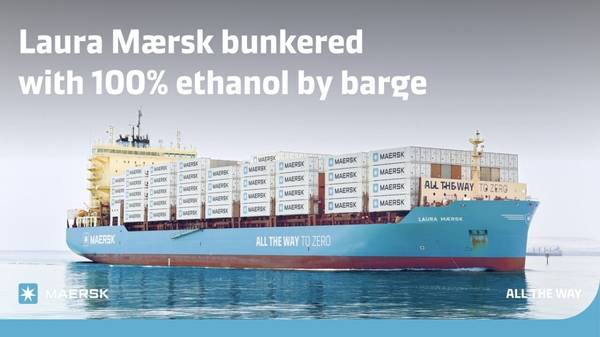
Laura Maersk ethanol bunkering graphic. Maersk conducts large-scale ethanol bunkering trial on Laura Maersk in Rotterdam  

A.P. Moller – Maersk has conducted a barge-delivered ethanol bunkering operation as part of ongoing fuel trials.

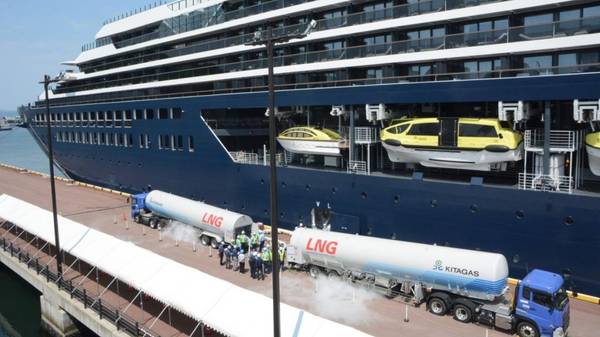
Luminara vessel truck-to-ship bunkering. MOL Techno-Trade completes first LNG bunkering for international cruise ship in Hokkaido  

Truck-to-ship LNG operation at Hakodate marks first such supply to an international cruise vessel in Hokkaido.

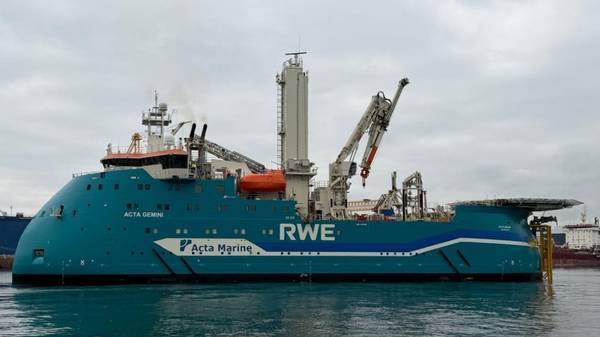
Acta Gemini vessel. Acta Marine takes delivery of methanol dual-fuel CSOV Acta Gemini for RWE wind farm charter  

The vessel will support operations at the Sofia Offshore Wind Farm at Dogger Bank.

Yeva Wood and Kirsten Møller Jørgensen. Malik Supply expands Danish team with bunker trader and finance hire  

Danish bunker supplier Malik Supply adds two new staff across its Fredericia and Aalborg offices.

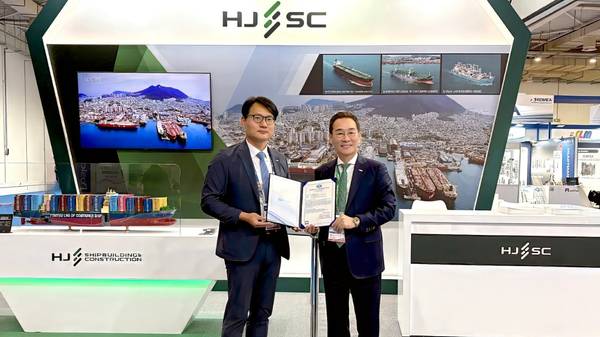
AiP award ceremony for a 10,000-teu biofuel-powered container ship. HJSC wins AiP for 10,000-teu biofuel-powered container ship design  

South Korean shipbuilder HJ Shipbuilding & Construction receives classification society approval for its biofuel vessel design at Posidonia.

Active vessel. Capital Clean Energy Carriers takes delivery of LNG carrier and dual-fuel gas carrier, secures five new charters  

Athens-based CCEC expands its fleet and pushes contracted revenue backlog to $3.1bn.

VPS logo. Fuel quality management for vessels in extended idle: Arabian Gulf, Gulf of Oman and adjacent anchorages | Rahul Choudhuri, VPS  

Managing fuel quality deterioration following the closure of the Strait of Hormuz.

Person signing a document. Agastya Green Fuels signs 250,000 t/yr e-methanol offtake deal with Sri Lanka’s SAR Group  

Indian producer and Sri Lankan maritime firm agree long-term green methanol supply partnership.


↑  Back to Top