This is a legacy page. Please click here to view the latest version.
Tue 7 Apr 2009, 13:32 GMT

EGCSA hails US-Canadian ECA proposal


Association says ECA plan is an opportunity for shipping to incorporate abatement technologies.


The Exhaust Gas Cleaning Systems Association (EGCSA) has today hailed news that the United States and Canada plans to introduce Emissions Control Areas (ECAs) in North America as an opportunity for shipping to widely incorporate abatement technologies in order to meet the impending laws.

The decision taken on 31st March by the United States Environmental Protection Agency (EPA) and Environment Canada will also endorse an 85% reduction in particulate matter – alongside Sulphur Oxide (SOx) and Nitrogen Oxide (NOx) reduction - by 2015.

This is the world’s first substantial ruling for the reduction of particulate matter from large ocean-going vessels. Whilst Emission Control Areas (ECAs) have been prevalent in Europe since 2006, neither of the European ECAs (The Baltic Sea and North Sea) have targeted the reduction of particulate matter, which is widely recognised as a major cause of cancer and other cardiovascular diseases in coastal areas.

"The decision to include particulate matter is even more significant as shipowners will be required to do more than switch to cleaner marine diesel or gasoil fuel, which can only reduce particulate matter by a nominal amount, while smaller and more harmful 2.5 particles may even increase when using cleaner fuels," the EGCSA said in a statement.

Several companies have developed scrubbing technology for marine applications with test results from seatrials revealing particulate matter reduction of around 80%. EGCSA's members are confident that that figure can be substantially improved with further development.

Donald Gregory, Director of EGCSA, said: “The US-Canada directive for 230 mile ECAs on the North American East and West coasts sets a new precedent for the reduction in pollution from ships. It has been well-documented that SOx and NOx emissions controls have been put in place through IMO MARPOL Annex VI, however particulate matter has been overlooked, up until now.

“This new ruling gives a clear mandate for the adoption of scrubbing technologies for the 90,000 port calls that are made by vessels every year in the US and Canada. – simply switching to a lighter marine diesel or gasoil will be a prohibitively costly means of meeting the proposed legislation.” Gregory added.

"The US–Canada proposal suggests meeting the new legislation will cost ship owners an additional $145 per tonne to move from high sulphur fuel oil (HSFO) to 0.1% sulphur marine fuel, however the differential reached was in excess of $500 per tonne in many ports in 2008," the EGCSA said.

While it is stipulated that 80% NOx must be removed by 2016 under the proposed legislation, the likelihood is that engine technology and additives can meet these requirements. Reducing emissions of SOx and particulate matter to meet the proposed US-Canadian standards can be achieved through the installation of scrubber technology for marine applications; rendering ships future proof to other ECAs currently under consideration. Payback periods when compared against the alternate cost of distillate fuel are miniscule when viewed against the capital cost of scrubber equipment and installation.

Particulate matter emissions from ocean-going ships are responsible for about 60,000 deaths a year from heart and lung-related cancers, according to research published by James Corbett, University of Delaware in 2007.

Corbett's report also stated that the number of premature deaths from ship emissions could rise by as much as 40 percent in the next four years because of increases in shipping activity, and it did not account for additional health impacts such as bronchitis and asthma related illnesses, estimated at 3.4 million instances in the US and Canada each year.

In the light of the recent G20 meeting and the re-confirmation of the benefits of world trade, the EGCSA said it believes now is the time for the shipping industry to take stock of the commercial benefits that the industry has enjoyed on the back of globalisation and balance that against the need to invest in technology for a sustainable future.


TMS Tankers logo. Lloyd’s Register delivers fleet-wide energy transition roadmap for TMS Tankers  

LR Advisory maps vessel-level compliance risk and decarbonisation pathways across the Greek owner’s tanker fleet.

Dr Prapisala Thepsithar, GCMD. GCMD shares biofuel assurance and green finance insights at Hong Kong shipping decarbonisation forum  

The Global Centre for Maritime Decarbonisation presented pilot findings on biofuels and energy efficiency financing.

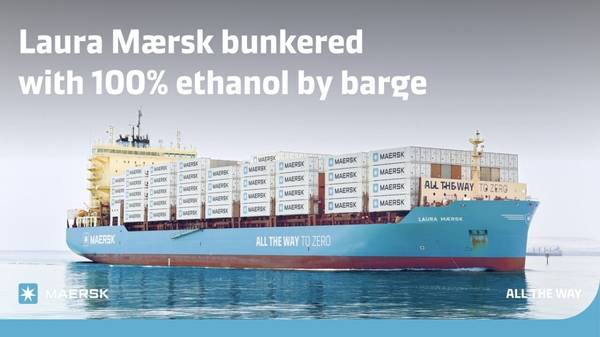
Laura Maersk ethanol bunkering graphic. Maersk conducts large-scale ethanol bunkering trial on Laura Maersk in Rotterdam  

A.P. Moller – Maersk has conducted a barge-delivered ethanol bunkering operation as part of ongoing fuel trials.

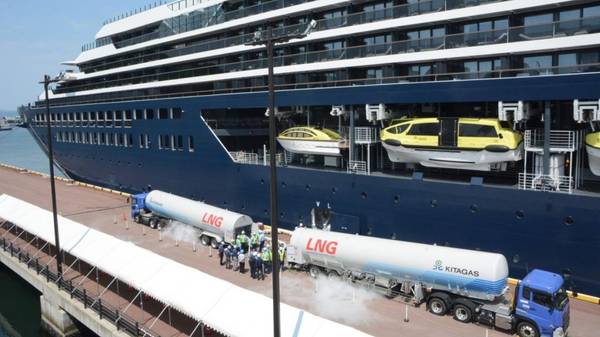
Luminara vessel truck-to-ship bunkering. MOL Techno-Trade completes first LNG bunkering for international cruise ship in Hokkaido  

Truck-to-ship LNG operation at Hakodate marks first such supply to an international cruise vessel in Hokkaido.

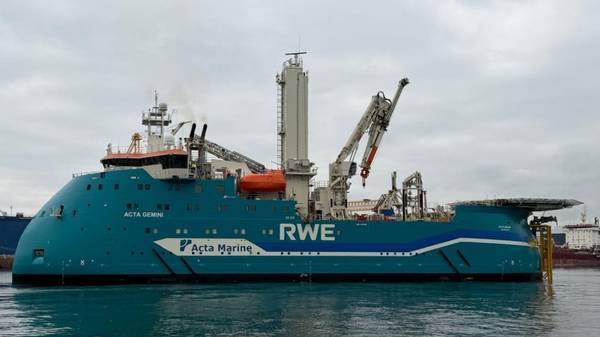
Acta Gemini vessel. Acta Marine takes delivery of methanol dual-fuel CSOV Acta Gemini for RWE wind farm charter  

The vessel will support operations at the Sofia Offshore Wind Farm at Dogger Bank.

Yeva Wood and Kirsten Møller Jørgensen. Malik Supply expands Danish team with bunker trader and finance hire  

Danish bunker supplier Malik Supply adds two new staff across its Fredericia and Aalborg offices.

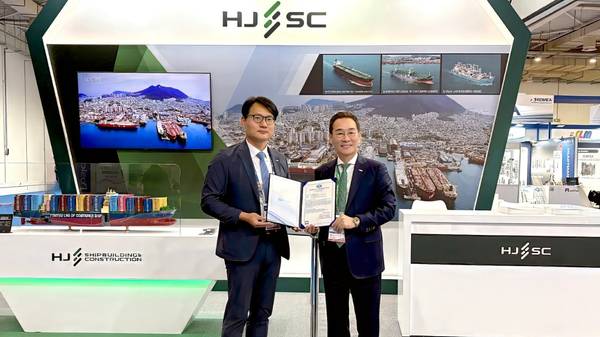
AiP award ceremony for a 10,000-teu biofuel-powered container ship. HJSC wins AiP for 10,000-teu biofuel-powered container ship design  

South Korean shipbuilder HJ Shipbuilding & Construction receives classification society approval for its biofuel vessel design at Posidonia.

Active vessel. Capital Clean Energy Carriers takes delivery of LNG carrier and dual-fuel gas carrier, secures five new charters  

Athens-based CCEC expands its fleet and pushes contracted revenue backlog to $3.1bn.

VPS logo. Fuel quality management for vessels in extended idle: Arabian Gulf, Gulf of Oman and adjacent anchorages | Rahul Choudhuri, VPS  

Managing fuel quality deterioration following the closure of the Strait of Hormuz.

Person signing a document. Agastya Green Fuels signs 250,000 t/yr e-methanol offtake deal with Sri Lanka’s SAR Group  

Indian producer and Sri Lankan maritime firm agree long-term green methanol supply partnership.


↑  Back to Top