This is a legacy page. Please click here to view the latest version.
Mon 6 Apr 2009, 17:18 GMT

LA to offset 'cold ironing' consumption with new solar system


Solar initiative to generate 10 megawatts of power as more ships plug into shoreside electricity.


The port of Los Angeles aims to offset the electric power used by ships during 'cold ironing' with the installation of a new rooftop solar panel system at a cost of $9 million.

The environmentally-conscious port will begin generating one megawatt of electricity via 71,500 square feet of solar panels on its World Cruise Center rooftop by the end of 2009.

A $9 million construction contract was recently approved by the Board of Harbor Commissioners for this first phase of a multi-year solar power generation initiative. Three additional phases are expected to occur in within five years, ultimately generating 10 megawatts of power through 1.16 million square feet of solar panels.

Commenting on the project, Geraldine Knatz, Port Executive Director, said “As we continue to plug more ships into electric power and test electric applications of drayage trucks, hostlers and other cargo-handling assets, our air will be cleaner but our electricity consumption will grow.

“This initiative will help offset that power consumption, ultimately providing a power supply that is equivalent to the electricity consumption of roughly 2,500 homes,” Knatz added.

Plug-in shoreside power, also known as "cold-ironing," allows ships to shut down their auxiliary engines while the ship is docked, for a 100 percent reduction of air pollution at berth. Without shoreside electricity, vessels would use their own diesel-powered auxiliary engines to power refrigerated containers, pumps, lighting, air conditioning and computers while at dock.

In October 2008, Mitsui OSK Lines (MOL) and CleanAir Logix, Inc.(CAL) tested a liquefied natural gas (LNG)-fueled shore power supply system on the containership MOL Enterprise at the port of Los Angeles.

This was followed in November 2008, when the K Line container vessel Long Beach Bridge became the first ship at the Port of Long Beach to plug in to clean electrical power and shut down its diesel engines at berth.

The latest solar panel initiative is part of Los Angeles Mayor Antonio Villaraigosa’s Solar LA Program, the largest solar power project undertaken by any single city in the world. The Solar LA Project will ultimately create a 1.3 gigawatt solar power network of residential, commercial and municipally-owned solar systems that will lower Los Angeles’s dependence on greenhouse gas emitting fossil fuels. In addition, future phases of the Port’s solar project will contribute toward the Mayor’s Green Initiative to use 20 percent renewable energy by 2010 and 35 percent by 2020.

The Port has been working closely with the Los Angeles Department of Water and Power (LADWP) to integrate future phases of LADWP’s solar power generation initiative. LADWP will also be assisting the Port with an expected $3.5 million up-front cash incentive as part of this first phase, the one megawatt project. Energy generated at the Port of Los Angeles will effectively flow back for use at Port facilities.

A recipient of numerous environmental awards, including the U.S. Environmental Protection Agency's 2007 Clean Air Excellence Award, the Port of Los Angeles said it is committed to innovating cleaner, greener ways of doing business.


TMS Tankers logo. Lloyd’s Register delivers fleet-wide energy transition roadmap for TMS Tankers  

LR Advisory maps vessel-level compliance risk and decarbonisation pathways across the Greek owner’s tanker fleet.

Dr Prapisala Thepsithar, GCMD. GCMD shares biofuel assurance and green finance insights at Hong Kong shipping decarbonisation forum  

The Global Centre for Maritime Decarbonisation presented pilot findings on biofuels and energy efficiency financing.

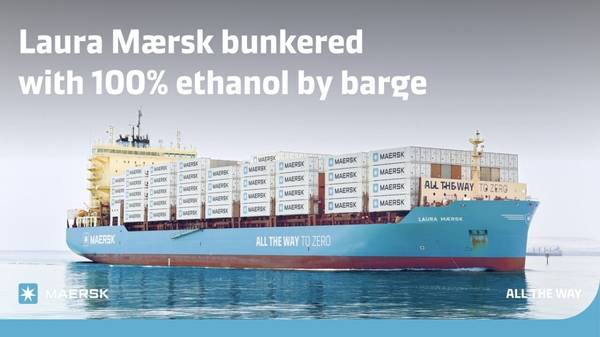
Laura Maersk ethanol bunkering graphic. Maersk conducts large-scale ethanol bunkering trial on Laura Maersk in Rotterdam  

A.P. Moller – Maersk has conducted a barge-delivered ethanol bunkering operation as part of ongoing fuel trials.

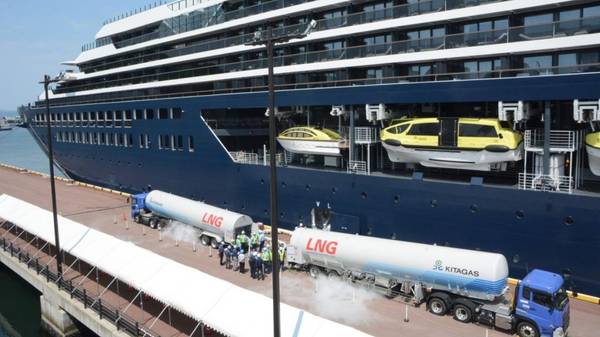
Luminara vessel truck-to-ship bunkering. MOL Techno-Trade completes first LNG bunkering for international cruise ship in Hokkaido  

Truck-to-ship LNG operation at Hakodate marks first such supply to an international cruise vessel in Hokkaido.

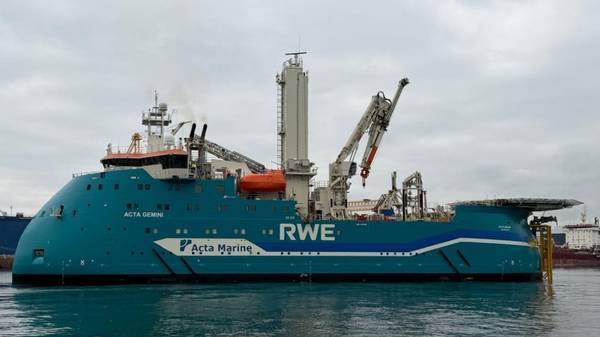
Acta Gemini vessel. Acta Marine takes delivery of methanol dual-fuel CSOV Acta Gemini for RWE wind farm charter  

The vessel will support operations at the Sofia Offshore Wind Farm at Dogger Bank.

Yeva Wood and Kirsten Møller Jørgensen. Malik Supply expands Danish team with bunker trader and finance hire  

Danish bunker supplier Malik Supply adds two new staff across its Fredericia and Aalborg offices.

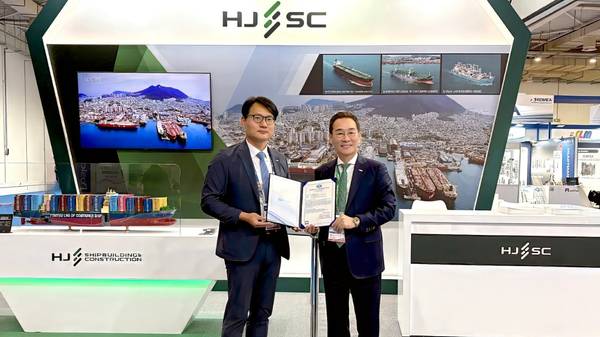
AiP award ceremony for a 10,000-teu biofuel-powered container ship. HJSC wins AiP for 10,000-teu biofuel-powered container ship design  

South Korean shipbuilder HJ Shipbuilding & Construction receives classification society approval for its biofuel vessel design at Posidonia.

Active vessel. Capital Clean Energy Carriers takes delivery of LNG carrier and dual-fuel gas carrier, secures five new charters  

Athens-based CCEC expands its fleet and pushes contracted revenue backlog to $3.1bn.

VPS logo. Fuel quality management for vessels in extended idle: Arabian Gulf, Gulf of Oman and adjacent anchorages | Rahul Choudhuri, VPS  

Managing fuel quality deterioration following the closure of the Strait of Hormuz.

Person signing a document. Agastya Green Fuels signs 250,000 t/yr e-methanol offtake deal with Sri Lanka’s SAR Group  

Indian producer and Sri Lankan maritime firm agree long-term green methanol supply partnership.


↑  Back to Top