This is a legacy page. Please click here to view the latest version.
Thu 2 Apr 2009, 08:02 GMT

Project to maximize fuel efficiency gets EU approval


Main aim of the project is to cut marine diesel engine fuel consumption by 10 percent.


Wärtsilä and MAN Diesel have obtained EU approval for a research project to develop optimally efficient and clean marine diesel engines, which will aim to cut marine diesel engine fuel consumption by 10 percent and to improve the efficiency of marine diesel propulsion systems to more than 60 percent.

The HERCULES-Beta research project represents a major international cooperative effort to maximise fuel efficiency combined with ultra-low emissions and to develop future generations of optimally efficient and clean marine diesel engines. As such, HERCULES-Beta aims to surpass the current limits set by the International Maritime Organization (IMO) to radically improve the environmental performance of waterborne transport.

The project began on 1 September 2008 with a budget of EUR 25 million and it is planned to run for 36 months. The project consortium has 32 participants, including engine-component suppliers, equipment manufacturers, universities, research institutions and shipping companies from 10 European countries.

HERCULES-Beta is the second phase of the HERCULES programme, which was conceived in 2002 as a long-term strategic R&D plan. The project was initiated by Europe's two major engine manufacturers, Wärtsilä Corporation and MAN Diesel. Diesel propulsion systems currently power 99% of the world fleet.

The project's principal aim is to reduce marine diesel engine fuel consumption by 10% and to improve the efficiency of marine diesel propulsion systems to more than 60%, significantly reducing CO2 emissions as a result. A further aim of the project is to target ultra-low exhaust emissions by eliminating 70% of NOx and 50% of particulates from marine engines by 2020.

HERCULES-Beta comprises 54 subprojects and is funded by the European Commission's Framework Program 7 (FP7, Theme Transport).

The original HERCULES project

In 2007, a group of more than 40 European companies, universities and research institutions, led by MAN Diesel and Wärtsilä Corporation, successfully completed a major, 43-month, cooperative research project under the name HERCULES (High Efficiency R&D on Combustion with Ultra-Low Emissions for Ships) with a budget of EUR 33 million, partly funded by the European Union (EUR 15 million) and the Swiss Federal Government (EUR 2.5 million).

The first phase of the HERCULES project concentrated on the development of tools (e.g., simulation software, measurement techniques, etc.) and the general investigation of potential avenues for reducing emissions and fuel consumption. Initially, the project established and operated prototypes. The results stemming from this indicate a great potential for significantly reducing fuel consumption and emissions and reaching the project's ambitious targets.

HERCULES-Beta will directly build on the findings of the first phase of the HERCULES project. The tools previously established will be employed to more closely investigate, understand and ultimately optimise the engines. Both analytical investigations as well as prototypes will be refined, based on first-phase results, with the intention of achieving the ultra-low emission and fuel consumption targets.

Finally, by carrying out field-tests on the prototypes developed in the first phase, information on the important effect of real-life boundary conditions will be gathered and analysed.


TMS Tankers logo. Lloyd’s Register delivers fleet-wide energy transition roadmap for TMS Tankers  

LR Advisory maps vessel-level compliance risk and decarbonisation pathways across the Greek owner’s tanker fleet.

Dr Prapisala Thepsithar, GCMD. GCMD shares biofuel assurance and green finance insights at Hong Kong shipping decarbonisation forum  

The Global Centre for Maritime Decarbonisation presented pilot findings on biofuels and energy efficiency financing.

Laura Maersk ethanol bunkering graphic. Maersk conducts large-scale ethanol bunkering trial on Laura Maersk in Rotterdam  

A.P. Moller – Maersk has conducted a barge-delivered ethanol bunkering operation as part of ongoing fuel trials.

Luminara vessel truck-to-ship bunkering. MOL Techno-Trade completes first LNG bunkering for international cruise ship in Hokkaido  

Truck-to-ship LNG operation at Hakodate marks first such supply to an international cruise vessel in Hokkaido.

Acta Gemini vessel. Acta Marine takes delivery of methanol dual-fuel CSOV Acta Gemini for RWE wind farm charter  

The vessel will support operations at the Sofia Offshore Wind Farm at Dogger Bank.

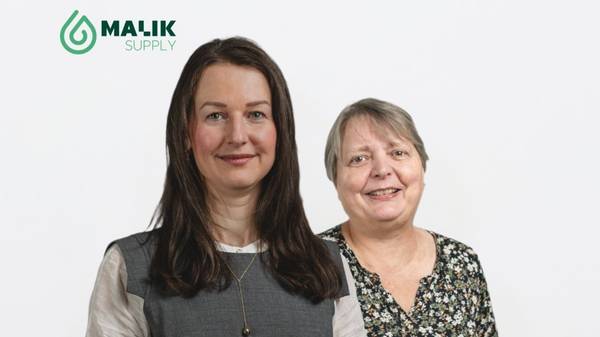
Yeva Wood and Kirsten Møller Jørgensen. Malik Supply expands Danish team with bunker trader and finance hire  

Danish bunker supplier Malik Supply adds two new staff across its Fredericia and Aalborg offices.

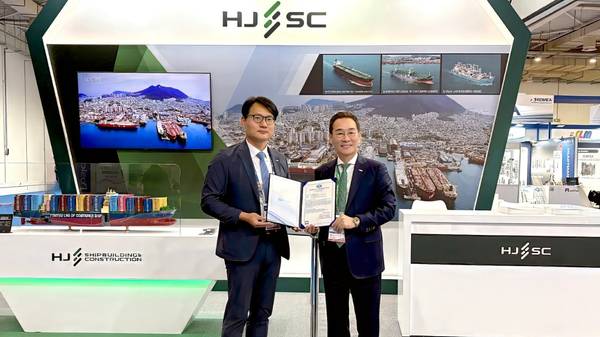
AiP award ceremony for a 10,000-teu biofuel-powered container ship. HJSC wins AiP for 10,000-teu biofuel-powered container ship design  

South Korean shipbuilder HJ Shipbuilding & Construction receives classification society approval for its biofuel vessel design at Posidonia.

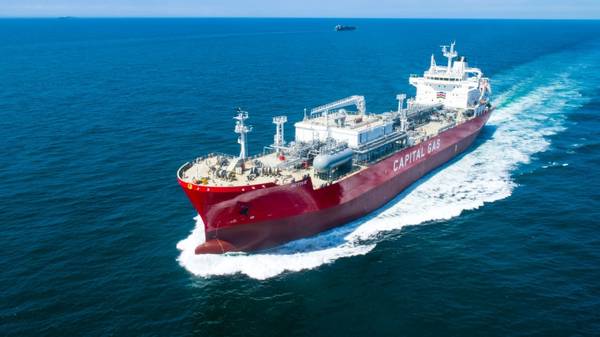
Active vessel. Capital Clean Energy Carriers takes delivery of LNG carrier and dual-fuel gas carrier, secures five new charters  

Athens-based CCEC expands its fleet and pushes contracted revenue backlog to $3.1bn.

VPS logo. Fuel quality management for vessels in extended idle: Arabian Gulf, Gulf of Oman and adjacent anchorages | Rahul Choudhuri, VPS  

Managing fuel quality deterioration following the closure of the Strait of Hormuz.

Person signing a document. Agastya Green Fuels signs 250,000 t/yr e-methanol offtake deal with Sri Lanka’s SAR Group  

Indian producer and Sri Lankan maritime firm agree long-term green methanol supply partnership.


↑  Back to Top