This is a legacy page. Please click here to view the latest version.
Fri 6 Mar 2009, 11:09 GMT

Bureau Veritas develops new fuel cell guidelines


Classification society creates new guidelines covering the safe application of fuel cells on ships.


Classification society Bureau Veritas has strengthened its commitment to greener shipping by developing comprehensive new guidelines covering the safe application of fuel cells on ships which could have important environmental and commercial advantages for shipowners and operators.

Fuel cells are electrochemical devices which convert the chemical energy of a fuel, for example hydrogen-rich gases, into direct current power.

Until now, their application in shipping has been limited to a few pilot projects, and BV product manager Gijsbert de Jong says the main obstacle to the wider application of fuel cells in shipping is the lack of a comprehensive framework covering the technology.

He explained: “By developing these new guidelines, BV is breaking the vicious circle whereby the lack of a regulatory framework limits the possibilities for building and testing the prototype applications which are essential for determining the safety and performance criteria involved."

“BV’s guidelines for the safe application of fuel cells on ships take into account all relevant existing IMO conventions and guidelines, together with a wide range of international non-marine standards. They reflect BV’s extensive in-house knowledge and expertise, and could have important commercial – as well as environmental – implications for shipowners and operators.”

There are several different types of fuel cell technology, using different types of fuel. BV has found that the use of hydrogen, for example, offers a number of significant advantages, not least the fact that there is an unlimited resource in atomic form and that it delivers a higher chemical energy per unit mass than does natural gas, and is non–toxic, non-polluting and non-poisonous.

BV is currently participating in the Green Tug project, an initiative led by the Offshore Ship Designers Group in the Netherlands to produce a new design for a near-zero-emission hydrogen-powered tug.

As well as achieving a significant reduction in exhaust emissions, the fuel cell technology used in the new tug design also helps to increase propulsion efficiency by roughly seventy per cent compared to a conventional diesel-direct drive installation.

Gijsbert de Jong said: "The object of the BV guidelines is to provide criteria for the arrangement and installation of machinery for propulsion and auxiliary purposes, using fuel cell installations, which have an equivalent level of integrity in terms of safety, reliability and dependability as that which can be achieved with new and comparable conventional oil-fuelled main and auxiliary machinery. The guidelines currently have preliminary status and are subject to internal and external review. After taking into account all relevant feedback, they will be published as a Bureau Veritas Guidance Note entitled ‘Guidelines for fuel cell systems on board commercial ships’."

“The guidelines are primarily intended for application to new ships but can also be used for retrofitting fuel cell systems on existing ships, on a case-by-case basis. They are to be used in addition to all relevant SOLAS provisions. There is no limit on the type or power of the applied fuel cell system, and no limitation on the type of gas used, although the guidelines may focus on natural gas and hydrogen as fuels."

“Given the current focus on the environmental impact of shipping, the industry is looking for ways to reduce exhaust gas emissions. Also, the recent volatility in oil prices, combined with the expectation that fossil gas may become increasingly scarce, is motivating owners and operators to explore alternative means of generating onboard power. To this end, fuel cells appear to be a promising solution for clean and efficient electrical power generation at sea.”

[Pictured: Wärtsilä Fuel Cell]


TMS Tankers logo. Lloyd’s Register delivers fleet-wide energy transition roadmap for TMS Tankers  

LR Advisory maps vessel-level compliance risk and decarbonisation pathways across the Greek owner’s tanker fleet.

Dr Prapisala Thepsithar, GCMD. GCMD shares biofuel assurance and green finance insights at Hong Kong shipping decarbonisation forum  

The Global Centre for Maritime Decarbonisation presented pilot findings on biofuels and energy efficiency financing.

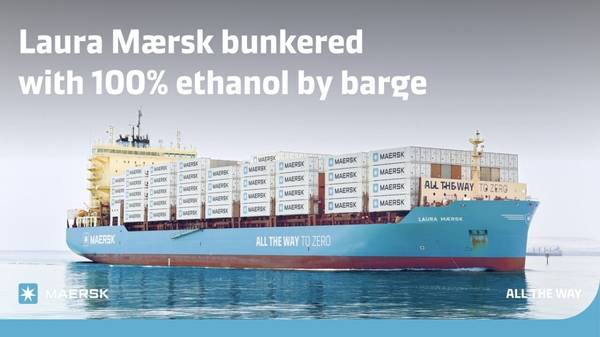
Laura Maersk ethanol bunkering graphic. Maersk conducts large-scale ethanol bunkering trial on Laura Maersk in Rotterdam  

A.P. Moller – Maersk has conducted a barge-delivered ethanol bunkering operation as part of ongoing fuel trials.

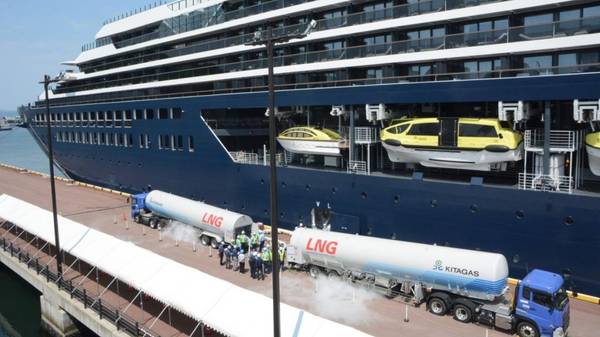
Luminara vessel truck-to-ship bunkering. MOL Techno-Trade completes first LNG bunkering for international cruise ship in Hokkaido  

Truck-to-ship LNG operation at Hakodate marks first such supply to an international cruise vessel in Hokkaido.

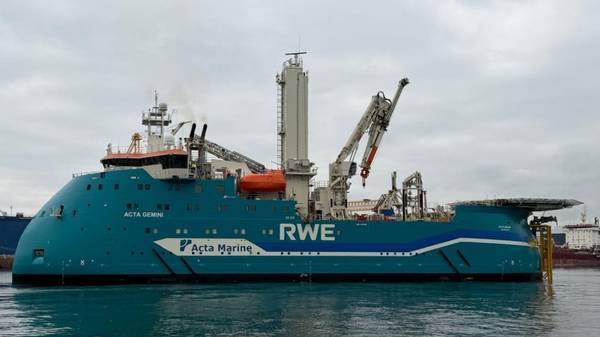
Acta Gemini vessel. Acta Marine takes delivery of methanol dual-fuel CSOV Acta Gemini for RWE wind farm charter  

The vessel will support operations at the Sofia Offshore Wind Farm at Dogger Bank.

Yeva Wood and Kirsten Møller Jørgensen. Malik Supply expands Danish team with bunker trader and finance hire  

Danish bunker supplier Malik Supply adds two new staff across its Fredericia and Aalborg offices.

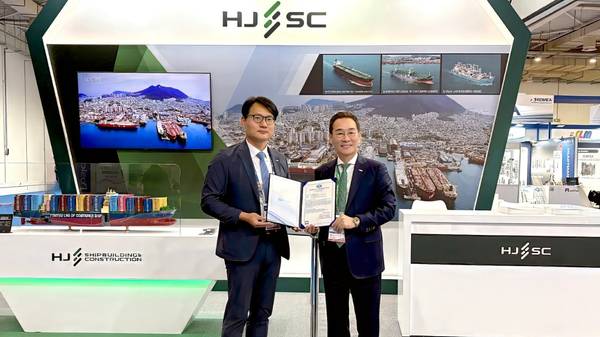
AiP award ceremony for a 10,000-teu biofuel-powered container ship. HJSC wins AiP for 10,000-teu biofuel-powered container ship design  

South Korean shipbuilder HJ Shipbuilding & Construction receives classification society approval for its biofuel vessel design at Posidonia.

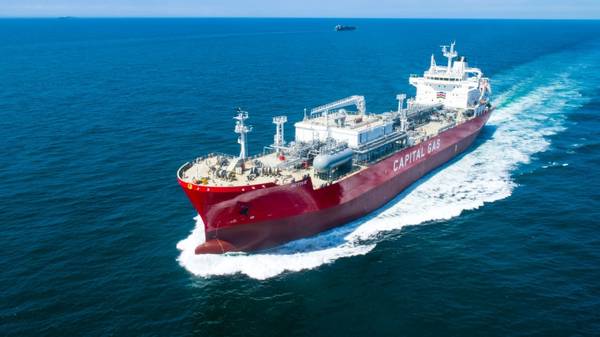
Active vessel. Capital Clean Energy Carriers takes delivery of LNG carrier and dual-fuel gas carrier, secures five new charters  

Athens-based CCEC expands its fleet and pushes contracted revenue backlog to $3.1bn.

VPS logo. Fuel quality management for vessels in extended idle: Arabian Gulf, Gulf of Oman and adjacent anchorages | Rahul Choudhuri, VPS  

Managing fuel quality deterioration following the closure of the Strait of Hormuz.

Person signing a document. Agastya Green Fuels signs 250,000 t/yr e-methanol offtake deal with Sri Lanka’s SAR Group  

Indian producer and Sri Lankan maritime firm agree long-term green methanol supply partnership.


↑  Back to Top