This is a legacy page. Please click here to view the latest version.
Wed 18 Feb 2009, 08:06 GMT

Petroplus aims to sell Teeside refinery


Bunker producing facility will be sold or converted into a storage site or terminal, CFO says.


Swiss-based refiner Petroplus Holdings AG is looking to sell its 117,000 barrels-per-day Teesside refinery, a senior company official said on Tuesday.

Speaking at Wood Mackenzie’s Global Refining Seminar, as part of the Energy Institute’s International Petroleum Week 2009, Chief Financial Officer Karyn Ovelmen [pictured] said the company will consider converting the facility into a storage site or terminal if it is not sold.

"We are looking to sell Teesside over the next six months," she said. "If there is no sale we may turn it into a terminal or storage facility."

The Teesside refinery is located on a 40 hectare site on the northern coast of England. The site was built in 1966 and acquired by Petroplus in January 2001 from ICI and Phillips Petroleum Company United Kingdom Ltd.

The plant is focused on straight run distillation with a name plate capacity of 117,000 barrels per day. It is the primary source of product for the bunker market in the Tyne Tees area.

The refinery has well established outlets to deliver its products to customers. Straight run fuel oil is typically sold f.o.b. at the refinery to various European refineries and chemical companies.

The refinery's middle distillates are sold predominantly in the United Kingdom, by truck and train. Heavy and light distillates, including naphtha, are sold in more-distant industrial regions of the United Kingdom as well as abroad for industrial use, with delivery in each case occurring by barge or pipeline.

Speaking yesterday, Ovelmen said runs had already been reduced at its plants as 60 percent of its product output is currently losing money versus dated Brent.

Earlier this month, Petroplus reported a net loss of $774.9 million for the three months ended December 31st 2008 compared with a profit of $136.9 million the previous year.

On announcing the company's financial results, Robert J. Lavinia, Petroplus’s Chief Executive Officer mentioned the possibility of a sale or conversion of its existing facilities.

“The Board of Directors has reviewed the refinery operations and based on required future capital investments at the site, the company will evaluate strategic alternatives, including the potential sale or conversion to a terminal or storage facility," said Lavinia.


Yampu vessel. CSL delivers world’s first battery-powered self-unloading bulk carrier  

MV Yampu will transport limestone for Adbri in Australia, with full electric operation targeted by 2031.

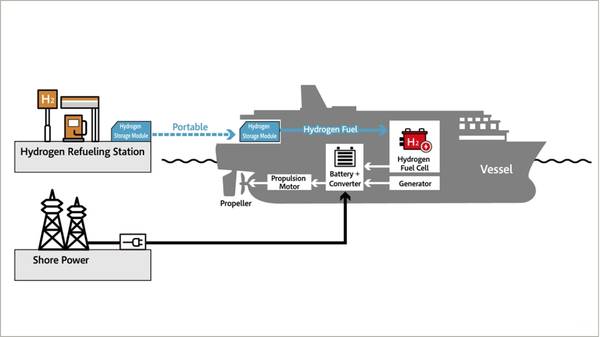
Illustration of hydrogen fuel cell system. NYK, Yanmar and Eneos to install hydrogen fuel cell system on new Tokyo dining cruise vessel  

Three Japanese companies are collaborating to bring hydrogen propulsion to a dining cruise ship due to enter service in 2027.

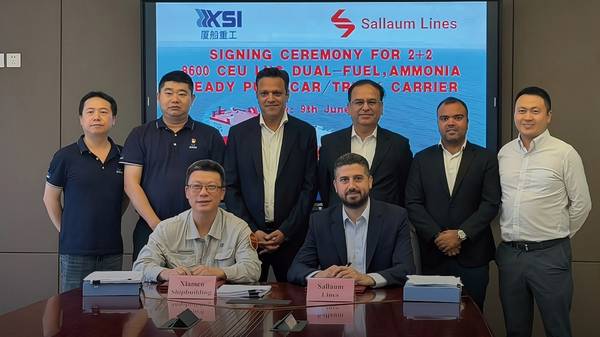
Signing ceremony for 8,600-ceu dual-fuel PCTCs. Sallaum Lines orders four 8,600-ceu dual-fuel PCTCs from Chinese yard — its largest vessels to date  

Ammonia-ready car carriers ordered from XSI mark the next phase of Sallaum Lines’ fleet renewal.

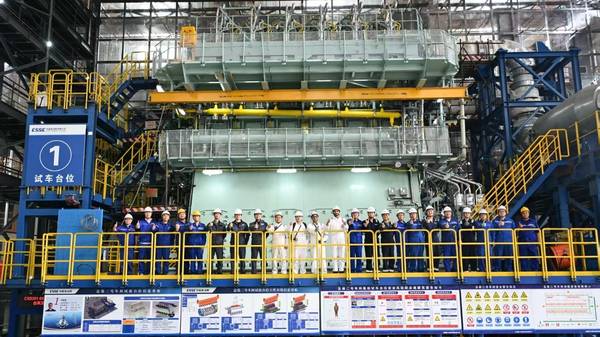
Factory acceptance test (FAT) for X72DF-A ammonia engine. WinGD completes factory acceptance test on X72DF-A ammonia engine destined for CMB.Tech bulker  

Swiss engine maker WinGD has completed factory acceptance testing of its ammonia-fuelled X72DF-A engine in China.

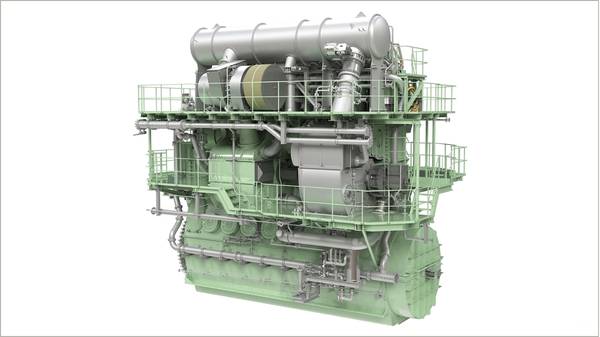
Everllence B&W S60ME-C10.5-GI-EcoEGR engine render. Everllence secures world’s first order for ME-GI Mk10.7 dual-fuel engine  

Norwegian car-carrier operator GCC selects next-generation methane engine for four newbuilds.

Capital Clean Energy Carriers Corp. (CCEC) and CMA CGM logos. Capital Clean Energy Carriers and CMA CGM form joint venture to build $82.8m LNG bunkering vessel  

The 20,000-cbm dual-fuel vessel is due for delivery in the third quarter of 2028.

Hong Kong flag. Hong Kong launches port dues and vessel registration incentives to boost green fuel bunkering  

Two new schemes offer financial concessions to attract green fuel vessels and grow the Hong Kong fleet.

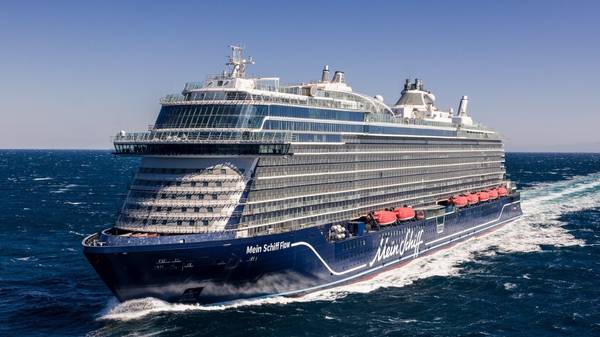
Mein Schiff Flow vessel. Fincantieri delivers LNG-ready cruise ship Mein Schiff Flow to TUI Cruises  

The 160,000 gross-tonne vessel is the second of two InTUItion-class dual-fuel ships.

Monjasa logo. Monjasa seeks trader for Fredericia-based Northwest Europe desk  

Bunker firm is recruiting a trader to join its Northwest Europe team.

Port of Barcelona and Port of Shanghai signing ceremony. Barcelona and Shanghai sign strategic port cooperation agreement targeting green fuels and digital corridors  

Ports formalise a 'sister ports' relationship covering green shipping, digitalisation and intermodality.


↑  Back to Top


 Recommended