This is a legacy page. Please click here to view the latest version.
Wed 11 Feb 2009, 10:39 GMT

Cold ironing planned for Maasvlakte


Maasvlakte agreement includes plans for the use of shore-based electricity.


The Port of Rotterdam Authority has said that recent discussions with Milieudefensie (Friends of the Earth Netherlands) have included the topic of emissions reduction and the use of shore-based electricity for sea-going vessels calling at the port.

Over the past few months the Port of Rotterdam Authority and Milieudefensie have had discussions about their differences of opinion regarding the environmental goals of the Second Maasvlakte, the new port and industrial zone that will cover 1000 hectares of industrial sites, located on deep water.

According to the Rotterdam Port Authority, it was determined that it was more attractive for both parties to strive for sustainable use of the Maasvlakte rather than get involved in litigation on the matter, as it would lead to "greater and more efficient environmental benefits".

As part of the 'Agreement on a Sustainable Maasvlakte', launched by both parties this week, is a study into the most effective measures for realising the emissions reduction. This includes the use of shore-based electricity for sea-going vessels which are berthed in the port, the use of port dues as an incentive for shippers to invest in environmental measures, and increasing the environmental zone on the Maasvlakte so that only cleaner trucks are welcome in other parts of the port area.

The study will also determine whether and how the emissions of SO2, CO2, NOX and fine dust – originating from activities of the current Maasvlakte and the Second Maasvlakte – can be reduced. The joint ambition is a reduction of air-polluting substances by 10 percent by 2020.

News of the eco-agreement for Maasvlakte follows the announcement in December that the Port of Rotterdam and Stena Line plan to install shoreconnected power at the Hook of Holland terminal.

Commenting on the project towards the end of last year, the Port of Rotterdam said: "This means that maritime shipping in the Netherlands will get its first shore-based power connection. The initiative is in line with the ambition of both the Port Authority and Stena Line to create a sustainable port."

The installation of shoreconnected power at the Hook of Holland terminal will carry a price tag of around €5 million. Modifying the ferries will cost in the region of €0.75 million per ship.

The Port of Rotterdam Authority said that it will also continue its consultations with Milieudefensie over the coming years to monitor the effect of the measures to be taken and, if necessary, to take additional measures.

Hans Smits, CEO of the Port of Rotterdam Authority said "We are pleased with the constructive attitude of Milieudefensie. It has always been the goal of the Port Authority to create win-win situations with all stakeholders in a permanent dialogue, whereby the economy and liveability are improved. The construction of the Second Maasvlakte will go ahead as planned and at the same time we will see to it that the port will become more sustainable."


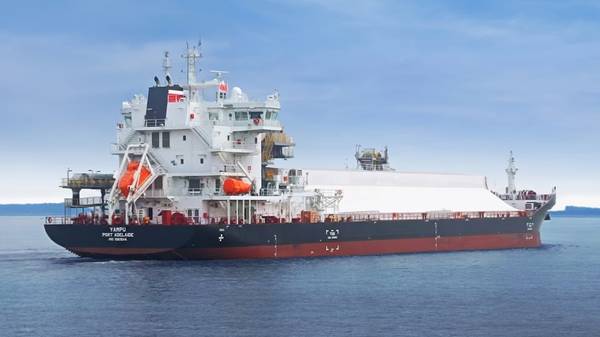
Yampu vessel. CSL delivers world’s first battery-powered self-unloading bulk carrier  

MV Yampu will transport limestone for Adbri in Australia, with full electric operation targeted by 2031.

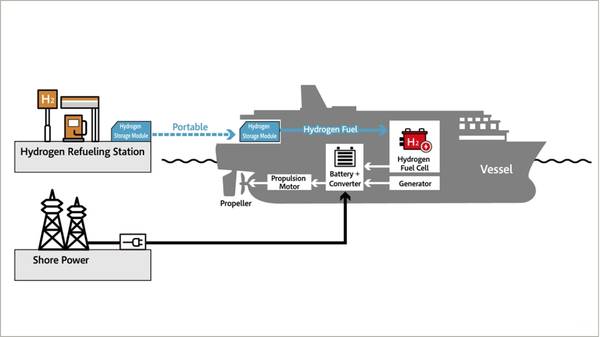
Illustration of hydrogen fuel cell system. NYK, Yanmar and Eneos to install hydrogen fuel cell system on new Tokyo dining cruise vessel  

Three Japanese companies are collaborating to bring hydrogen propulsion to a dining cruise ship due to enter service in 2027.

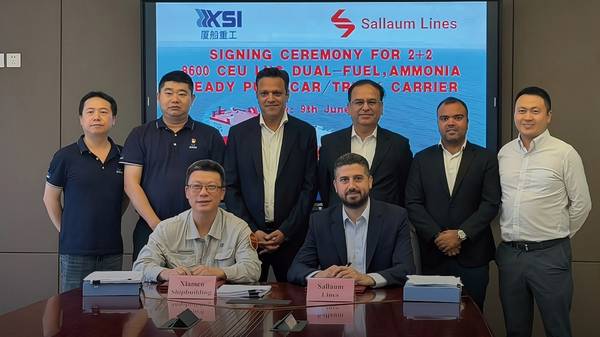
Signing ceremony for 8,600-ceu dual-fuel PCTCs. Sallaum Lines orders four 8,600-ceu dual-fuel PCTCs from Chinese yard — its largest vessels to date  

Ammonia-ready car carriers ordered from XSI mark the next phase of Sallaum Lines’ fleet renewal.

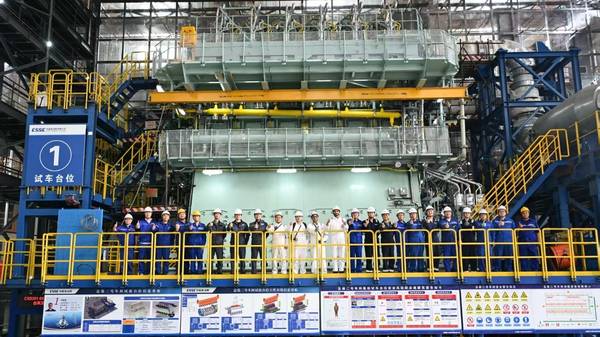
Factory acceptance test (FAT) for X72DF-A ammonia engine. WinGD completes factory acceptance test on X72DF-A ammonia engine destined for CMB.Tech bulker  

Swiss engine maker WinGD has completed factory acceptance testing of its ammonia-fuelled X72DF-A engine in China.

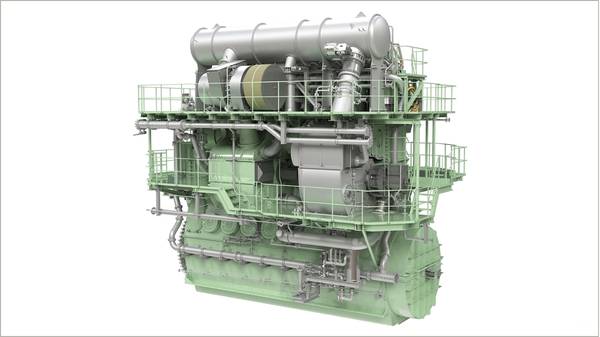
Everllence B&W S60ME-C10.5-GI-EcoEGR engine render. Everllence secures world’s first order for ME-GI Mk10.7 dual-fuel engine  

Norwegian car-carrier operator GCC selects next-generation methane engine for four newbuilds.

Capital Clean Energy Carriers Corp. (CCEC) and CMA CGM logos. Capital Clean Energy Carriers and CMA CGM form joint venture to build $82.8m LNG bunkering vessel  

The 20,000-cbm dual-fuel vessel is due for delivery in the third quarter of 2028.

Hong Kong flag. Hong Kong launches port dues and vessel registration incentives to boost green fuel bunkering  

Two new schemes offer financial concessions to attract green fuel vessels and grow the Hong Kong fleet.

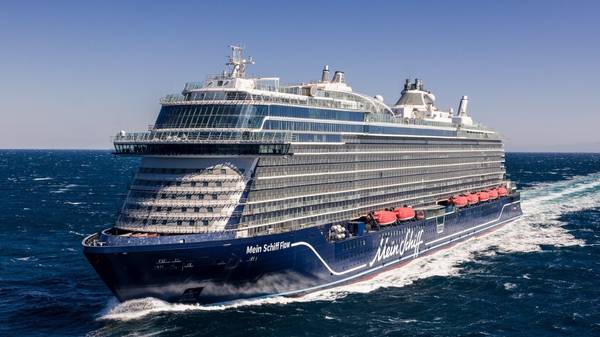
Mein Schiff Flow vessel. Fincantieri delivers LNG-ready cruise ship Mein Schiff Flow to TUI Cruises  

The 160,000 gross-tonne vessel is the second of two InTUItion-class dual-fuel ships.

Monjasa logo. Monjasa seeks trader for Fredericia-based Northwest Europe desk  

Bunker firm is recruiting a trader to join its Northwest Europe team.

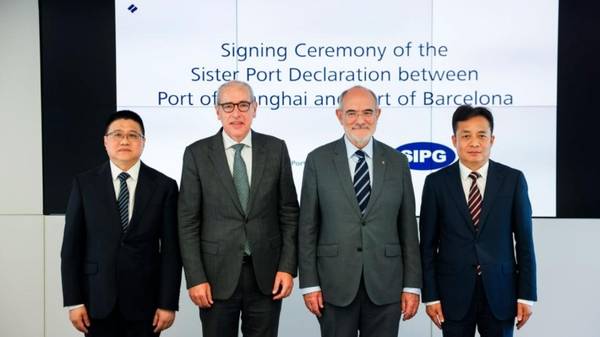
Port of Barcelona and Port of Shanghai signing ceremony. Barcelona and Shanghai sign strategic port cooperation agreement targeting green fuels and digital corridors  

Ports formalise a 'sister ports' relationship covering green shipping, digitalisation and intermodality.


↑  Back to Top