This is a legacy page. Please click here to view the latest version.
Tue 8 May 2018, 12:47 GMT

ICS raises concerns over 2020 fuel availability and agreed standards


Association calls on IMO to 'urgently resolve' these issues within the next 18 months.


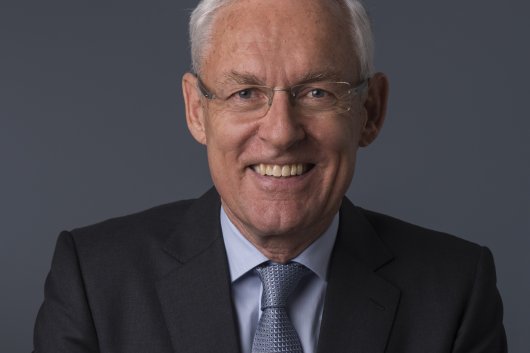
Esben Poulsson, chairman of the International Chamber of Shipping (ICS).
Image credit: International Chamber of Shipping (ICS)
The International Chamber of Shipping (ICS) says it is "very concerned" about some of the potential implications of the upcoming 0.5 percent cap on the sulphur content of marine fuel in 2020 and has called for the International Maritime Organization (IMO) to "urgently resolve" these issues within the next 18 months.

In particular, the ICS has raised its concerns regarding whether there will be sufficient 2020-compliant fuels available in ports around the world when the new legislation becomes effective.

Additionally, the association warns that, without agreed international standards for new 0.5 percent fuels, it could lead to vessels suffering mechanical issues as a result.

Agreed standards

On the issue of legislation, the ICS said: "In the absence of agreed standards for new fuels, including blends that will be compliant with the 0.5% sulphur limit but which may differ in their composition from port to port, ICS is very concerned this could lead to serious compatibility and mechanical problems."

Availability issues

Discussing fuel availability, the ICS stated: "While the industry is fully committed to immediate implementation, there could possibly be an initial period of 'teething problems' when suitable compliant fuel might not always be available in every port until it can be shipped in from elsewhere. This is more likely to be a significant problem for ships in tramp trades which call at diverse port destinations which are not always known long in advance."

If 0.5 percent sulphur fuel is not available in every port worldwide, ICS notes that ships may still bunker and use other compliant fuels, such as 0.1 percent distillates, but warns that this raises other serious issues - not least those relating to compatibility.

Esben Poulsson, chairman of the International Chamber of Shipping, stressed: "It is vital that ship operators, charterers and fuel purchasers start making the necessary preparations to be ready for this major change. This also means that oil refiners and bunker suppliers will need to ensure that compliant fuels are actually available for ships to purchase well in advance of January 2020."

Annual review

The ICS chairman made the comments in his introduction to the new ICS Annual Review, published in advance of next week's ICS AGM in Hong Kong.

The ICS Annual Review 2018 is an overview of regulatory and policy issues confronting ship operators, which is being distributed by ICS member national shipowner associations and can be downloaded via the ICS website.

The ICS Annual Review contains an in-depth analysis of issues such as the milestone IMO agreement on reducing CO2 emissions, as well as the many safety, legal and trade policy developments affecting international shipping.


Bermuda Container Line (BCL) logo. Bermuda Container Line imposes emergency bunker surcharge citing Iran War fuel price spike  

Shipping operator to add $150 per TEU charge from 1 May amid geopolitical fuel cost pressures.

China flag. Zhejiang’s first methanol-powered container ship launches in Jiaxing  

Vessel uses methanol propulsion technology to reduce carbon dioxide emissions by 90%.

TES flag with a model vessel in the background. TES joins SEA-LNG coalition to advance e-methane as marine fuel  

Green energy company targets 1m tonnes annual e-methane production by 2030 for shipping decarbonisation.

Ethanol and methanol workshop graphic. IBIA to host workshop on ethanol and methanol marine fuels during Singapore Maritime Week  

Half-day event will examine alcohol-based fuel pathways and integration into shipping’s multi-fuel landscape.

Steel-cutting ceremony for 13,000-dwt vessel. ROC begins construction of second chemical tanker for Essberger  

Chinese shipbuilder holds steel-cutting ceremony for 13,000-dwt methanol-ready vessel with ice class capability.

Norsepower and CHIC sign agreement. Norsepower and Cosco Shipping Heavy Industry Equipment sign wind propulsion cooperation agreement  

Wind propulsion technology provider partners with Chinese shipyard to scale rotor sail production.

Wärtsilä logo. Shipping firms struggle to prioritise decarbonisation investments amid regulatory uncertainty, Wärtsilä survey finds  

Survey of 225 maritime executives reveals 70% say uncertainty hinders investment decisions despite regulatory pressure.

IMT Isca G-Flex vessel render. Longitude Engineering unveils IMT Isca G-Flex PSV design with alternative fuel capability  

Naval architecture firm launches adaptable platform support vessel design based on the IMT-984 G-Class hull.

Philippos Ioulianou, EmissionLink. Shore power infrastructure is key to cutting ferry emissions in European cities, says EmissionLink  

Port electrification is needed to enable vessels to switch off engines at berth, reducing urban pollution.

Maritime and Port Authority of Singapore logo. Singapore prioritises maritime resilience amid geopolitical uncertainty, eyes digitalisation and green fuels  

MPA chief outlines the sector’s adaptation to supply chain disruptions while advancing automation and alternative fuels.


↑  Back to Top