This is a legacy page. Please click here to view the latest version.
Fri 16 Jan 2009, 14:14 GMT

Fuel control kit retrofit for US Navy


US Navy retrofits gas turbines with Digital Fuel Control (DFC) kits.


GE Marine reports that the United States Navy has retrofitted nearly 50 LM2500 marine aeroderivative gas turbines with its Digital Fuel Control (DFC) kits.

The LM2500s power the U.S. Navy's CG-47 Ticonderoga class cruisers and DDG-51 Arleigh Burke class destroyers, the company revealed today at the Surface Navy Association National Symposium.

GE Marine said the DFC technology kits incorporate the most state-of-the-art controls available for GE LM gas turbines -- a technology now standard on new LM2500 and LM2500+ engines. Previous-generation LM2500s use a hydro-mechanical control system.

Noting the benefits of the new system, the U.S. Navy incorporated the DFC retrofit into a concurrent ship system modernization program.

Since the first digital fuel controls were installed, the U.S. Navy has accumulated more than 100,000 DFC operating hours on selected DDG-51 and CG-47 class ships. In addition, the U.S. Navy recently purchased 16 DFC kits for four additional ships. GE anticipates continuing this modernization program throughout the above-mentioned class fleets.

According to Dave DePauw, GE Marine director of services in Evendale, Ohio, "In 1994, the U.S. Navy installed their first LM2500 equipped with the DFC technology aboard the Watson class large, medium-speed, roll-on/roll-off ships. The DFC technology -- as part of the standard engine equipment -- also has been delivered to international navies for recent LM2500 gas turbines applications, as well as on a variety of commercial projects where GE gas turbines are used to power cruise ships and fast ferries."

In addition, the new LM2500 and LM2500+ gas turbines supplied by GE Marine for U.S. Navy ship programs incorporate the engine's standard DFC technology. The vessels include the Makin Island LHD 8 amphibious assault ship and the GE-powered Littoral Combat Ships.

GE Marine said the benefits of the DFC technology include:

- Improved engine resistance to possible fuel contamination through oil actuation of variable stator vanes (VSV) and the fuel metering valve.

- Updated control of fuel and air scheduling within the gas turbine provides more accurate fuel/air scheduling through electrical feedback and closed-loop control. In addition, fuel characteristics and VSV positions can be recalibrated through the control software inputs.

- Gas turbine control sensor redundancy on compressor discharge pressure, compressor inlet temperature and pressure, gas generator speed, VSV position, and fuel metering valve position.

- Improved operator signals, alarms, and troubleshooting are provided by additional electrical sensors and actuator feedback. GE DFC kits also offer improved capabilities for data capture and condition monitoring.

- Fuel savings thanks to better system response and reliability, reducing time required for high-power check-out and torque balancing after fuel control changes.

Primary DFC retrofit kit components include a fuel metering valve and two VSV actuators, both with redundant electronic feedback. An upgraded engine controller and shipboard wiring changes are also required to incorporate the DFC kit.

GE Marine is one of the world's leading manufacturers of marine products and services, including aeroderivative gas turbines ranging from 6,000 to 57,300 shaft horsepower.


VPS logo. Fuel quality management for vessels in extended idle: Arabian Gulf, Gulf of Oman and adjacent anchorages | Rahul Choudhuri, VPS  

Managing fuel quality deterioration following the closure of the Strait of Hormuz.

Person signing a document. Agastya Green Fuels signs 250,000 t/yr e-methanol offtake deal with Sri Lanka’s SAR Group  

Indian producer and Sri Lankan maritime firm agree long-term green methanol supply partnership.

Bunker Holding logo. Bunker Holding seeks risk specialist for Copenhagen internal pricing desk  

Danish bunker group is expanding its internal pricing team to meet growing demand for fixed-price solutions.

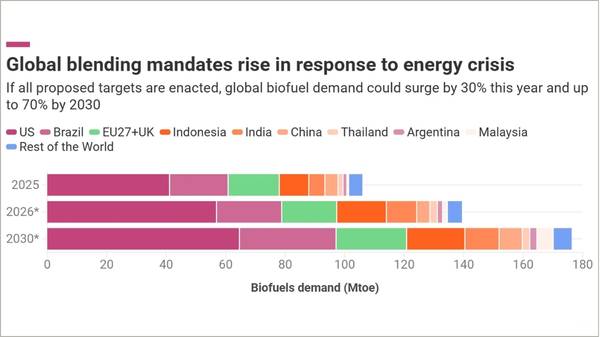
Global biofuels demand chart. Biofuel demand could surge 70% by 2030 as food price fears mount  

T&E warns governments risk trading an oil crisis for a food crisis as biofuel targets strain vegetable oil and fertiliser markets.

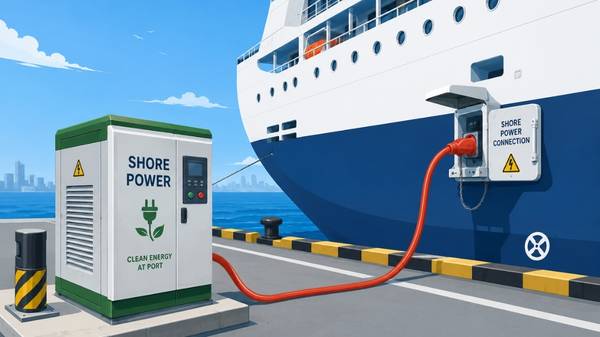
Shore power illustration. Shore power shifts from voluntary measure to compliance requirement, DNV white paper finds  

Shore power is moving from an optional emissions tool to a regulatory obligation for shipowners in key trades.

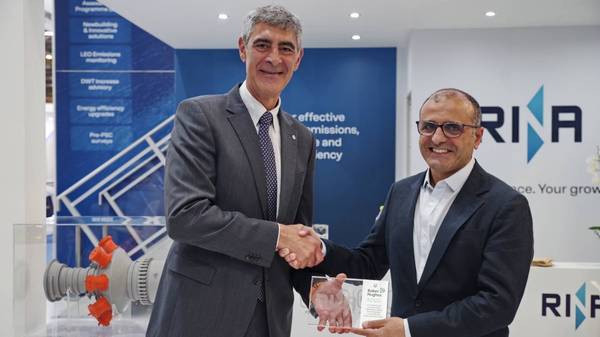
Giosuè Vezzuto and Ahmed Eldemerdash. Baker Hughes’ NovaLT 16 gas turbine receives RINA type approval for marine propulsion on hydrogen and natural gas  

Certification covers operation on natural gas and blends up to 100% hydrogen for marine use.

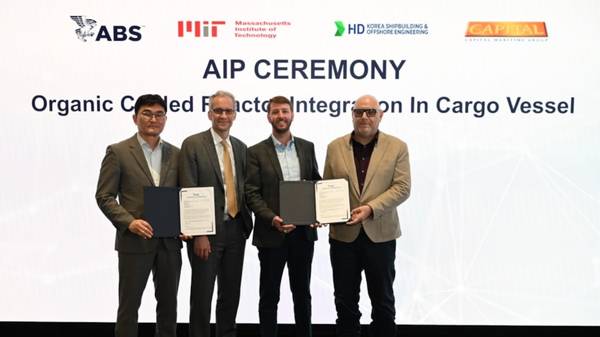
AiP award ceremony for nuclear reactor integration in cargo vessel design. ABS grants approval in principle for nuclear reactor integration in cargo vessel design  

ABS, HD KSOE, Capital Maritime Group and MIT have received approval in principle for a nuclear-powered cargo vessel propulsion system.

Green e-fuel export corridor consortium partners logos. Green e-fuel export corridor between Brazil and Belgium advances to feasibility stage  

A consortium has been formed to develop a green e-fuel corridor linking Porto do Açu to Antwerp-Bruges.

Naming ceremony of Ocean Express and Ocean Navigator vessels. Sallaum Lines takes delivery of two LNG-fuelled PCTCs in simultaneous handover ceremony  

RoRo carrier receives MV Ocean Express and MV Ocean Navigator from Chinese shipyard.

Person signing a document. Agastya Group signs MoU with Andhra Pradesh government for 1 MTPA green methanol hub at Mulapeta Port  

India-based Agastya Group plans a $6.5bn green methanol export facility on the country's east coast.


↑  Back to Top