This is a legacy page. Please click here to view the latest version.
Fri 9 Jan 2009, 14:34 GMT

Port of Amsterdam reports volume growth


Rise in cargo throughput bodes well for bunker sales volumes in Amsterdam.


The Amsterdam Port Area (consisting of the Ports of Velsen/IJmuiden, Beverwijk, Zaanstad and Amsterdam) continued its strong performance in 2008, according to preliminary figures released yesterday.

Cargo throughput rose by 4 percent from 87.4 million metric tons in 2007 to 90.9 million metric tons in 2008. In the port of Amsterdam alone, cargo throughput increased by 7 percent from 67.9 million metric in 2007 tons to 72.4 million metric tons in 2008.

The preliminary figures were revealed by Hans Gerson, CEO of the Port of Amsterdam, at the New Year's Reception of the port and the Amsterdam Employers' Association (ORAM), and would appear to indicate that sales of bunker fuel have also been positive as a consequence of the growth in cargo throughput.

Commenting on the results, Gerson said "The very strong performance achieved in the first ten months could not be maintained in the last two months. But over the whole year, we fared remarkably well in comparison to other ports in the Hamburg-Le Havre range.

"That applies in particular to the Port of Amsterdam itself. Over the past three years, the growth figures been nothing short of spectacular: 13.4 percent in 2006, 7.1 percent in 2007 and 7 percent in 2008).

"This also means that the growth in sea transport going through the sea lock in IJmuiden are far exceeding the most recent predictions from the Netherlands Bureau for Economic Policy Analysis," said Gerson.

According to provisional numbers, the transshipment of oil products grew by 15.3 percent from 24.9 million tons to 28.7 million tons. This is attributed to a number of factors, including increased exports to the United States and expanded storage capacity at various facilities in the Port of Amsterdam. Oil storage firm Oiltanking boosted its capacity from 900,000 cubic metres in 2001 to 1.6 million cubic metres. Meanwhile, in September 2008, NuStar began operating a completely modernized terminal, thereby increasing its capacity from 170,000 to 650,000 cubic metres.

The transshipment of containers jumped by 10.2 percent from 385,603 TEU to 424,880 TEU. Expressed in weight, the volume of containers handled by the port rose by 11 percent from 3.4 million tons to 3.8 million tons.

Meanwhile, the transshipment of coal dropped by 4.2 percent from 17.3 million tons in 2007 to 16.5 million tons. The decrease stemmed in part from the large supplies held by the coal terminals.

The number of sea cruise passengers skyrocketed by 53.7 percent from 147,000 to 226,000. Likewise, the number of sea cruise ships grew by 50 percent from 78 to 117.

The number of river cruise passengers leveled out, remaining at 170,000. With river cruise ships growing in size and becoming more luxurious, the number of vessels calling at Amsterdam dropped by 2.6 percent from 1,019 to 998.

Meanwhile, the number of cargo-carrying sea ships visiting the Port of Amsterdam increased by 9.5 percent from 5,310 in 2008 to 5,813 in 2008.

Amsterdam is not only welcoming a growing number of ships, but the vessels are also becoming larger and wider, a fact the port says underlines the need to construct a larger sea lock in IJmuidenin in the near future.

Port of Amsterdam officials expect growth to decline in 2009, but are currently unsure as to what extent and for how long the recession will affect the various sectors in the port.

"Thanks to recent investment in terminal capacity in the energy sector in particular and the wide range of goods moving through the port, the Port of Amsterdam will probably weather the economic storm fairly well," the Port of Amsterdam said.


TMS Tankers logo. Lloyd’s Register delivers fleet-wide energy transition roadmap for TMS Tankers  

LR Advisory maps vessel-level compliance risk and decarbonisation pathways across the Greek owner’s tanker fleet.

Dr Prapisala Thepsithar, GCMD. GCMD shares biofuel assurance and green finance insights at Hong Kong shipping decarbonisation forum  

The Global Centre for Maritime Decarbonisation presented pilot findings on biofuels and energy efficiency financing.

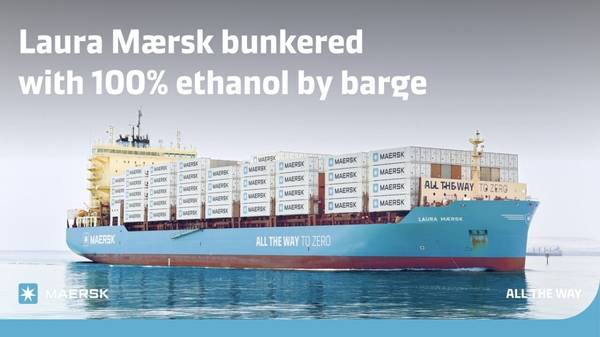
Laura Maersk ethanol bunkering graphic. Maersk conducts large-scale ethanol bunkering trial on Laura Maersk in Rotterdam  

A.P. Moller – Maersk has conducted a barge-delivered ethanol bunkering operation as part of ongoing fuel trials.

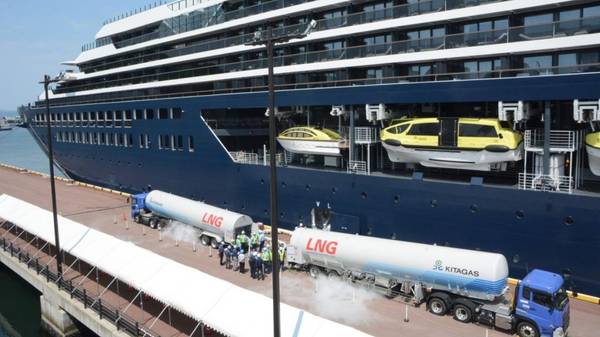
Luminara vessel truck-to-ship bunkering. MOL Techno-Trade completes first LNG bunkering for international cruise ship in Hokkaido  

Truck-to-ship LNG operation at Hakodate marks first such supply to an international cruise vessel in Hokkaido.

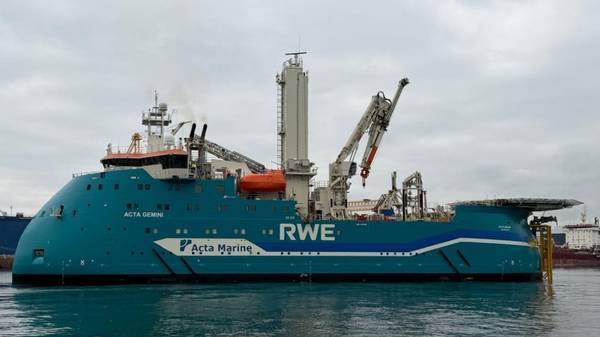
Acta Gemini vessel. Acta Marine takes delivery of methanol dual-fuel CSOV Acta Gemini for RWE wind farm charter  

The vessel will support operations at the Sofia Offshore Wind Farm at Dogger Bank.

Yeva Wood and Kirsten Møller Jørgensen. Malik Supply expands Danish team with bunker trader and finance hire  

Danish bunker supplier Malik Supply adds two new staff across its Fredericia and Aalborg offices.

AiP award ceremony for a 10,000-teu biofuel-powered container ship. HJSC wins AiP for 10,000-teu biofuel-powered container ship design  

South Korean shipbuilder HJ Shipbuilding & Construction receives classification society approval for its biofuel vessel design at Posidonia.

Active vessel. Capital Clean Energy Carriers takes delivery of LNG carrier and dual-fuel gas carrier, secures five new charters  

Athens-based CCEC expands its fleet and pushes contracted revenue backlog to $3.1bn.

VPS logo. Fuel quality management for vessels in extended idle: Arabian Gulf, Gulf of Oman and adjacent anchorages | Rahul Choudhuri, VPS  

Managing fuel quality deterioration following the closure of the Strait of Hormuz.

Person signing a document. Agastya Green Fuels signs 250,000 t/yr e-methanol offtake deal with Sri Lanka’s SAR Group  

Indian producer and Sri Lankan maritime firm agree long-term green methanol supply partnership.


↑  Back to Top