This is a legacy page. Please click here to view the latest version.
Mon 5 Jan 2009, 17:26 GMT

Eco-tug to be launched in January


'World’s first hybrid tug' to be unveiled in San Pedro Bay later this month.


Bunker barge operator and marine transportation company Foss Maritime has announced that it will be launching 'the world's first true hybrid tug' in California later this month.

The Seattle-based firm said its low emission tug will be unveiled in San Pedro Bay on January 23rd at 10 am. Port officials, local dignitaries and Foss customers are expected to attend the event together with representatives of Foss Maritime.

Industry analysts and environmental officials alike have praised Foss Maritime’s eco-friendly tug, which the company claims to be 'the world’s first true hybrid'. It reduces nitrogen oxide, particulate emissions, sulphur dioxide and carbon emissions and will exceed the EPA’s Tier 2 emissions requirement for marine engines.

Unlike other tugs, the hybrid tug will rely on batteries and an active power management system to minimize engine use. When the engines are used, they will run at power levels that maximize efficiency, reversing the trend of harbor tugs to spend approximately 60 percent of their time at less efficient low power levels.

Main engine emissions reductions from using the hybrid tug are expected to be in the order of 44 percent for particle emissions and nitrous oxide. Fuel consumption is expected to decrease by 20 to 30 percent with a commensurate reduction in sulphur dioxide and carbon emissions.

The low emission tug will help lower costs. The primary financial benefits of the design come through fuel and lube savings and reduced life cycle and maintenance costs of the major equipment components.

Additionally, the tug’s modular design can be applied as a retrofit technology for existing tugboats. It will be able to incorporate future energy storage improvements in battery technology and hydrogen fuel cells.

Foss Maritime has already won the Environmental Protection Agency’s Clean Air Technology Award for developing the low emission tug, the first time a maritime operating company has ever received the federal government’s prestigious honor.

The ports of Long Beach and Los Angeles also recently honored Seattle-based Foss Maritime, calling its innovative approach to reducing air pollution in southern California an outstanding example of corporate leadership.

The green tug is just one of several ways Foss is moving aggressively to improve the global environment.

In October 2007 the company announced its vessels were switching to ultra low sulfur diesel fuel (ULSDF), a move aimed at producing a significant reduction in emissions of particulate matter and carbon monoxide. Port officials in Seattle and Portland lauded Foss for taking an important step to reducing the carbon footprint in Elliott Bay, Puget Sound and the Columbia and Snake rivers.

In August 2007, Foss announced that it had joined the SmartWay Transport® Partnership, a voluntary collaboration between EPA and the freight industry designed to increase energy efficiency while significantly reducing greenhouse gases and air pollution. Foss was the first carrier accepted into the program for its marine transportation services.

Foss has pledged to contribute to the partnership’s goal to reduce 33 to 66 million metric tons of carbon dioxide and up to 200,000 tons of nitrogen oxide per year by 2012 by improving the environmental performance of its marine operations.

The unveiling of the green tug will take place at Pier D, Berth 52, Port of Long Beach at 10 am on January 23rd.


Yampu vessel. CSL delivers world’s first battery-powered self-unloading bulk carrier  

MV Yampu will transport limestone for Adbri in Australia, with full electric operation targeted by 2031.

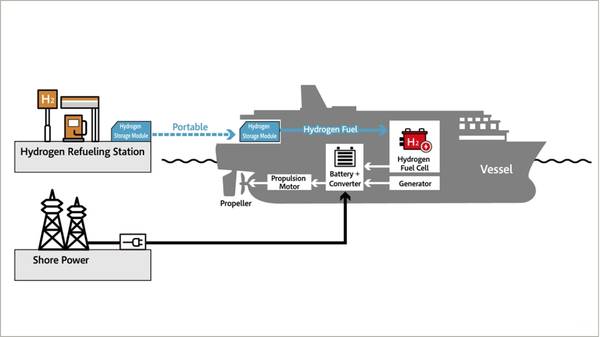
Illustration of hydrogen fuel cell system. NYK, Yanmar and Eneos to install hydrogen fuel cell system on new Tokyo dining cruise vessel  

Three Japanese companies are collaborating to bring hydrogen propulsion to a dining cruise ship due to enter service in 2027.

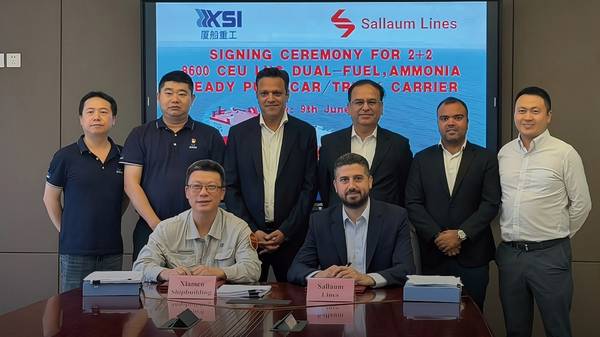
Signing ceremony for 8,600-ceu dual-fuel PCTCs. Sallaum Lines orders four 8,600-ceu dual-fuel PCTCs from Chinese yard — its largest vessels to date  

Ammonia-ready car carriers ordered from XSI mark the next phase of Sallaum Lines’ fleet renewal.

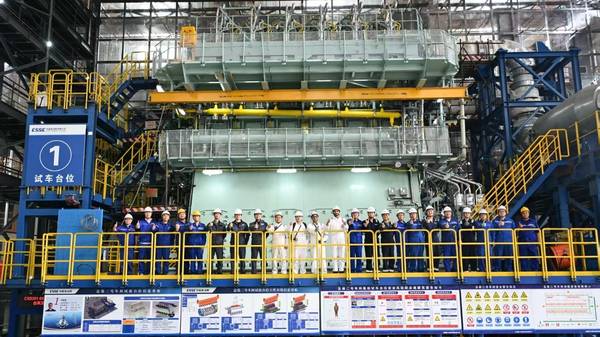
Factory acceptance test (FAT) for X72DF-A ammonia engine. WinGD completes factory acceptance test on X72DF-A ammonia engine destined for CMB.Tech bulker  

Swiss engine maker WinGD has completed factory acceptance testing of its ammonia-fuelled X72DF-A engine in China.

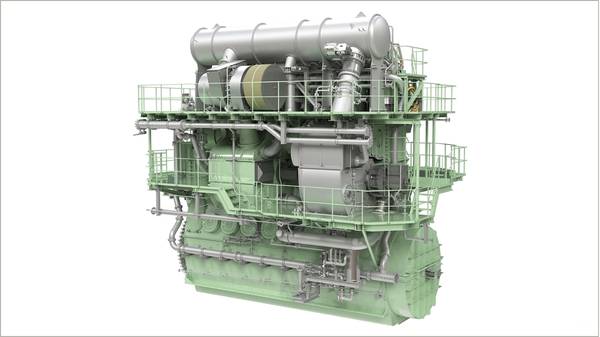
Everllence B&W S60ME-C10.5-GI-EcoEGR engine render. Everllence secures world’s first order for ME-GI Mk10.7 dual-fuel engine  

Norwegian car-carrier operator GCC selects next-generation methane engine for four newbuilds.

Capital Clean Energy Carriers Corp. (CCEC) and CMA CGM logos. Capital Clean Energy Carriers and CMA CGM form joint venture to build $82.8m LNG bunkering vessel  

The 20,000-cbm dual-fuel vessel is due for delivery in the third quarter of 2028.

Hong Kong flag. Hong Kong launches port dues and vessel registration incentives to boost green fuel bunkering  

Two new schemes offer financial concessions to attract green fuel vessels and grow the Hong Kong fleet.

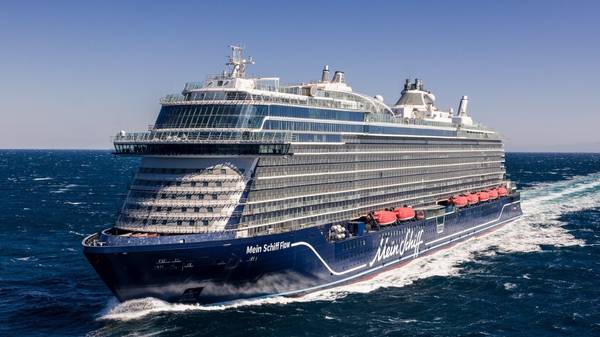
Mein Schiff Flow vessel. Fincantieri delivers LNG-ready cruise ship Mein Schiff Flow to TUI Cruises  

The 160,000 gross-tonne vessel is the second of two InTUItion-class dual-fuel ships.

Monjasa logo. Monjasa seeks trader for Fredericia-based Northwest Europe desk  

Bunker firm is recruiting a trader to join its Northwest Europe team.

Port of Barcelona and Port of Shanghai signing ceremony. Barcelona and Shanghai sign strategic port cooperation agreement targeting green fuels and digital corridors  

Ports formalise a 'sister ports' relationship covering green shipping, digitalisation and intermodality.


↑  Back to Top