This is a legacy page. Please click here to view the latest version.
Mon 29 Dec 2008, 17:12 GMT

ExxonMobil to pay $6.1m for oil spill


Oil major agrees to pay fine for 2006 Boston Harbor spill.


The US federal government has charged a wholly owned subsidiary of ExxonMobil Corporation with a criminal violation of the Clean Water Act in connection with a spill of 15,000 gallons of diesel oil into the Mystic River from ExxonMobil's oil terminal in Everett, Massachusetts.

ExxonMobil Pipeline Company has been charged with the January 2006 spill and has signed a plea agreement in which it will pay a fine of more than $6.1 million and agree to have the Everett terminal monitored by a court-appointed observer.

As set forth in the Information, since 1929 ExxonMobil Corporation and its corporate predecessors have owned a marine distribution terminal in Everett, where oil tankers deliver petroleum products that are distributed from the terminal throughout the region.

The Everett Terminal includes an inland tank farm, with a tank loading rack and 29 large-scale oil storage tanks in which oil products are stored. Various above-ground pipes and valves connect those tanks to the Terminal's marine transfer area located at the confluence of the Mystic and Island End Rivers.

The Island End River flows into the Mystic River, which flows into Boston Harbor. Both rivers are navigable waterways of the United States.

The Terminal's marine transfer area comprises three berths. Barges and ships offload petroleum products that are piped to and stored in the tanks within the tank farm. Those products are then piped to the Terminal truck loading rack, where they are loaded onto trucks for distribution.

At 4:30 am on January 9, 2006, the oil tanker M/V Nara docked at Berth 3 to unload petroleum products, including 3.1 million gallons of low sulfur diesel fuel.

Later that morning, hoses running from the Nara's tanks were attached to a product intake manifold on Berth 3. By mid-afternoon, pumps aboard the Nara began to pump the fuel from the vessel through the manifold into a product receipt line that was connected to storage tanks on the tank farm.

As it was being pumped from the Nara, the fuel flowed past a 10-inch seal valve located on Berth 3, which closed off a product receipt line from Berth 1. As a result of wear and tear, the valve did not close completely and leaked oil into the Berth 1 product receipt line.

ExxonMobil was aware of this defect, prosecutors charged. In September 2005, a contractor pressure-tested the value and informed ExxonMobil that it leaked. Nevertheless, ExxonMobil had failed to replace the valve by the time the Nara arrived in January 2006.

At the time of the spill, the line was 610 feet long and 10 inches in diameter, and was filled with 2,500 gallons of low sulfur kerosene. At the other end of the line was a pressure relief valve capped by a 3/4-inch coupling. The coupling had not been replaced in more than 30 years, was unpainted and was badly corroded, the prosecutors said.

A total of 2,500 gallons of kerosene and 12,700 gallons of low sulfur diesel poured into the Mystic River, causing a visible blue-green sheen on the river that spread up the Island End River and down to Boston Harbor, and prompting several reports to the Coast Guard.

ExxonMobil personnel did not discover the ruptured coupling until 11:00 am on January 11th, when Coast Guard personnel arrived at the facility to ask questions about the origin of the sheen.

"ExxonMobil's negligent failure to provide adequate resources and oversight to the maintenance and operation of the Everett terminal was a direct cause of the spill," prosecutors said.

As part of its plea agreement, ExxonMobil has agreed to pay the maximum possible fine of $359,018, which amounts to twice the cost of the cleanup, the cleanup costs of $179,634, and a community service payment of $5,640,982 to the North American Wetlands Conservation Act fund to be used to restore wetlands in Massachusetts.

Fine monies from the prosecutions in the Buzzards Bay oil spill case and the recent Overseas Shipholding Group prosecution were directed into this fund where they were, and are continuing to be, used in wetlands restoration projects in Massachusetts.

ExxonMobil further agreed that for the next three years, the Everett facility will be monitored by a court-appointed official and will be subject to a rigorous environmental compliance program.

The plea agreement is subject to court approval.


TMS Tankers logo. Lloyd’s Register delivers fleet-wide energy transition roadmap for TMS Tankers  

LR Advisory maps vessel-level compliance risk and decarbonisation pathways across the Greek owner’s tanker fleet.

Dr Prapisala Thepsithar, GCMD. GCMD shares biofuel assurance and green finance insights at Hong Kong shipping decarbonisation forum  

The Global Centre for Maritime Decarbonisation presented pilot findings on biofuels and energy efficiency financing.

Laura Maersk ethanol bunkering graphic. Maersk conducts large-scale ethanol bunkering trial on Laura Maersk in Rotterdam  

A.P. Moller – Maersk has conducted a barge-delivered ethanol bunkering operation as part of ongoing fuel trials.

Luminara vessel truck-to-ship bunkering. MOL Techno-Trade completes first LNG bunkering for international cruise ship in Hokkaido  

Truck-to-ship LNG operation at Hakodate marks first such supply to an international cruise vessel in Hokkaido.

Acta Gemini vessel. Acta Marine takes delivery of methanol dual-fuel CSOV Acta Gemini for RWE wind farm charter  

The vessel will support operations at the Sofia Offshore Wind Farm at Dogger Bank.

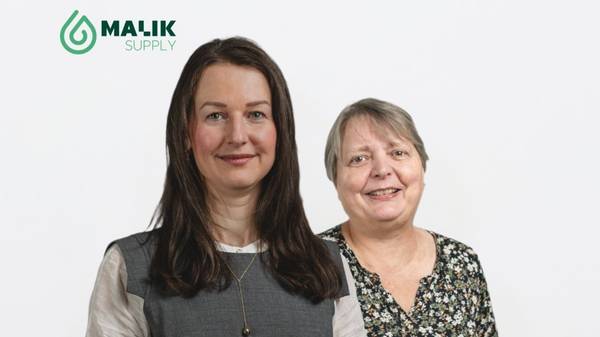
Yeva Wood and Kirsten Møller Jørgensen. Malik Supply expands Danish team with bunker trader and finance hire  

Danish bunker supplier Malik Supply adds two new staff across its Fredericia and Aalborg offices.

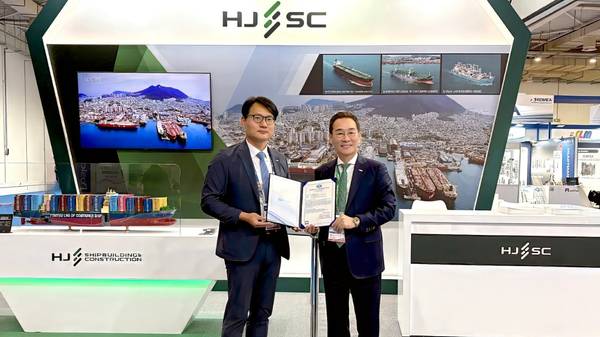
AiP award ceremony for a 10,000-teu biofuel-powered container ship. HJSC wins AiP for 10,000-teu biofuel-powered container ship design  

South Korean shipbuilder HJ Shipbuilding & Construction receives classification society approval for its biofuel vessel design at Posidonia.

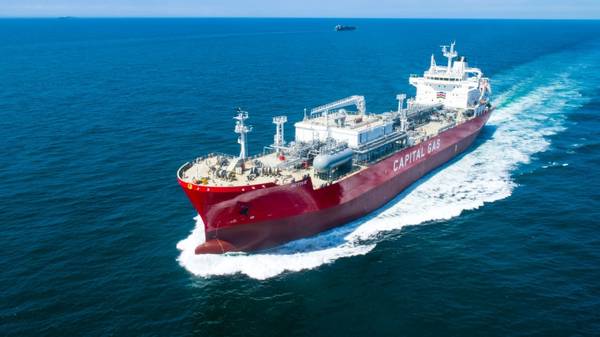
Active vessel. Capital Clean Energy Carriers takes delivery of LNG carrier and dual-fuel gas carrier, secures five new charters  

Athens-based CCEC expands its fleet and pushes contracted revenue backlog to $3.1bn.

VPS logo. Fuel quality management for vessels in extended idle: Arabian Gulf, Gulf of Oman and adjacent anchorages | Rahul Choudhuri, VPS  

Managing fuel quality deterioration following the closure of the Strait of Hormuz.

Person signing a document. Agastya Green Fuels signs 250,000 t/yr e-methanol offtake deal with Sri Lanka’s SAR Group  

Indian producer and Sri Lankan maritime firm agree long-term green methanol supply partnership.


↑  Back to Top