This is a legacy page. Please click here to view the latest version.
Mon 22 Dec 2008, 09:51 GMT

Baltic 'Clean Seas Guide' is released


Guide contains pollution prevention measures designed to protect the Baltic Sea.


The Helsinki Commission (HELCOM) has released the 2009 Clean Seas Guide for mariners plying the waters of the Baltic Sea. Its aim is to provide ship masters with basic information on the pollution prevention regulations which have been established in the region by HELCOM.

To protect the marine environment of the Baltic Sea area from pollution, every ship entering the area has been urged to comply with the HELCOM anti-pollution regulations. This applies to all ships, irrespective of whether or not they are flying the flag of a HELCOM Member State.

In accordance with the IMO’s International Convention for the Prevention of Pollution from Ships (MARPOL 73/78), under which the Baltic Sea area has been designated as a special area due to its extreme sensitivity to harmful substances, far-reaching prohibitions and restrictions on any discharge into the sea of oil or oily mixtures and garbage have been introduced by the Baltic Sea States.

“The discharge regulations must be strictly observed owing to the vulnerable marine environment of the Baltic Sea area and in order to keep the shorelines and beaches clean,” said Monika Stankiewicz, Professional Secretary on maritime and response issues at HELCOM.

“The responsibility for avoiding discharges of oil or other harmful substances rests not only with the master and his crew but also with the charterer, the ship-owner and the ports.”

The Baltic Sea has been designated as a sulphur oxide (SOx) emission control area (SECA) which requires that all ships navigating in its waters use fuel oil with a sulphur content not exceeding 1.5% m/m or an exhaust gas cleaning system/any other technical method reducing the total emissions of sulphur oxides from ships ensuring the same level of efficiency.

A bunker delivery note accompanied by a representative sample of the delivered fuel oil should be kept on board the ship for inspection and according to Annex VI “Regulations for Prevention of Air Pollution from Ships” to MARPOL 73/78.

The Baltic Sea States place high priority on the elimination of violations of anti-pollution regulations, and on the conviction of any offenders. Various actions have been taken to this end. In order to prevent and detect any violation of discharge regulations, the Baltic Sea States regularly conduct aerial surveillance supported by satellite observations of their response regions and jointly survey specific parts of the Baltic Sea area. The HELCOM Member States are co-operating to investigate violations of anti-pollution regulations and fine polluters.

In addition to the pollution prevention measures, the coastal countries have agreed on certain safety of navigation measures in the Baltic Sea area, like ship traffic monitoring using the Automatic Identification System, ship routing systems, including numerous traffic separation schemes and deep water routes, ship reporting, pilotage, measures related to safety of winter navigation.

To view the brochure, please click here: Clean Seas Guide 2009


TMS Tankers logo. Lloyd’s Register delivers fleet-wide energy transition roadmap for TMS Tankers  

LR Advisory maps vessel-level compliance risk and decarbonisation pathways across the Greek owner’s tanker fleet.

Dr Prapisala Thepsithar, GCMD. GCMD shares biofuel assurance and green finance insights at Hong Kong shipping decarbonisation forum  

The Global Centre for Maritime Decarbonisation presented pilot findings on biofuels and energy efficiency financing.

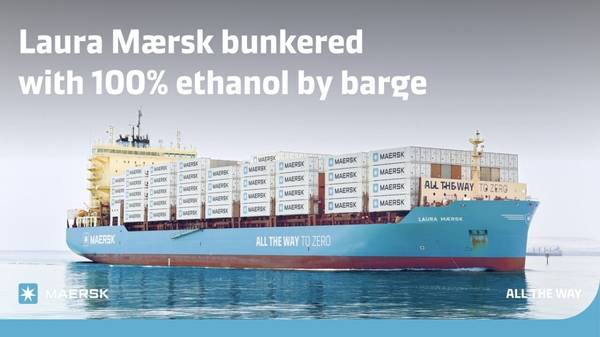
Laura Maersk ethanol bunkering graphic. Maersk conducts large-scale ethanol bunkering trial on Laura Maersk in Rotterdam  

A.P. Moller – Maersk has conducted a barge-delivered ethanol bunkering operation as part of ongoing fuel trials.

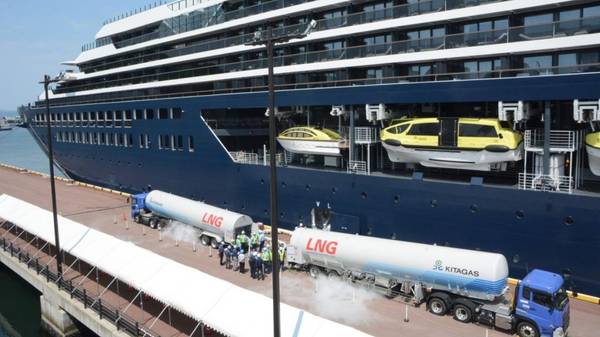
Luminara vessel truck-to-ship bunkering. MOL Techno-Trade completes first LNG bunkering for international cruise ship in Hokkaido  

Truck-to-ship LNG operation at Hakodate marks first such supply to an international cruise vessel in Hokkaido.

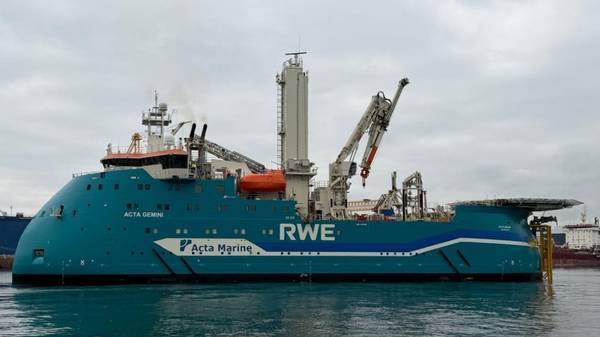
Acta Gemini vessel. Acta Marine takes delivery of methanol dual-fuel CSOV Acta Gemini for RWE wind farm charter  

The vessel will support operations at the Sofia Offshore Wind Farm at Dogger Bank.

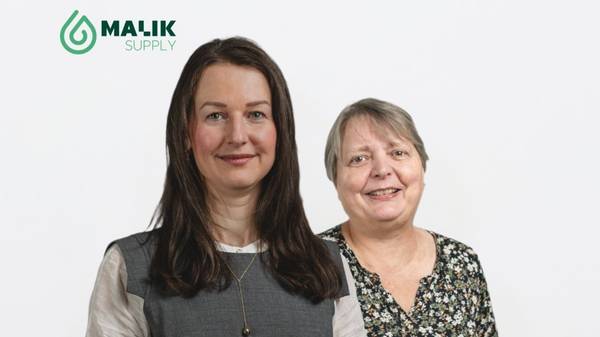
Yeva Wood and Kirsten Møller Jørgensen. Malik Supply expands Danish team with bunker trader and finance hire  

Danish bunker supplier Malik Supply adds two new staff across its Fredericia and Aalborg offices.

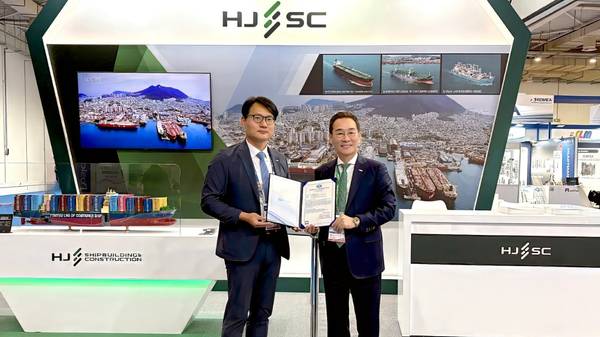
AiP award ceremony for a 10,000-teu biofuel-powered container ship. HJSC wins AiP for 10,000-teu biofuel-powered container ship design  

South Korean shipbuilder HJ Shipbuilding & Construction receives classification society approval for its biofuel vessel design at Posidonia.

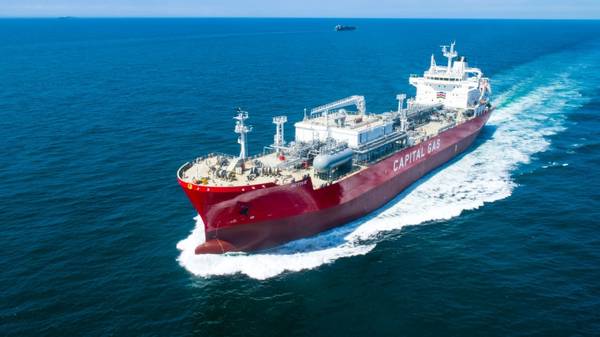
Active vessel. Capital Clean Energy Carriers takes delivery of LNG carrier and dual-fuel gas carrier, secures five new charters  

Athens-based CCEC expands its fleet and pushes contracted revenue backlog to $3.1bn.

VPS logo. Fuel quality management for vessels in extended idle: Arabian Gulf, Gulf of Oman and adjacent anchorages | Rahul Choudhuri, VPS  

Managing fuel quality deterioration following the closure of the Strait of Hormuz.

Person signing a document. Agastya Green Fuels signs 250,000 t/yr e-methanol offtake deal with Sri Lanka’s SAR Group  

Indian producer and Sri Lankan maritime firm agree long-term green methanol supply partnership.


↑  Back to Top