This is a legacy page. Please click here to view the latest version.
Fri 15 Sep 2017, 06:45 GMT

First Europe-built LNG bunker vessel performs maiden delivery in southern Norway


The Coralius delivered LNG to Skangas's facility near Fredrikstad.


The first LNG bunker vessel to be built in Europe, the Skangas-chartered Coralius, performed its maiden delivery of LNG to the company's facility in Ora, near Fredrikstad, in southern Norway on September 14. The LNG was transported from Skangas's own production facility in Risavika, Stavanger.

The Skangas terminal in Ora is a large tank park comprising nine tanks with a combined LNG storage capacity of 6,400 cubic metres. There is a pipeline that stretches from the quay directly to the facility.

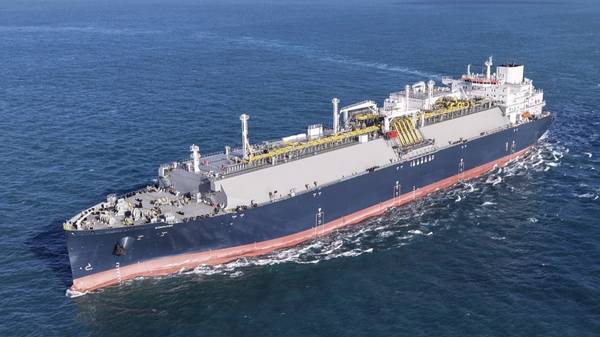
The Coralius, meanwhile, is equipped with state-of-the-art LNG transfer equipment on board and the flat working deck is especially engineered for safe side-by-side operations. Special winches have also been installed to enable safe and swift mooring operations.

As a bunker vessel, the Coralius is designed to quickly discharge large quantities of LNG to its receiving vessel. It is said to have been built according to the guidelines set by the Society for Gas and Marine Fuel (SGMF), whose aim is to harmonize safe and responsible operations of gas-fuelled ships.

Earlier this month, on September 2, Skangas took delivery of the 5,800-cubic-metre-capacity Coralius from its owners Anthony Veder and Sirius Shipping, with the vessel now on a long-term charter to perform LNG bunker deliveries for Skangas in the North Sea, the Skagerak area and the Baltic Sea.

"We are very content with further developing the marine LNG availability in Northern Europe by our new ship Coralius," remarked Kimmo Rahkamo, CEO of Skangas. "We look forward to serving our existing and new customers wherever they need LNG by ship-to-ship. Today the technology and ship engines are sound for gas and we are more than ready to supply it by our supply chain."

As previously reported by Bunker Index, Skangas's majority shareholder is Gasum, which in June increased its shareholding in the LNG bunker supplier from 51 percent to 70 percent, with Lyse Group, which had a 49 percent stake in the firm, decreasing its ownership to 30 percent.

Skangas supplies LNG as fuel in shipping and heavy-duty road transport, and in industrial processes outside the gas network. The company's LNG portfolio consists of the purchase of feed gas, LNG liquefaction, and distribution of LNG by trucks and ships through receiving terminals, to customer facilities where LNG is regasified to natural gas or delivered as fuel to end users.

Skangas has a liquefaction plant in Risavika, Norway, in addition to owning and operating LNG terminals in Ora (Norway), Lysekil (Sweden), and Pori (Finland). Skangas is also a shareholder of the Manga LNG joint venture, which is due to open a new terminal in Tornio, Finland, in 2018.

Additionally, the company operates the Coral Energy, which is the world's first direct-driven, dual-fuel, ice-class 1A LNG carrier.

The main characteristics of the LNG bunker vessel Coralius have been provided below.

Length overall: 99.60 metres

Beam: 17.95 metres

Draft: 5.8 metres

LNG capacity: 5,800 cubic metres

Service speed: 13.5 knots

Image: The Skangas-chartered bunker vessel Coralius.


Container ship near a port. Ammonia emerges as most feasible alternative fuel for deep-sea shipping in 2050 emissions study  

Research combining expert survey and technical analysis ranks ammonia ahead of hydrogen and methanol.

Cargo vessel at sea. EMSA study examines biodiesel blend spill response as shipping adopts alternative fuels  

Research addresses knowledge gaps on biodiesel-conventional fuel blends as marine pollutants and response measures.

BIMCO ETS BARECON clause 2026 graphic. BIMCO adopts ETS clause for bareboat charters, delays biofuel provision  

BIMCO’s Documentary Committee has approved an emissions trading compliance clause while requesting further work on a biofuel charter provision.

SALEFORM 2025 standard form graphic. BIMCO and Norwegian Shipbrokers’ Association launch SALEFORM 2025 ship sale contract  

Updated agreement addresses banking changes, compliance requirements and environmental regulations affecting vessel transactions.

Everllence H2 test engine. Everllence develops hydrogen test bench for marine engines  

German engine maker upgrades Augsburg facility under HydroPoLEn project backed by federal maritime research funding.

CMA CGM Osmium vessel. CMA CGM names 13,000-teu methanol-fuelled containership in South Korea  

CMA CGM Osmium to operate on Asia–Mexico service as part of the carrier’s decarbonisation strategy.

NorthStandard logo. NorthStandard publishes biofuel guide as marine insurance claims emerge  

White paper addresses quality issues and compliance requirements as biofuel testing volumes surge twelvefold.

Clean Maritime Fuels Platform (CMFP) logo. Maritime fuel platform calls for EU shipping ETS revenues to fund clean fuel deployment  

Clean Maritime Fuels Platform urges earmarking of national emissions trading revenues for renewable fuel infrastructure.

Seatransport 73m SLV Lloyd’s Register grants approval for hybrid nuclear power design for amphibious vessels  

Classification society approves Seatransport’s concept integrating micro modular reactors with diesel-electric systems.

Everllence ME-LGIE engine. Everllence and Vale partner on ethanol-powered marine engine development  

Brazilian mining company to develop dual-fuel ethanol engines based on ME-LGI platform.


↑  Back to Top