This is a legacy page. Please click here to view the latest version.
Thu 4 Dec 2008, 10:32 GMT

US Congress to evaluate "Green Ship" initiative


"Marine Highway" proposal would move freight to fuel-efficient ships and raise bunker volumes.


U.S. Congress is currently drafting the 2009 economic stimulus package, which could include a "Marine Highway" initiative that proposes to remove thousands of trucks off Atlantic and Pacific Coast highways and move their freight to more fuel-efficient “Green Ships”.

The proposal follows a report carried out by Stas Margaronis, president of California-based Santa Maria Shipowning & Trading, Inc. entitled “Green Ships Can Fight Global Warming.”

The report is based on a ten-year effort to build fuel-efficient, low-emission ships to transport freight on U.S. marine highways.

Margaronis argues that coastal or short sea shipping can remove tens of thousands of trucks from the country's roads and highways every day. This, he claims, would significantly impact the country's environment and infrastructure, make roads safer and less congested, and bring savings to consumers, shippers and taxpayers.

Margaronis has proposed to create low-carbon freight corridors in partnership with trucking companies. Ships powered by ultra-low sulfur diesel would be contracted by shippers and truckers to haul containerized truckloads along coastal corridors, with trucks used for pick-ups and deliveries.

The Green Marine Highway Initiative is currently in contention for inclusion in the U.S. Congress 2009 economic stimulus package, which if approved could create over 20,000 new jobs in shipbuilding, steel fabrication, marine propulsion, cargo handling and new ship manning.

Over 20,000 trucks travel on the East and West Coast corridors daily. The Green Marine Highway Initiative would remove these trucks from highways and shift their freight onto 66 fuel-efficient ships, thereby cutting carbon emissions, saving shippers money and reducing the effects of global warming. These additional ships would also lead to an increase in bunker volumes along the US coastline.

The cost to taxpayers would be around $250 million for U.S.-backed loan guarantees to generate $3.3 billion in new shipbuilding as well as $1.7 billion in upgrades for ports and harbors.

In addition, U.S. law, the Jones Act, requires that all coastal ships be built in the United States and manned by U.S. crews. The work cannot therefore be outsourced to foreign competitors, so the Marine Highway Initiative would create new jobs for shipbuilders and steel makers in the Great Lakes, the Gulf Coast, and along the East and West Coasts.

The campaign recently picked up the endorsement of Caterpillar Marine Power Systems, which would provide marine engines to power the new ships.

The initial fleet of 66 ships could be financed with $165 million through U.S. Maritime Administration Title XI loan guarantees. However, Congress must first authorize the funding.

Using Title XI, taxpayers would spend $165 million to guarantee $3.3 billion in bank loans for construction. This equates to $50 million for a ship that would carry 300 53-foot truckloads of cargo.

In addition, $85 million is proposed for port and shipyard improvements that would guarantee $1.7 billion in loans. In total, $250 million will guarantee $5 billion in marine highway guarantees.

Margaronis is seeking signatures on an electronic petition that will be sent to Congress urging the allocation of the funds to reactivate the US Maritime Administration's Title XI loan guarantee program.

This will facilitate the financing of 66 American built ships to transport truckloads by water. For more information on the Green Ships initiative and to sign the petition, please visit www.GreenShips.org.


TMS Tankers logo. Lloyd’s Register delivers fleet-wide energy transition roadmap for TMS Tankers  

LR Advisory maps vessel-level compliance risk and decarbonisation pathways across the Greek owner’s tanker fleet.

Dr Prapisala Thepsithar, GCMD. GCMD shares biofuel assurance and green finance insights at Hong Kong shipping decarbonisation forum  

The Global Centre for Maritime Decarbonisation presented pilot findings on biofuels and energy efficiency financing.

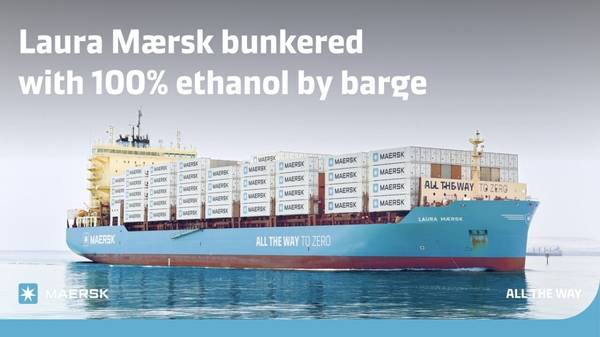
Laura Maersk ethanol bunkering graphic. Maersk conducts large-scale ethanol bunkering trial on Laura Maersk in Rotterdam  

A.P. Moller – Maersk has conducted a barge-delivered ethanol bunkering operation as part of ongoing fuel trials.

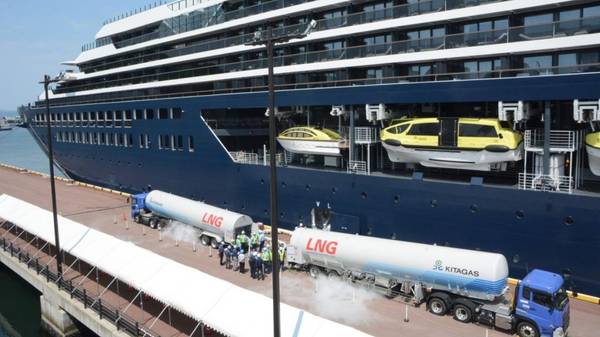
Luminara vessel truck-to-ship bunkering. MOL Techno-Trade completes first LNG bunkering for international cruise ship in Hokkaido  

Truck-to-ship LNG operation at Hakodate marks first such supply to an international cruise vessel in Hokkaido.

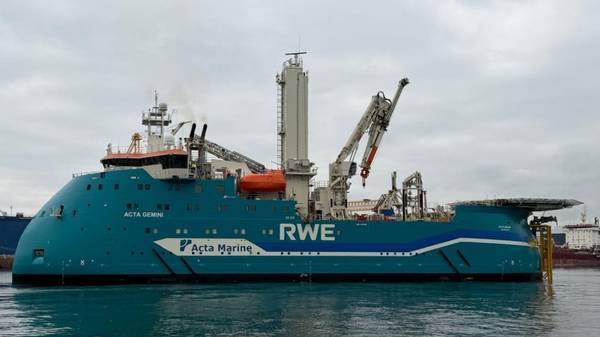
Acta Gemini vessel. Acta Marine takes delivery of methanol dual-fuel CSOV Acta Gemini for RWE wind farm charter  

The vessel will support operations at the Sofia Offshore Wind Farm at Dogger Bank.

Yeva Wood and Kirsten Møller Jørgensen. Malik Supply expands Danish team with bunker trader and finance hire  

Danish bunker supplier Malik Supply adds two new staff across its Fredericia and Aalborg offices.

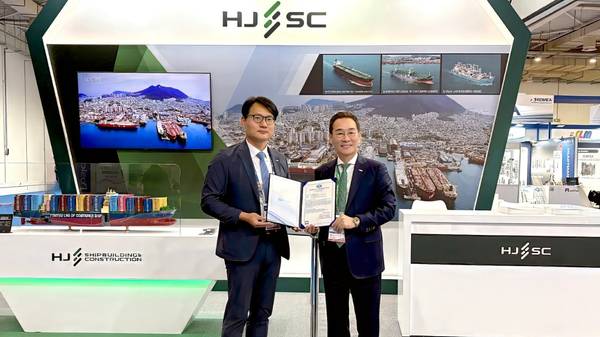
AiP award ceremony for a 10,000-teu biofuel-powered container ship. HJSC wins AiP for 10,000-teu biofuel-powered container ship design  

South Korean shipbuilder HJ Shipbuilding & Construction receives classification society approval for its biofuel vessel design at Posidonia.

Active vessel. Capital Clean Energy Carriers takes delivery of LNG carrier and dual-fuel gas carrier, secures five new charters  

Athens-based CCEC expands its fleet and pushes contracted revenue backlog to $3.1bn.

VPS logo. Fuel quality management for vessels in extended idle: Arabian Gulf, Gulf of Oman and adjacent anchorages | Rahul Choudhuri, VPS  

Managing fuel quality deterioration following the closure of the Strait of Hormuz.

Person signing a document. Agastya Green Fuels signs 250,000 t/yr e-methanol offtake deal with Sri Lanka’s SAR Group  

Indian producer and Sri Lankan maritime firm agree long-term green methanol supply partnership.


↑  Back to Top