This is a legacy page. Please click here to view the latest version.
Wed 3 Dec 2008, 08:11 GMT

Oil spill risk assessment team established


Management team is set up with funds from bunker spill court settlement.


Representatives of the National Fish and Wildlife Foundation (NFWF), the Coast Guard, and the Alaska Department of Environmental Conservation (ADEC) have formed a management team for a comprehensive assessment of the risk of oil spills and vessel accidents in the Aleutian Islands.

The formation of the risk assessment team comes four years after the grounding and breakup of the bulk carrier Selendang Ayu during a severe storm, which focused public attention on the oil spill risks posed by vessels transiting the Aleutians.

It resulted in a spill of 336,000 gallons of heavy fuel oil near the shores of Unalaska Island. Whilst this incident was particularly severe, other accidents, spills, and near misses have taken place and continue to occur in the region.

A federal court settlement following the Selendang Ayu grounding specified that certain community service funds paid by the defendant in that case be allocated to pay for a comprehensive risk assessment of ship accidents and spills in the Aleutians and for the conduct of projects identified to minimize those risks.

The management team has been assembled and will conduct its work in accordance with the recommendations of a scoping report on the risk assessment project issued by the Transportation Research Board (TRB) of the National Academies.

"We are committed to this process and its ultimate goal," said Cmdr. James Robertson, Coast Guard District Seventeen.

"This is the best approach to determine what steps can be responsibly taken to mitigate the potential for future marine incidents along the Aleutian Archipelago and protect the resources that exist there."

Both ADEC and the Coast Guard have asked the TRB to develop a scientifically rigorous framework for the comprehensive risk assessment and to design the assessment with a logical sequence of building blocks so that it could be conducted in discrete steps.

This effort culminated with the TRB's issuance of a report titled "Risk of Vessel Accidents and Spills in the Aleutian Islands: Designing a Comprehensive Risk Assessment, which can be found at the following address: http://onlinepubs.trb.org/Onlinepubs/sr/sr293.pdf.

As set forth in the TRB report, the risk assessment will be conducted with the input of four groups: a Management Team, an Advisory Panel, a Risk Analysis Team, and a Peer Review Panel.

A priority for the management team is the establishment of the advisory panel of stakeholders and the appointment of a facilitator for the panel, both as contemplated by the TRB report.

The advisory panel will represent a structured stakeholder/participatory approach intended to build trust, clarify the values and goals that should inform the assessment, incorporate local information and knowledge that could otherwise be missed, and potentially provide a path to organizational learning and policy change that might not otherwise be available.

The panel will consist of stakeholders and experts who can offer local knowledge and expertise on all issues pertinent to the assessment, such as local infrastructure, relevant industries, waterways and their navigation, weather, and habitats.

The facilitator will assist in the management of the stakeholder elicitation process and ensure that all available information emerges, that participants are fairly heard, and that individual views are not unduly suppressed within the panel.

A Request for Proposals from individuals and firms interested in serving as facilitator for the advisory panel is now being prepared by the management team and will be disseminated shortly.


TMS Tankers logo. Lloyd’s Register delivers fleet-wide energy transition roadmap for TMS Tankers  

LR Advisory maps vessel-level compliance risk and decarbonisation pathways across the Greek owner’s tanker fleet.

Dr Prapisala Thepsithar, GCMD. GCMD shares biofuel assurance and green finance insights at Hong Kong shipping decarbonisation forum  

The Global Centre for Maritime Decarbonisation presented pilot findings on biofuels and energy efficiency financing.

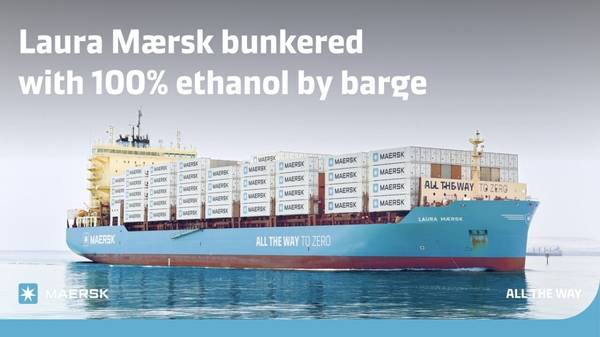
Laura Maersk ethanol bunkering graphic. Maersk conducts large-scale ethanol bunkering trial on Laura Maersk in Rotterdam  

A.P. Moller – Maersk has conducted a barge-delivered ethanol bunkering operation as part of ongoing fuel trials.

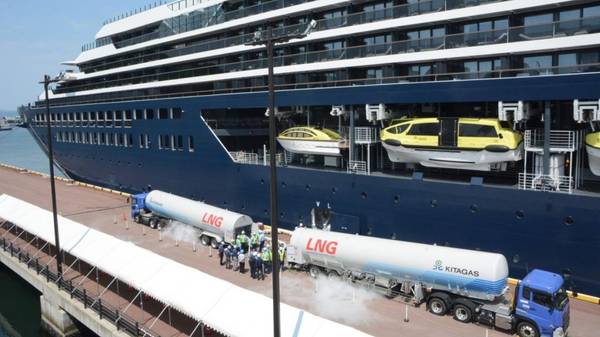
Luminara vessel truck-to-ship bunkering. MOL Techno-Trade completes first LNG bunkering for international cruise ship in Hokkaido  

Truck-to-ship LNG operation at Hakodate marks first such supply to an international cruise vessel in Hokkaido.

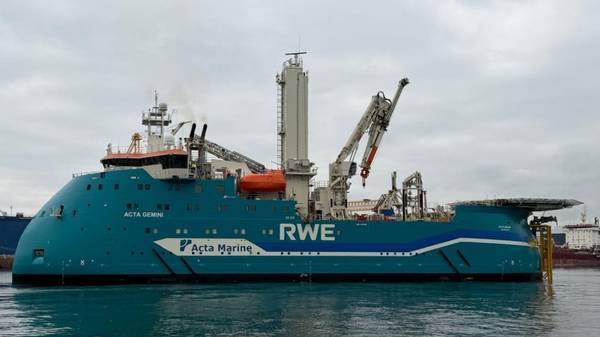
Acta Gemini vessel. Acta Marine takes delivery of methanol dual-fuel CSOV Acta Gemini for RWE wind farm charter  

The vessel will support operations at the Sofia Offshore Wind Farm at Dogger Bank.

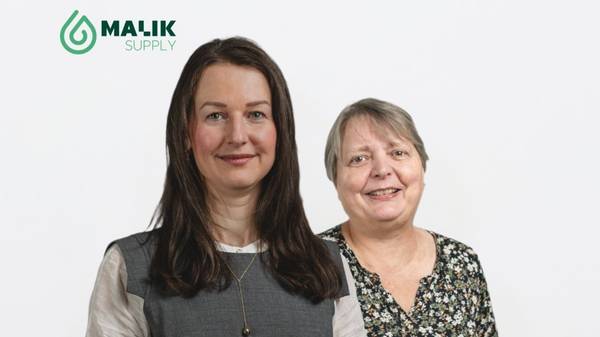
Yeva Wood and Kirsten Møller Jørgensen. Malik Supply expands Danish team with bunker trader and finance hire  

Danish bunker supplier Malik Supply adds two new staff across its Fredericia and Aalborg offices.

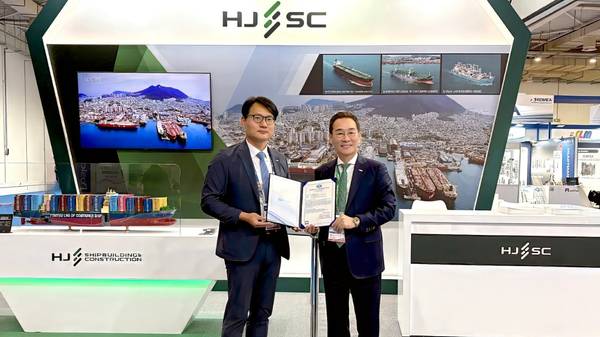
AiP award ceremony for a 10,000-teu biofuel-powered container ship. HJSC wins AiP for 10,000-teu biofuel-powered container ship design  

South Korean shipbuilder HJ Shipbuilding & Construction receives classification society approval for its biofuel vessel design at Posidonia.

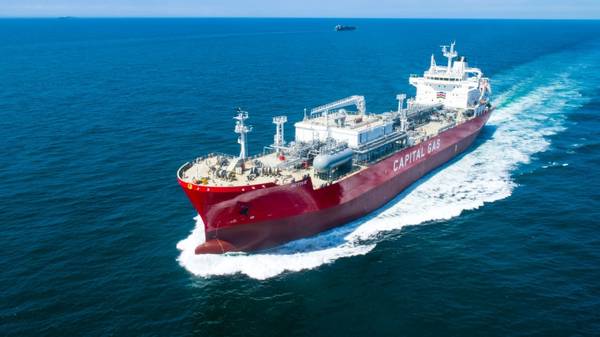
Active vessel. Capital Clean Energy Carriers takes delivery of LNG carrier and dual-fuel gas carrier, secures five new charters  

Athens-based CCEC expands its fleet and pushes contracted revenue backlog to $3.1bn.

VPS logo. Fuel quality management for vessels in extended idle: Arabian Gulf, Gulf of Oman and adjacent anchorages | Rahul Choudhuri, VPS  

Managing fuel quality deterioration following the closure of the Strait of Hormuz.

Person signing a document. Agastya Green Fuels signs 250,000 t/yr e-methanol offtake deal with Sri Lanka’s SAR Group  

Indian producer and Sri Lankan maritime firm agree long-term green methanol supply partnership.


↑  Back to Top