This is a legacy page. Please click here to view the latest version.
Mon 24 Nov 2008, 15:42 GMT

OW Bunker issues margin call warning


Bunker hedgers advised to recognise the ability to pay margins.


OW Bunker, one of the world’s leading suppliers and traders of marine fuel, has today stressed the need for companies to ensure that they understand the true impact of 'margin calls' when considering their hedging and risk management strategies.

In a statement released today, the company said "Amidst the current global economic turbulence as well as volatile fuel prices and reduced credit lines, companies leave themselves increasingly exposed to falling into arrears beyond their existing credit lines, which could put them out of business.

"Going forward, a major consideration for companies who wish to hedge, must be their ability to pay these potential margin calls."

Following the recent downturn in the shipping markets and current market volatility, a large number of bunker suppliers and traders are understood to be revising their existing credit lines with customers as it becomes increasingly difficult to have complete confidence in the strength of a company’s financial statements.

Understanding and identifying counterparty risk has now become a major issue for shipping companies, particularly in relation to charter and Forward Freight Agreements.

OW Bunker uses the following example: If two counterparties have an agreed $500,000 credit line and one buys 2,000 metric tonnes per month of IFO380 fuel over a 12-month period at $300 per tonne with an initial delivery date of Q1 2009, but one week later the price of fuel oil drops to $280, the buyer is $480,000 in arrears on the hedge. However, the current credit line ensures that no security needs to be posted.

Conversely, if the price falls a further $20 per tonne to $260, the buying counterparty will be $960,000 in arrears on the hedge and will owe the selling counterparty $460,000 as an immediate cash payment, as they will have exceeded the initial credit line agreement.

"This payment is due immediately, despite the first delivery often being weeks or months away," OW Bunker points out.

This could cause significant problems for the hedger if they do not have access to cash, which is becoming increasingly more common due to the current liquidity issues within the global economy.

OW Bunker also recommends that hedgers establish counterparty relationships as early as possible prior to hedging to ensure that they have the ability to trade when they want to, rather than been slowed down through administrative processes.

Morten Dehn, Head of Risk Management Sales for OW Bunker commented: “If a company wishes to hedge with the current levels of volatility and reduced credit lines in the market, they must consider their ability to pay margin calls, particularly if they are hedging a substantial position, which is more than a traditional bunker stem.

"If they get it wrong, then many face the risk of going out of business. It is therefore critical that companies review the financial position of each counterparty as well as readdressing the baseline for extending credit lines.

"Most importantly, it is vital that companies fully understand the risk that they expose themselves to, and work with suppliers that have a complete understanding of the hedging process and the role that credit plays in an overall risk management strategy," added Dehn.


TMS Tankers logo. Lloyd’s Register delivers fleet-wide energy transition roadmap for TMS Tankers  

LR Advisory maps vessel-level compliance risk and decarbonisation pathways across the Greek owner’s tanker fleet.

Dr Prapisala Thepsithar, GCMD. GCMD shares biofuel assurance and green finance insights at Hong Kong shipping decarbonisation forum  

The Global Centre for Maritime Decarbonisation presented pilot findings on biofuels and energy efficiency financing.

Laura Maersk ethanol bunkering graphic. Maersk conducts large-scale ethanol bunkering trial on Laura Maersk in Rotterdam  

A.P. Moller – Maersk has conducted a barge-delivered ethanol bunkering operation as part of ongoing fuel trials.

Luminara vessel truck-to-ship bunkering. MOL Techno-Trade completes first LNG bunkering for international cruise ship in Hokkaido  

Truck-to-ship LNG operation at Hakodate marks first such supply to an international cruise vessel in Hokkaido.

Acta Gemini vessel. Acta Marine takes delivery of methanol dual-fuel CSOV Acta Gemini for RWE wind farm charter  

The vessel will support operations at the Sofia Offshore Wind Farm at Dogger Bank.

Yeva Wood and Kirsten Møller Jørgensen. Malik Supply expands Danish team with bunker trader and finance hire  

Danish bunker supplier Malik Supply adds two new staff across its Fredericia and Aalborg offices.

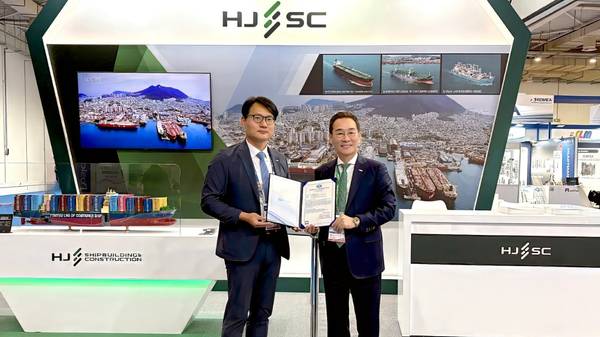
AiP award ceremony for a 10,000-teu biofuel-powered container ship. HJSC wins AiP for 10,000-teu biofuel-powered container ship design  

South Korean shipbuilder HJ Shipbuilding & Construction receives classification society approval for its biofuel vessel design at Posidonia.

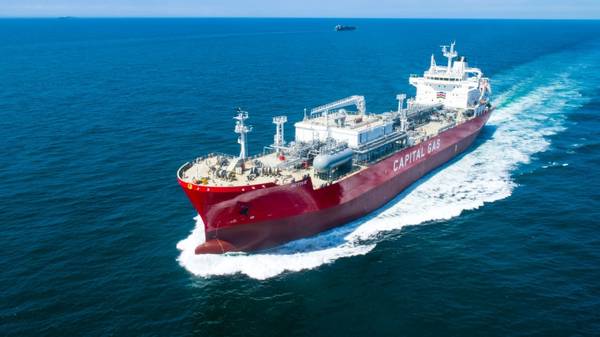
Active vessel. Capital Clean Energy Carriers takes delivery of LNG carrier and dual-fuel gas carrier, secures five new charters  

Athens-based CCEC expands its fleet and pushes contracted revenue backlog to $3.1bn.

VPS logo. Fuel quality management for vessels in extended idle: Arabian Gulf, Gulf of Oman and adjacent anchorages | Rahul Choudhuri, VPS  

Managing fuel quality deterioration following the closure of the Strait of Hormuz.

Person signing a document. Agastya Green Fuels signs 250,000 t/yr e-methanol offtake deal with Sri Lanka’s SAR Group  

Indian producer and Sri Lankan maritime firm agree long-term green methanol supply partnership.


↑  Back to Top


 Recommended