This is a legacy page. Please click here to view the latest version.
Thu 20 Nov 2008, 16:24 GMT

Piracy may boost SA bunker demand


'Pirate alley' threat could lead to rise in ships refuelling in South Africa.


Demand for bunker fuel in South African ports may increase as ships look to steer clear of the eastern coast of Africa following the recent escalation of piracy incidents, according to port authority officials.

Speaking to Business Day, Cape Town's harbor master Ravi Naicker is reported to have said that the ports of Durban, Port Elizabeth and Richards Bay may see a rise in the number of ships requiring bunker fuel as shipping firms reroute vessels around Africa rather than using the Suez Canal because of the threat of piracy in the Gulf of Aden - a stretch of water also known as "pirate alley".

News of the potential surge in bunker demand comes only days after South African refiner and bunker supplier Engen Petroleum Ltd. revealed that its bunker-producing refinery in Durban could be closed for up to four months following last week's fire. The company has already said that it will import refined fuel in order to avoid any shortages.

National Ports Authority spokesperson Koen Birkenstock said the country's ports would be able to cope with an increase in shipping traffic if piracy forced vessels to divert to the longer route around the west coast of Africa. He also pointed out that the recent decrease in the price of bunker fuel could entice ship owners to opt for the Cape Sea route rather than Suez and the Gulf of Aden.

In Durban, for example, the price of 180-centistoke (cst) has dropped from $445 per metric tonne on October 20th to the current price of $275 per metric tonne, according to Bunker Index price data. The average price of this product during the month of July was $794 per tonne.

Commenting on bunkering operations in Cape Town, Birkenstock said ships would be able to bunker from quayside points at four berths in Table Bay Harbour - two on the landing wall and two at the eastern mole.

Vessels would also be able to refuel from the port's bunker barge if they were forced to dock at cargo docks.

It is estimated that approximately 30 percent of ships passing Cape Town usually refuel there. The port is thought to have a 20 percent share of South Africa's bunker market, supplying between 650,000 and 700,000 tonnes per annum.

The port of Durban is the country's largest in terms of cargo volume and marine fuel sold. It accounts for approximately 70 percent of total bunker demand in South Africa, which is estimated to be approximately 3.3 million metric tonnes per year. Annual volumes at the port are around 2.3 million tonnes.


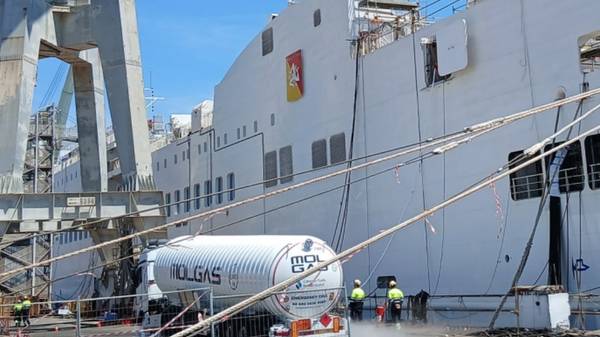
Truck-to-ship (TTS) LNG bunkering at Port of Palermo. Molgas completes first LNG bunkering operation at Palermo  

Spanish energy firm carries out maiden LNG delivery at Sicilian port.

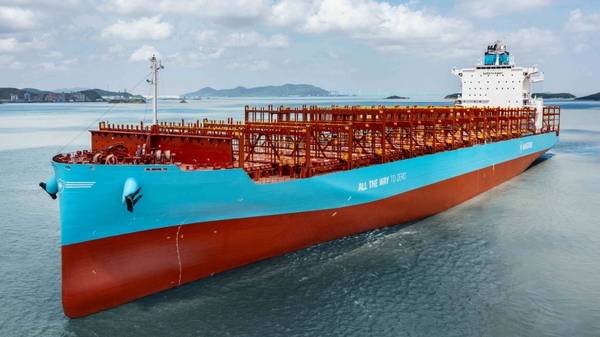
Maersk 5,900-teu vessel. Tsuneishi China delivers third methanol dual-fuel boxship in series  

Zhoushan shipbuilder hands over another 5,900-teu Maersk container vessel.

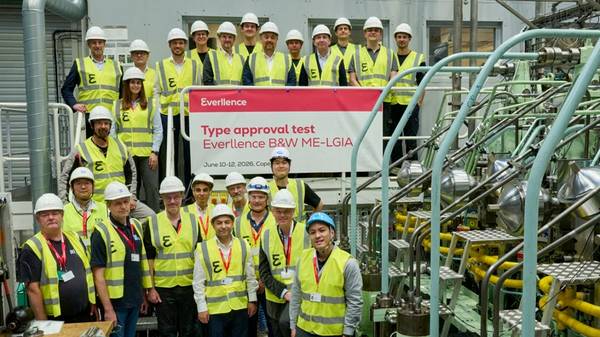
Type approval test (TAT) for ME-LGIA ammonia engine. Everllence completes type approval test for ammonia engine ahead of sea trials  

Eight classification societies oversee testing of ME-LGIA ammonia engine at Copenhagen research centre.

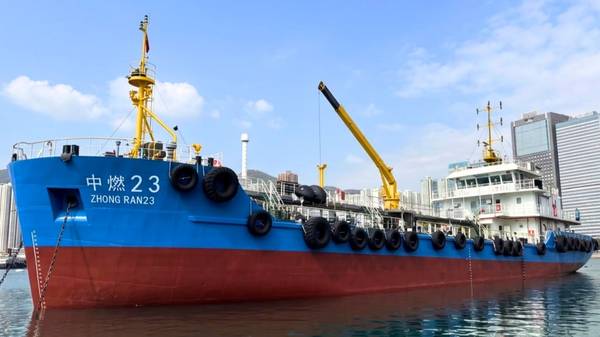
Zhong Ran 23 vessel. CPN bunker barge becomes first vessel listed under Hong Kong’s new quality bunkering scheme  

Zhong Ran 23 achieves listing under the Marine Department’s voluntary mass flow metering initiative.

Peder Moller, Bunker Holding. Bunker Holding posts $73m pre-tax profit amid geopolitical headwinds and board overhaul  

Marine fuels exceeds its own expectations despite 4% revenue decline.

Oilmar Board of Directors graphic. Oilmar formalises governance structure with establishment of board of directors  

Dubai-based marine fuels trader Oilmar appoints three-member board.

Henrik Andersen, Vestas Wind Systems A/S. Vestas Wind Systems CEO appointed vice chair of Bunker Holding  

Henrik Andersen joins the board of the marine fuels group with more than two decades of international business experience.

Tina Revsbech, Maersk Tankers. Maersk Tankers CEO Tina Revsbech joins Bunker Holding board  

Danish USTC Group appoints shipping veteran to subsidiary’s board of directors.

Yampu vessel. CSL delivers world’s first battery-powered self-unloading bulk carrier  

MV Yampu will transport limestone for Adbri in Australia, with full electric operation targeted by 2031.

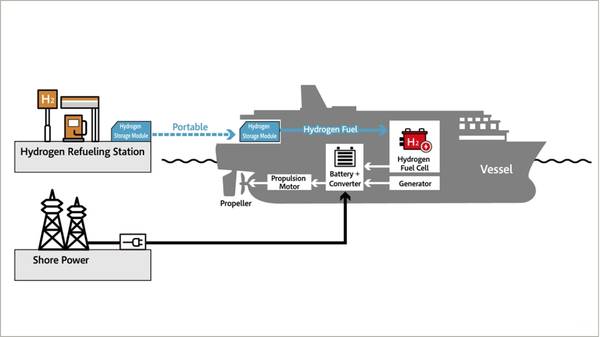
Illustration of hydrogen fuel cell system. NYK, Yanmar and Eneos to install hydrogen fuel cell system on new Tokyo dining cruise vessel  

Three Japanese companies are collaborating to bring hydrogen propulsion to a dining cruise ship due to enter service in 2027.


↑  Back to Top


 Recommended