This is a legacy page. Please click here to view the latest version.
Mon 17 Nov 2008, 08:05 GMT

Study: Higher fuel costs can benefit coastal shipping


US report compares fuel efficiency of vessels versus other modes of transportation.


The US Maritime Administration (MARAD) has released details of a study in which it concludes that waterborne freight transportation is much less affected by fuel charge increases than other modes of transportation.

The study, which was carried out by Maryland-based Transportation Economics and Management Systems, Inc. (TEMS), was sponsored by MARAD to review U.S. and international forecasts of potential oil prices and assess how higher fuel prices would impact different modes of transportation.

The report came to the conclusion that water transportation was more fuel-efficient and therefore far less affected by fuel price increases than trucking, particularly over longer shipping distances and where Roll-On/Roll-Off vessels - which have significantly lower fixed intermodal drayage and port costs - can be used.

Increased demand for rail/truck intermodal services is depleting available rail capacity, making existing and potential water services even more attractive, the study said.

In an analysis of the five major U.S. freight corridors that serve over 95 percent of the U.S. population – Great Lakes (and St. Lawrence Seaway), Gulf Coast, Mississippi River, East Coast, and West Coast - the report said domestic waterborne containerized traffic has the potential to increase by a factor of 2 to 3 as diesel fuel prices rise from $2 up to $7 per gallon.

The study said three of the corridors - the Mississippi River, Gulf of Mexico, and Great Lakes-St. Lawrence Seaway - could generate sufficient domestic traffic volume to initiate new water services.

On the East and West Coasts of the US, a portion of the huge and growing volume of U.S. international trade now distributed inland through gateway Atlantic and Pacific seaports could be moved by new coastal feeder services, the report said.

Commenting on the study, MARAD concluded "As the economy revives and energy demand grows, oil prices should rise again. Higher fuel prices should encourage investment in waterborne transportation by providing a cost incentive for a significantly enhanced role for water in the U.S. transportation network."


TMS Tankers logo. Lloyd’s Register delivers fleet-wide energy transition roadmap for TMS Tankers  

LR Advisory maps vessel-level compliance risk and decarbonisation pathways across the Greek owner’s tanker fleet.

Dr Prapisala Thepsithar, GCMD. GCMD shares biofuel assurance and green finance insights at Hong Kong shipping decarbonisation forum  

The Global Centre for Maritime Decarbonisation presented pilot findings on biofuels and energy efficiency financing.

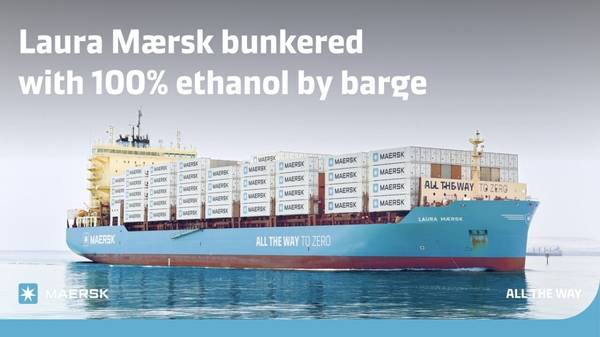
Laura Maersk ethanol bunkering graphic. Maersk conducts large-scale ethanol bunkering trial on Laura Maersk in Rotterdam  

A.P. Moller – Maersk has conducted a barge-delivered ethanol bunkering operation as part of ongoing fuel trials.

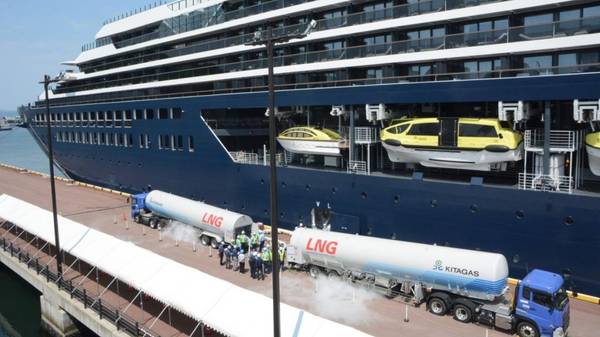
Luminara vessel truck-to-ship bunkering. MOL Techno-Trade completes first LNG bunkering for international cruise ship in Hokkaido  

Truck-to-ship LNG operation at Hakodate marks first such supply to an international cruise vessel in Hokkaido.

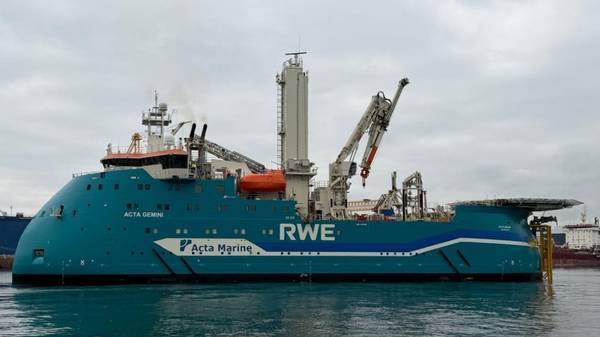
Acta Gemini vessel. Acta Marine takes delivery of methanol dual-fuel CSOV Acta Gemini for RWE wind farm charter  

The vessel will support operations at the Sofia Offshore Wind Farm at Dogger Bank.

Yeva Wood and Kirsten Møller Jørgensen. Malik Supply expands Danish team with bunker trader and finance hire  

Danish bunker supplier Malik Supply adds two new staff across its Fredericia and Aalborg offices.

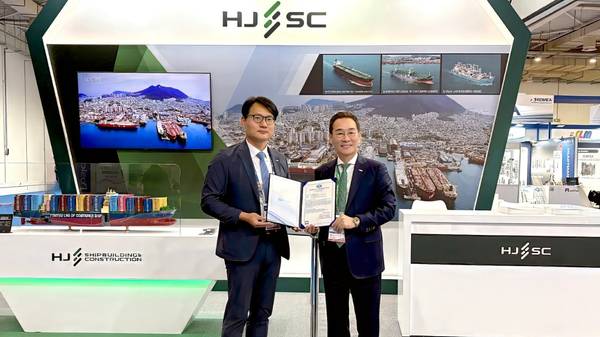
AiP award ceremony for a 10,000-teu biofuel-powered container ship. HJSC wins AiP for 10,000-teu biofuel-powered container ship design  

South Korean shipbuilder HJ Shipbuilding & Construction receives classification society approval for its biofuel vessel design at Posidonia.

Active vessel. Capital Clean Energy Carriers takes delivery of LNG carrier and dual-fuel gas carrier, secures five new charters  

Athens-based CCEC expands its fleet and pushes contracted revenue backlog to $3.1bn.

VPS logo. Fuel quality management for vessels in extended idle: Arabian Gulf, Gulf of Oman and adjacent anchorages | Rahul Choudhuri, VPS  

Managing fuel quality deterioration following the closure of the Strait of Hormuz.

Person signing a document. Agastya Green Fuels signs 250,000 t/yr e-methanol offtake deal with Sri Lanka’s SAR Group  

Indian producer and Sri Lankan maritime firm agree long-term green methanol supply partnership.


↑  Back to Top