This is a legacy page. Please click here to view the latest version.
Fri 14 Nov 2008, 14:35 GMT

Meeting to discuss emission reduction measures


St. Petersburg meeting to evaluate Baltic NECA with tighter emission restrictions.


The Maritime Group of the Helsinki Commission (HELCOM MARITIME) will hold its regular meeting on 18-20 November in St. Petersburg, Russia, to discuss further measures to improve safety of navigation and reduce pollution from ships in the Baltic Sea.

The primary focus of the meeting will be on further measures to reduce emissions from ships in the Baltic, including new, more stringent requirements on nitrogen oxide (NOx) emissions from shipping.

The meeting will particularly discuss the possibility to designate the Baltic Sea as a special NOx Emission Control Area (NECA) under IMO’s MARPOL 73/78 Convention, with tighter atmospheric emission restrictions.

“According to the most recent studies, tighter NECA restrictions, requiring an 80 percent reduction of emissions from marine diesel engines installed on ships on or after 1 January 2016, would reverse the increasing trend of NOx emissions in the Baltic Sea in the long run,” said Monika Stankiewicz, HELCOM’s Professional Secretary for maritime and response issues.

Atmospheric nitrogen deposition is said to be one of the main contributors to the high nutrient concentrations that stimulate massive algae blooms in the Baltic. The most recent calculations identify shipping as the largest contributor to atmospheric nitrogen oxide deposition to the Baltic Sea with a share of 16 percent.

However, the present study claims the contribution reaches up to 50 percent in some areas and seasons. The total annual NOx emission from ships is estimated at more than 370 kilotons. The estimate is based on information from the HELCOM Automatic Identification System for monitoring ship traffic in the Baltic Sea and is verified against information on fuel consumption obtained from shipping companies and measurements of air quality near fairways.

The NOx emissions from shipping in Finnish waters alone are said to be higher than emissions from Finnish land-based traffic. With regards to the Baltic Sea, the emissions from shipping are comparable to the combined land-based NOx emissions from Denmark and Sweden. Most of these emissions are concentrated on the southern part of the Baltic Sea, around the Danish straits and the Kiel Canal where shipping is intense, but significant emissions can also be seen throughout the Gulf of Finland.

The Baltic Sea has already been the first to establish a special sulphur oxide (SOx) Emission Control Area (SECA). In a recent submission to IMO, HELCOM has reported the positive experience in implementing the world’s strictest regulations limiting the sulphur content of bunker fuel in a busy shipping area like the Baltic Sea.

The meeting will take place at the Admiral Makarov State Maritime Academy and will be conducted by the Chair of the HELCOM Maritime Group, Ms. Ingelore Hering.


TMS Tankers logo. Lloyd’s Register delivers fleet-wide energy transition roadmap for TMS Tankers  

LR Advisory maps vessel-level compliance risk and decarbonisation pathways across the Greek owner’s tanker fleet.

Dr Prapisala Thepsithar, GCMD. GCMD shares biofuel assurance and green finance insights at Hong Kong shipping decarbonisation forum  

The Global Centre for Maritime Decarbonisation presented pilot findings on biofuels and energy efficiency financing.

Laura Maersk ethanol bunkering graphic. Maersk conducts large-scale ethanol bunkering trial on Laura Maersk in Rotterdam  

A.P. Moller – Maersk has conducted a barge-delivered ethanol bunkering operation as part of ongoing fuel trials.

Luminara vessel truck-to-ship bunkering. MOL Techno-Trade completes first LNG bunkering for international cruise ship in Hokkaido  

Truck-to-ship LNG operation at Hakodate marks first such supply to an international cruise vessel in Hokkaido.

Acta Gemini vessel. Acta Marine takes delivery of methanol dual-fuel CSOV Acta Gemini for RWE wind farm charter  

The vessel will support operations at the Sofia Offshore Wind Farm at Dogger Bank.

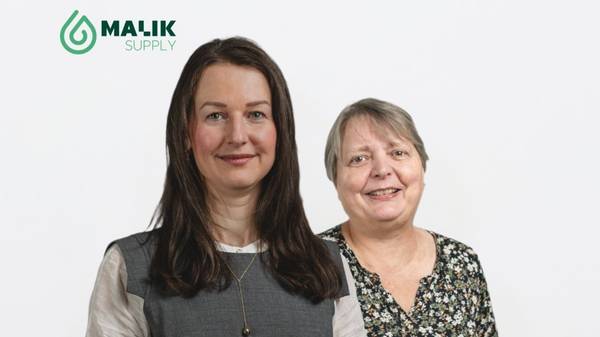
Yeva Wood and Kirsten Møller Jørgensen. Malik Supply expands Danish team with bunker trader and finance hire  

Danish bunker supplier Malik Supply adds two new staff across its Fredericia and Aalborg offices.

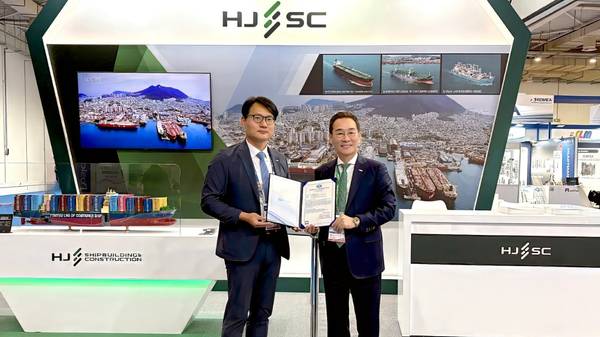
AiP award ceremony for a 10,000-teu biofuel-powered container ship. HJSC wins AiP for 10,000-teu biofuel-powered container ship design  

South Korean shipbuilder HJ Shipbuilding & Construction receives classification society approval for its biofuel vessel design at Posidonia.

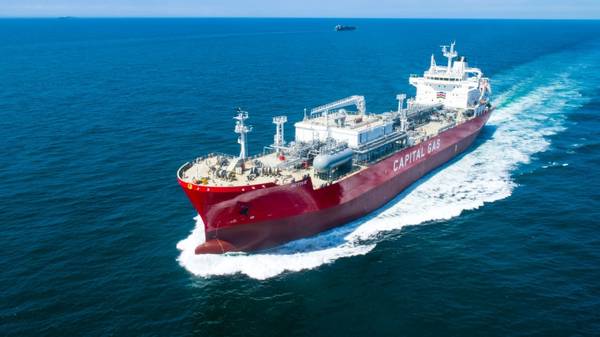
Active vessel. Capital Clean Energy Carriers takes delivery of LNG carrier and dual-fuel gas carrier, secures five new charters  

Athens-based CCEC expands its fleet and pushes contracted revenue backlog to $3.1bn.

VPS logo. Fuel quality management for vessels in extended idle: Arabian Gulf, Gulf of Oman and adjacent anchorages | Rahul Choudhuri, VPS  

Managing fuel quality deterioration following the closure of the Strait of Hormuz.

Person signing a document. Agastya Green Fuels signs 250,000 t/yr e-methanol offtake deal with Sri Lanka’s SAR Group  

Indian producer and Sri Lankan maritime firm agree long-term green methanol supply partnership.


↑  Back to Top


 Recommended