This is a legacy page. Please click here to view the latest version.
Wed 29 Oct 2008, 16:40 GMT

Bunker prices drop in Asian ports


Singapore 380-cst plummets 52 percent in a month. Price rise expected.


Bunker prices continued to drop in the majority of Asian ports today, despite the rise in crude oil prices, which has seen WTI crude for December delivery climb as high as $67.60 per barrel, a rise of almost $5 compared to yesterday's settlement price of $62.73 per barrel.

In Singapore, world's largest bunker port by volume, the price of 380-centistoke (cst) fell by $6.50 to $288.50 per tonne according to Bunker Index price data. Having broken through the $300 barrier yesterday, bunker suppliers were reportedly offering between $287 and $291 per tonne to customers today.

Marine fuel prices in Singapore have decreased dramatically in the space of just one month, mirroring the fall in crude prices. Between September 29th and October 29th, the price of 380-cst has plummeted $313.50 from $602 per tonne to today's price of $288.50 per tonne, a drop of 52 percent.

In Busan, South Korea's leading bunker port with sales of approximately 8 million tonnes per annum, the price of 380-cst fell for the sixth day in a row to $360 per tonne, according to Bunker Index price data. Today's price was $12 lower than levels quoted yesterday and $250 lower than the $380-cst price on September 29th.

180-cst levels in Busan decreased by $11 today from $391 to $380 per tonne. Only a month ago, suppliers were quoting $645 per tonne to customers, thus representing a 41 percent drop in price over this period.

Hong Kong was also bearish today with 380-cst bunker prices being quoted at an average of $308 per tonne, $8 lower than yesterday. The price of 180-cst dropped to $322 per tonne, $9 below yesterday's price of $331 per tonne.

380-cst prices in Hong Kong have plunged $282 since September 29th, whilst 180-cst levels have dropped by $274, which represents a decrease of 47 percent and 45 percent for each bunker grade respectively.

In other Asian ports today, 380-cst at Kaohsiung was being quoted $20 lower than yesterday at $324 per tonne, with 180-cst prices also dropping by the same amount to $333 per tonne.

In Port Klang, 380-cst prices dropped below the $300 mark to $296 per tonne, with 180-cst falling $7 to $308 per tonne.

With crude prices set to continue to remain firm in the international oil markets today, bunker buyers are likely to see a rise in marine fuel prices in Asia tomorrow as a consequence.


Capital's LNG-powered vessel. Chinese shipbuilder delivers 155,500-dwt LNG dual-fuel crude oil tanker  

Vessel handed over to Capital Ship Management Corp in China.

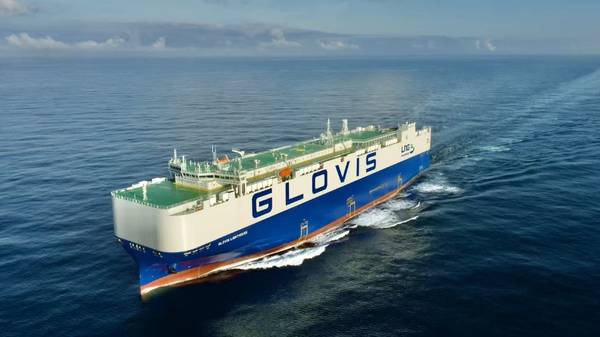
Glovis Lighthouse vessel. Seaspan takes delivery of first 10,800-ceu dual-fuel LNG car carrier  

Glovis Lighthouse enters service as one of a handful of vessels globally to exceed 10,000 CEU capacity.

Port of Rotterdam, Maersk, Core Power and Lloyd's Register logos. Rotterdam study maps pathway for nuclear-powered commercial ship port calls  

A joint study by Lloyd's Register, the Port of Rotterdam, Core Power and Maersk examines the feasibility of nuclear vessel port calls.

Hakata waterfront. Kinkai Yusen conducts first biofuel demonstration on domestic ro-ro vessel at Hakata Port  

Japanese shipping company to trial B24 biofuel blend aboard the vessel Nanotsu on 16 June.

Norwegian Energy Trading (NET) AS logo. Norwegian Energy Trading renews ISCC certification for biofuel trading  

Norwegian bunker trader says renewal reflects growing biofuel volumes and commitment to verifiable sustainability standards.

Ivy Cove vessel. Jiangnan delivers VLAC with LPG dual-fuel main engine  

Vessel is claimed to be the world’s first 93,000 cbm very large ammonia carrier.

BIMCO logo. BIMCO adopts biofuel clause for time charter parties  

Shipping body has introduced a new contractual clause to govern the use of biofuels under time charter agreements.

Prince Madog hydrogen fuel cell retrofit receives LR certification. UK research vessel Prince Madog wins LR certification for hydrogen fuel cell retrofit  

Lloyd’s Register certifies what is claimed to be the first sea-going, manned hydrogen retrofit of its kind.

World Fuel logo. World Fuel seeks marine lube operations and sales executive in Greece  

US firm is recruiting for a commercial role focused on marine lubricants, based out of its Glyfada office.

ECSA Parliamentary Breakfast event. European Shipowners calls for fuel supplier mandates and ETS revenue investment ahead of policy revision  

Industry body urges EU policymakers to redirect carbon revenues into clean marine fuel production.


↑  Back to Top


 Recommended