This is a legacy page. Please click here to view the latest version.
Thu 23 Oct 2008, 11:15 GMT

Canadian firm orders 'fuel saving' system


'Low Loss Concept' system ordered for first passenger vessel.


Wärtsilä's Low Loss Concept system has been ordered by Canadian shipowner Transport Desgagnés for installation in a 95m passenger/vehicle/container vessel, to be built at Croatia's Kraljevica Shipyard. It will be the first ever application of Wärtsilä's Low Loss Concept (LLC) in a passenger vessel.

The Low Loss Concept was developed by Wärtsilä to save both fuel and installation costs, as well as reducing emissions and the amount of space required for component installation. This innovation also aims to deliver greater redundancy in the electrical propulsion system, and make commissioning work easier.

Wärtsilä says it has already established considerable support from owners in the offshore vessel segment.

"In a conventional diesel-electric propulsion arrangement, you need many large distribution transformers. But we have developed a system that obviates the need for transformers in the propulsion line, so we can eliminate these huge, heavy components, and their associated equipment and utilities. This reduces investment costs, operational costs, and the space required for the equipment onboard," says Piotr Kabacinski, Project Manager, Wärtsilä Ship Power.

"LLC can reduce electrical losses by 3%, and this means good fuel savings and less pollution. The system also provides improved health, safety and environmental (HSE) performance through fewer components, lower pollution and higher system redundancy," added Kabacinski.

In a statement, Wärtsilä said the decision by Transport Desgagnés to opt for the LLC arrangement was reinforced by consultant Deltamarin Ltd, who found that the LLC was favourable over conventional power distribution solutions due to the high level of energy efficiency and redundancy it affords.

The main electrical equipment components are divided into two separate compartments, a requirement deemed imperative to the shipowner's environmental considerations, and one that also increases redundancy, according to Wärtsilä.

Additionally, Wärtsilä said the total installed equipment weight and required space of the LLC package was found to be significantly less than that offered by competitors.

These factors were taken into account during the equipment selection process, as the 381-passenger, 125TEU-carrying vessel will operate along the ecologically sensitive St Lawrence River, with a weekly itinerary that takes in 22 ports-of-call with short ship stays of no more than five hours.

"LLC combined with the smokeless operation of common-rail engines offers significant benefits to any shipowner operating in environmentally sensitive areas," said Kabacinski.

In addition to the state-of-the-art LLC system, Wärtsilä's scope of supply to the Desgagnés-designed vessel includes a complete diesel-electric propulsion package based on four, nine-cylinder versions, of the established Wärtsilä 20CR (common-rail) medium speed generating sets. All 600V main distribution switchboards, the electric propulsion motors, and the frequency converters also form part of the supply agreement.

Wärtsilä will deliver the equipment to the Kraljevica Shipyard in January 2010.


VPS logo. Fuel quality management for vessels in extended idle: Arabian Gulf, Gulf of Oman and adjacent anchorages | Rahul Choudhuri, VPS  

Managing fuel quality deterioration following the closure of the Strait of Hormuz.

Person signing a document. Agastya Green Fuels signs 250,000 t/yr e-methanol offtake deal with Sri Lanka’s SAR Group  

Indian producer and Sri Lankan maritime firm agree long-term green methanol supply partnership.

Bunker Holding logo. Bunker Holding seeks risk specialist for Copenhagen internal pricing desk  

Danish bunker group is expanding its internal pricing team to meet growing demand for fixed-price solutions.

Global biofuels demand chart. Biofuel demand could surge 70% by 2030 as food price fears mount  

T&E warns governments risk trading an oil crisis for a food crisis as biofuel targets strain vegetable oil and fertiliser markets.

Shore power illustration. Shore power shifts from voluntary measure to compliance requirement, DNV white paper finds  

Shore power is moving from an optional emissions tool to a regulatory obligation for shipowners in key trades.

Giosuè Vezzuto and Ahmed Eldemerdash. Baker Hughes’ NovaLT 16 gas turbine receives RINA type approval for marine propulsion on hydrogen and natural gas  

Certification covers operation on natural gas and blends up to 100% hydrogen for marine use.

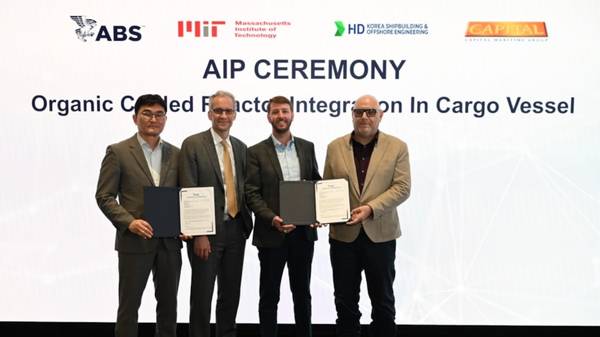
AiP award ceremony for nuclear reactor integration in cargo vessel design. ABS grants approval in principle for nuclear reactor integration in cargo vessel design  

ABS, HD KSOE, Capital Maritime Group and MIT have received approval in principle for a nuclear-powered cargo vessel propulsion system.

Green e-fuel export corridor consortium partners logos. Green e-fuel export corridor between Brazil and Belgium advances to feasibility stage  

A consortium has been formed to develop a green e-fuel corridor linking Porto do Açu to Antwerp-Bruges.

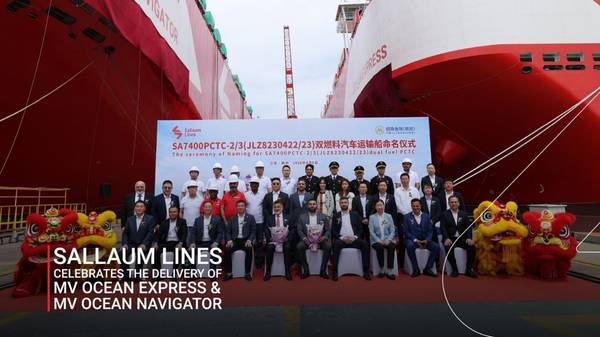
Naming ceremony of Ocean Express and Ocean Navigator vessels. Sallaum Lines takes delivery of two LNG-fuelled PCTCs in simultaneous handover ceremony  

RoRo carrier receives MV Ocean Express and MV Ocean Navigator from Chinese shipyard.

Person signing a document. Agastya Group signs MoU with Andhra Pradesh government for 1 MTPA green methanol hub at Mulapeta Port  

India-based Agastya Group plans a $6.5bn green methanol export facility on the country's east coast.


↑  Back to Top