This is a legacy page. Please click here to view the latest version.
Wed 22 Oct 2008, 09:42 GMT

Ship emission warning for marine insurers


Increased legislation could fuel the next wave of environmental claims.


Increased regulatory and legislative efforts to reduce air pollution from oceangoing vessels could fuel the next wave of environmental claims for marine insurers, according to marine environment and insurance sources.

Driven by a growing concern that emissions from ships, particularly diesel particulate matter, make up some of the most toxic air pollutants and are the cause of many health problems such as asthma and lower pulmonary function among children, regulators have stepped up their scrutiny of ship emissions.

In recent years, the U.S. Environmental Protection Agency and a host of local, state and federal agencies have made air pollution control in communities along the U.S. coastlines and ports, such as Los Angeles, Houston and New York, a high priority. Some experts say the lawmakers and federal environmental agencies have turned their attention toward ships also because they believe the marine industry has ignored existing emission standards and have managed to avoid the same level of scrutiny as other stationary contributors of toxic pollutants, such as coal-fired power plants.

Frances Keeler, a California attorney who specializes in environmental law, recently told a gathering of marine underwriters that regulators are increasingly showing a willingness to push new boundaries in order to rein in serious violators of air pollution standards.

“The Department of Justice is saying that Clean Air Act violations are not being taken seriously enough and that they need to be brought up to the same level as Clean Water Act violations,” Keeler told the underwriters. “So, they’re looking to slowly make examples of companies and increase the penalties and increase the fines. That’s what you’re going to see as an industry as a whole.”

The situation has taken on new urgency not only in the United States, but around the maritime world. In recent weeks, member states of the International Maritime Organization have adopted international standards for marine diesel engines and their fuels. The revised standards call for a gradual reduction in allowable ship emissions of sulphur oxides (SOx) and nitrogen oxides (NOx), and will impact ship operators and owners, marine diesel engine manufacturers, marine fuel suppliers and several associated industries.

Still, Elena Craft, an air quality specialist with the Environmental Defense Fund, a not-for-profit group that partners with businesses and governments to find solutions to environmental problems, said while the IMO’s actions are commendable, the adopted emission standards don’t go far enough. One of Craft’s major quarrels is that it doesn’t address greenhouse gas emission.

Another is that IMO’s ship emission standards won’t take effect until 2015. “We can’t afford to wait until then. We need to address the problem today. We needed it yesterday,” she said.

What’s clear is that states like California, America’s smog capital, are not going to wait for these standards to take effect. Already, California is enforcing its own Clean Air Act, which is more stringent than the federal act. The state has given considerable authority to the California Air Resources Board to regulate mobile emission sources.

Regulators are desperate for solutions and quick fixes, which may spell trouble for marine insurers and their insureds, said Keeler. “They’ll try anything to get reductions. And so they’re pushing that envelope constantly. They’re always going out there and they’re not going to let up,” she said.

Fines, for instance, have recently gone up sharply. "Typically, I was looking at fines of $1,000, but it’s gone up to $3,000 and $5,000. The last one I settled, they wanted $20,000 and we settled for $15,000," Keeler said.

And until recently, air pollution violations were hardly prosecuted. Now, Keeler said the government is bringing criminal penalties against some offenders. "I’m seeing them now, whether it’s a marine source or a land-based source. I’m working on a case now where they’re going for a criminal indictment and they want a $5 million fine. It's not been heard of in the criminal arena," she said.


Capital's LNG-powered vessel. Chinese shipbuilder delivers 155,500-dwt LNG dual-fuel crude oil tanker  

Vessel handed over to Capital Ship Management Corp in China.

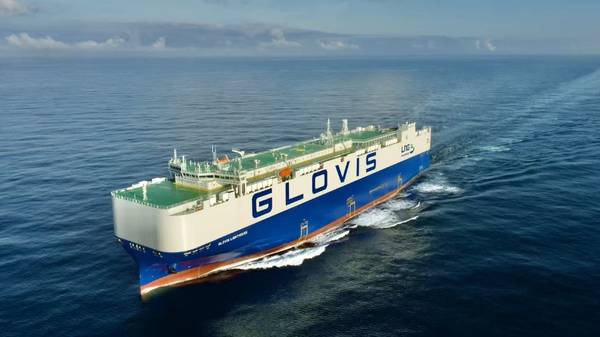
Glovis Lighthouse vessel. Seaspan takes delivery of first 10,800-ceu dual-fuel LNG car carrier  

Glovis Lighthouse enters service as one of a handful of vessels globally to exceed 10,000 CEU capacity.

Port of Rotterdam, Maersk, Core Power and Lloyd's Register logos. Rotterdam study maps pathway for nuclear-powered commercial ship port calls  

A joint study by Lloyd's Register, the Port of Rotterdam, Core Power and Maersk examines the feasibility of nuclear vessel port calls.

Hakata waterfront. Kinkai Yusen conducts first biofuel demonstration on domestic ro-ro vessel at Hakata Port  

Japanese shipping company to trial B24 biofuel blend aboard the vessel Nanotsu on 16 June.

Norwegian Energy Trading (NET) AS logo. Norwegian Energy Trading renews ISCC certification for biofuel trading  

Norwegian bunker trader says renewal reflects growing biofuel volumes and commitment to verifiable sustainability standards.

Ivy Cove vessel. Jiangnan delivers VLAC with LPG dual-fuel main engine  

Vessel is claimed to be the world’s first 93,000 cbm very large ammonia carrier.

BIMCO logo. BIMCO adopts biofuel clause for time charter parties  

Shipping body has introduced a new contractual clause to govern the use of biofuels under time charter agreements.

Prince Madog hydrogen fuel cell retrofit receives LR certification. UK research vessel Prince Madog wins LR certification for hydrogen fuel cell retrofit  

Lloyd’s Register certifies what is claimed to be the first sea-going, manned hydrogen retrofit of its kind.

World Fuel logo. World Fuel seeks marine lube operations and sales executive in Greece  

US firm is recruiting for a commercial role focused on marine lubricants, based out of its Glyfada office.

ECSA Parliamentary Breakfast event. European Shipowners calls for fuel supplier mandates and ETS revenue investment ahead of policy revision  

Industry body urges EU policymakers to redirect carbon revenues into clean marine fuel production.


↑  Back to Top