This is a legacy page. Please click here to view the latest version.
Tue 14 Oct 2008, 08:02 GMT

Hellas Committee discusses CO2 emissions


CO2 index evaluated as a means of reducing fuel costs and ship emissions.


Under the chairmanship of Capt. Vassilis Constantakopoulos, senior owner of Costamare, 30 representatives of the Greek maritime community met to discuss market trends, operational challenges and new technologies to save fuel.

“In the last two years, shipowners have seen bunker prices increase by roughly 140 %”, said Dr. Hermann J. Klein, Member of the Executive Board at Germanischer Lloyd (GL).

“Additionally considering upcoming environmental regulations, shipowners pay more attention to an economical and environmental friendly way of transport,” he added.

Dr Pierre Sames, Senior Vice President Strategic Research at Germanischer Lloyd gave the Committee an overview of the holistic approach to cut costs and spare the environment from unnecessary emissions.

“The GL approach to reducing fuel costs starts with the CO2 index, a tool used to determine fuel consumption. It makes it possible to compare the consumption values of individual ships of a given fleet with each other,” said Dr Sames.

This function in particular is expected to trigger a learning effect, according to GL, as the availability of data for each vessel and voyage segment reveals differences in fuel consumption and makes ship operation parameters transparent.

The idea is that ships with a good (low) index will be deployed more extensively, transport more cargo and improve their index even further.

GL has already launched a CO2 index for shipping, based on MEPC/Circ.471. Earlier this year, Greek Ship owner Costamare registered the vessels COSCO Guangzhou, COSCO, Ningbo, COSCO Yantian, COSCO Beijing and COSCO Hellas with the operational CO2 indexing program.

The GL index, which is available for certification for all ships, will assess CO2 emissions based on the quantity of fuel consumed and the amount of cargo transported. Computed index values will then be compared with those of other ships and be used to minimize emissions caused by transport.

In a statement, GL said that a “CO2-Index Data Analysis” and an “Operational Fuel Consumption Analysis” aims to help shipowners and ship managers understand fuel consumption patterns and to identify technical and operational measures to reduce fuel costs.

The experience of key crew members and the fleet management is also integrated into the interactive analysis of actual fuel consumption and ranking of improvement measures.

“The resulting report summarizes practical advice on how to improve the ship’s efficiency as a function of fuel price”, said Dr Sames.

The Committee also discussed the on-going trend to impose strict emission limits on shipping and the potential of alternative energy.

The latest trends in the Greek shipping market and Germanischer Lloyd’s service to the Greek fleet were highlighted by Athanasios Reisopoulos, GL’s Area Manager Mediterranean / South Africa. Michael Pane, Managing Director Maritime Strategies International, gave a presentation on the forecast of shipping and the shipbuilding market.

Greece 

TMS Tankers logo. Lloyd’s Register delivers fleet-wide energy transition roadmap for TMS Tankers  

LR Advisory maps vessel-level compliance risk and decarbonisation pathways across the Greek owner’s tanker fleet.

Dr Prapisala Thepsithar, GCMD. GCMD shares biofuel assurance and green finance insights at Hong Kong shipping decarbonisation forum  

The Global Centre for Maritime Decarbonisation presented pilot findings on biofuels and energy efficiency financing.

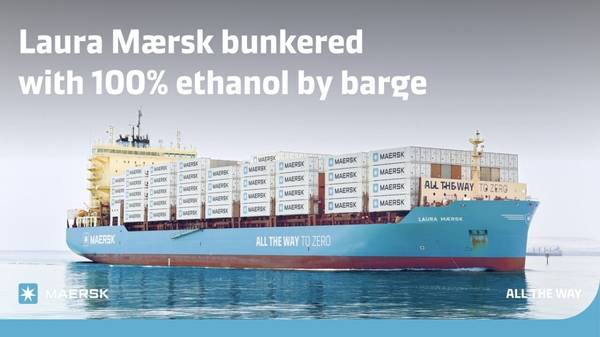
Laura Maersk ethanol bunkering graphic. Maersk conducts large-scale ethanol bunkering trial on Laura Maersk in Rotterdam  

A.P. Moller – Maersk has conducted a barge-delivered ethanol bunkering operation as part of ongoing fuel trials.

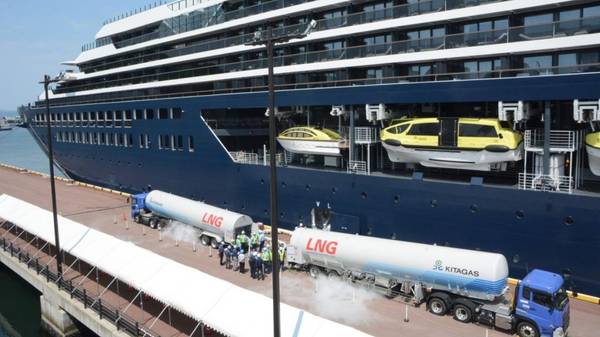
Luminara vessel truck-to-ship bunkering. MOL Techno-Trade completes first LNG bunkering for international cruise ship in Hokkaido  

Truck-to-ship LNG operation at Hakodate marks first such supply to an international cruise vessel in Hokkaido.

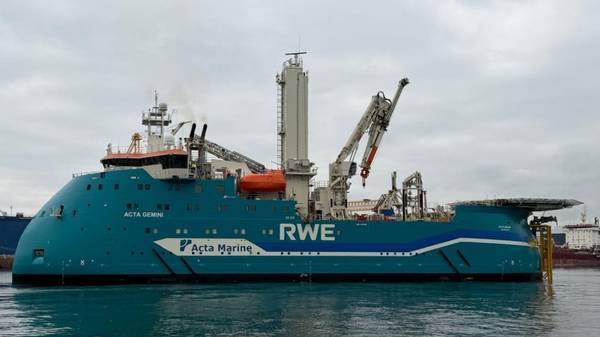
Acta Gemini vessel. Acta Marine takes delivery of methanol dual-fuel CSOV Acta Gemini for RWE wind farm charter  

The vessel will support operations at the Sofia Offshore Wind Farm at Dogger Bank.

Yeva Wood and Kirsten Møller Jørgensen. Malik Supply expands Danish team with bunker trader and finance hire  

Danish bunker supplier Malik Supply adds two new staff across its Fredericia and Aalborg offices.

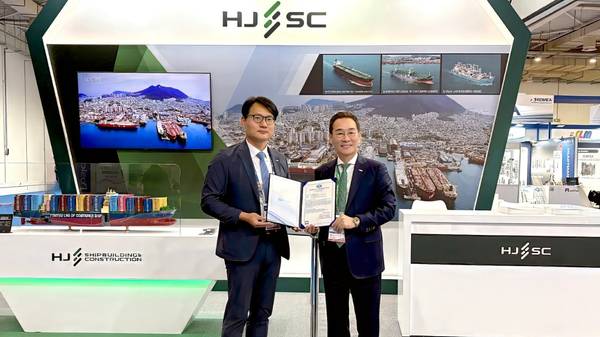
AiP award ceremony for a 10,000-teu biofuel-powered container ship. HJSC wins AiP for 10,000-teu biofuel-powered container ship design  

South Korean shipbuilder HJ Shipbuilding & Construction receives classification society approval for its biofuel vessel design at Posidonia.

Active vessel. Capital Clean Energy Carriers takes delivery of LNG carrier and dual-fuel gas carrier, secures five new charters  

Athens-based CCEC expands its fleet and pushes contracted revenue backlog to $3.1bn.

VPS logo. Fuel quality management for vessels in extended idle: Arabian Gulf, Gulf of Oman and adjacent anchorages | Rahul Choudhuri, VPS  

Managing fuel quality deterioration following the closure of the Strait of Hormuz.

Person signing a document. Agastya Green Fuels signs 250,000 t/yr e-methanol offtake deal with Sri Lanka’s SAR Group  

Indian producer and Sri Lankan maritime firm agree long-term green methanol supply partnership.


↑  Back to Top


 Recommended