The International Maritime Organization's (IMO)
Marine Environment Protection Committee (MEPC) on Thursday decided to set 1st January 2020 - and not 1st January 2025 - as the date to implement a global 0.5% cap on sulphur content in marine fuels.
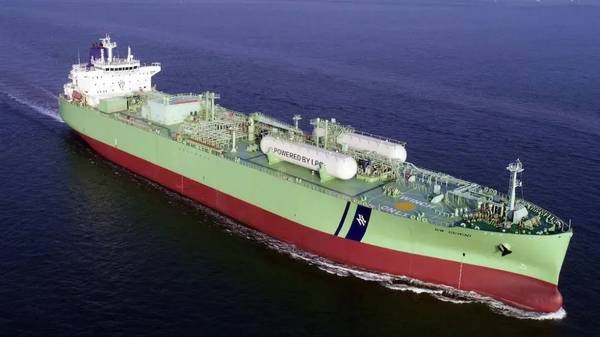
The decision means that in just over three years' time, ships will either have to run on regulation-compliant distillates, ultra-low-sulphur fuel oil (ULSFO), or alternative fuels such as liquefied natural gas (LNG), liquefied petroleum gas (LPG), methanol, ethane or biofuels. Alternatively, shipowners could also decide to have scrubbers installed on their fleet of vessels and continue to use marine fuel with a sulphur content above 0.5%.
Discussions
Confirming the news on Thursday, the IMO tweeted: "IMO sets 2020 date for 0.5 % global sulphur cap. More details to follow. #MEPC70", having previously confirmed that discussions were under way around five hours earlier.
During Thursday's debate,
Sara Ropke, Head of Division at the Danish Environmental Protection Agency (EPA), representing Denmark at the MEPC meeting, kept the outside world informed about how Denmark was pushing for 2020, saying: "Have told #MEPC70 that DK finds it necessary to decide now on the date of the global #sulphur cap, i.e. 2020 #blaadk."
The previous day, Russian representatives were said to have proposed 2023 as the year in which the 0.5% sulphur cap should be implemented - as a sort of compromise between the two proposed dates of 2020 and 2025.
Reaction
Reacting to the news, engine manufacturer
MAN Diesel & Turbo - a company that has developed engines capable of running on traditional fuels, LNG and methanol - tweeted: "Great! Cap on #sulfur content in shipping fuel to take effect in 2020! Congrats to all delegates at #MEPC70 for making this happen! @IMOHQ."
The European Sea Ports Organisation (ESPO), which represents the port authorities, port associations and port administrations of the seaports of member states of the European Union and Norway at EU political level, said: "Congratulations! This is good news for European ports, the maritime industry and the surrounding community and people! #mepc."
Karmenu Vella, Commissioner for Environment, Maritime Affairs and Fisheries, wrote: "Congratulations from @EU_Commission to all involved #MEPC70 @EU_ENV."
Meanwhile, maritime consultancy
20|20 Marine Energy stressed that there will be availability of product when the new regulation is implemented, saying: "So now we start planning for the post-2020 era. The fuel will be available, but market impacts and logistical challenges remain #MEPC."
The
International Chamber of Shipping (ICS) tweeted: "ICS welcomes clear IMO decision on global sulphur cap. But much to do by 2020 to ensure compliant fuels available & smooth implementation."
More news to follow.