This is a legacy page. Please click here to view the latest version.
Mon 24 Oct 2016, 07:14 GMT

Skangas in agreement to supply LNG fuel to Statoil ships


LNG fuel to be delivered to Statoil's platform supply vessels and tugs.


Skangas has entered into an agreement to supply liquefied natural gas (LNG) fuel to Statoil's platform supply vessels (PSVs).

The LNG is to be delivered by ship to several bases along the Norwegian west coast, located at Mongstad, Floro (Saga Fjordbase) and Kristiansund (Vestbase).

Additionally, Skangas will deliver LNG to Statoil's tugs at Karsto. The agreement is valid from 1st April 2017 until the end of 2020 with an option for two plus two years.

The agreement between Statoil and Skangas was a result of a tender process involving "several LNG suppliers in the Norwegian market", Skangas said.

"We see this agreement as a recognition of our daily work and a confirmation of a good relationship with Statoil," commented Tor Morten Osmundsen, CEO of Skangas. "It is important to have customers that emphasize the necessity of more sustainable operations enabling the use of a more environmentally friendly energy. We are depending on front runners to develop the market for LNG and further for liquefied biogas (LBG)."

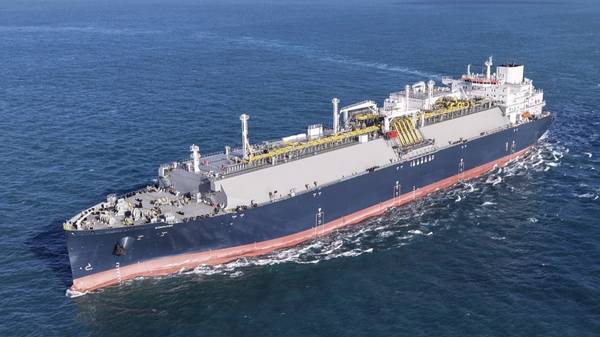
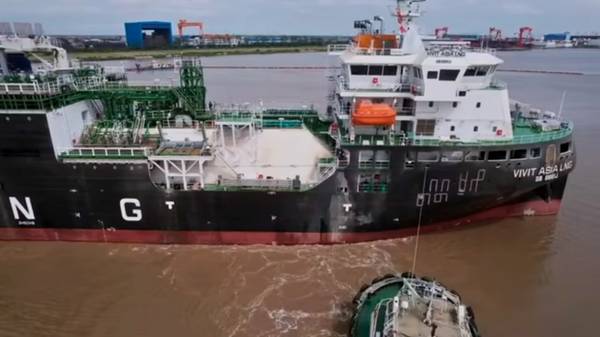
The LNG is to be delivered from Skangas's natural gas liquefaction plant to the supply bases along the Norwegian coast by Skangas' new LNG feeder and bunker ship Coralius. The 5800-cubic-metre (cbm) Coralius is expected to be available in the spring of 2017.

Earlier this month, Bunker Index reported that Skangas bunkered a ship for the first time directly from its LNG terminal in Pori, Finland. The recently launched LNG terminal supplies LNG to a gas connection pipeline and offers truck loading as well as terminal-to-ship bunkering operations. It is the only location in the Gulf of Bothnia where ships can bunker directly from a terminal.

Skangas is owned by Gasum (with a 51 percent shareholding) and Norway's Lyse Group (with a 49 percent stake). Gasum is 75 percent owned by the Finnish government, with Russia's Gazprom owning a 25 percent share in the business.

Oriental Aquamarine vessel. HMM deploys Korea's first MR tanker with wing sail technology  

Oriental Aquamarine equipped with wind-assisted propulsion system expected to cut fuel consumption by up to 20%.

BC Ferries vessel render. ABB to supply hybrid-electric propulsion for BC Ferries' four new vessels  

Technology will enable ferries to run on biofuel or renewable diesel with battery storage.

Alternative marine fuels port graphic. LNG-fuelled boxships sustain alternative fuel orderbook share despite market slowdown  

Alternative fuels maintained 38% of gross tonnage orders in 2025, driven by container segment.

Conceptual diagram of the MOL–ITOCHU strategic alliance. MOL and ITOCHU sign MoU for cross-industry environmental attribute certificate partnership  

Japanese shipping and trading firms to promote EACs for reducing Scope 3 emissions in transport.

CPN as China's No. 1 marine biofuel supplier in 2025 graphic. Chimbusco Pan Nation delivers 170,000 tonnes of marine biofuel in China in 2025  

Supplier says volumes quadrupled year on year, with a 6,300-tonne B24 operation completed during the period.

V.Group and Njord logo side by side. V.Group acquires Njord to expand decarbonisation services for shipowners  

Maritime services provider buys Maersk Tankers-founded green technology business to offer integrated fuel-efficiency solutions.

Container vessel manoeuvring in port. Has Zhoushan just become the world's third-largest bunker port?  

With 2025 sales of 8.03m tonnes for the Chinese port, Q4 data for Antwerp-Bruges will decide which location takes third place.

Monjasa Oil & Shipping Trainee (MOST) trainees. Monjasa opens applications for global trainee programme  

Marine fuel supplier seeks candidates for MOST scheme spanning offices from Singapore to New York.

Singapore's first fully electric harbour tug. Singapore's first fully electric tug completes commissioning ahead of April deployment  

PaxOcean and ABB’s 50-tonne bollard-pull vessel represents an early step in harbour craft electrification.

Fuel for thought: Hydrogen report cover. Lloyd's Register report examines hydrogen's potential and challenges for decarbonisation  

Classification society highlights fuel's promise alongside safety, infrastructure, and cost barriers limiting maritime adoption.


↑  Back to Top