This is a legacy page. Please click here to view the latest version.
Fri 10 Oct 2008, 08:03 GMT

IMO praised for new emission standards


US environmental group applauds MARPOL Annex VI ammendments.


The Environmental Defense Fund has praised the 168 member nations of the International Maritime Organization (IMO) for adopting new emissions standards to limit emissions from ocean-going vessels.

The Marine Environment Protection Committee (MEPC) of the IMO set a global cap for the amount of sulphur in marine fuels yesterday after adopting proposed amendments to the MARPOL Annex VI regulations to reduce harmful emissions from ships.

The main changes will see a progressive reduction in sulphur oxide (SOx) emissions from ships, with the global sulphur cap reduced initially to 3.50% (from the current 4.50%), effective from January 1st 2012; then progressively to 0.50 %, effective from January 1st 2020.

The revised Annex VI also allows for the designation of Sulphur Emission Control Areas (SECAS), where the limits applicable will be reduced to 1.00%, beginning on July 1st 2010 (from the current 1.50 %); being further reduced to 0.10 % , effective from January 1st 2015. All new ships will also have to run on engines that reduce nitrogen oxide (NOx) emissions by 80 percent.

“Nearly 90% of ships that call on U.S. ports are foreign-flagged ships, so the progress we made at the international level today is especially important to people living in communities near U.S. ports and along our nation’s coastlines,” said Janea Scott, a senior attorney in the Los Angeles office of Environmental Defense Fund.

“This newly adopted international regulation will ensure that all ships, both domestic and foreign, are held to the same rigorous emissions standards,” added Scott.

In a statement, the Environmental Defense Fund said "These new standards will help restore healthier air to ports and coastal communities around the world. Worldwide, shipping-related particulate matter pollution is responsible for approximately 60,000 cardiopulmonary and lung cancer deaths annually. Ships also are responsible for three percent of the global warming pollution worldwide, about as much global warming pollution as Canada emits."

Scott also urged the international community to address the issue of greenhouse gas emissions.

“Now that nations from around the world have collaborated on historic clean air standards to cut dangerous pollution from big ships, we need to work together here at home to carry out this clean air blueprint and restore healthier air for millions of Americans.

“We also urge these world leaders to build from this partnership to address the extensive global warming pollution released from these big ships,” added Scott.

Earlier this month, the Environmental Defense Fund (EDF) released a report entitled “Floating Smokestacks: A Call for Action to Clean Up Marine Shipping Pollution," which said that large ocean-going ships were a major source of urban smog pollution and one of the world’s largest emitters of greenhouse gases.

The report found that ocean-going ships in the Houston/Galveston area annually emit approximately 5,600 tonnes of smog-forming nitrogen oxide (NOx) and 590 tonnes of particulate matter pollution.


VPS logo. Fuel quality management for vessels in extended idle: Arabian Gulf, Gulf of Oman and adjacent anchorages | Rahul Choudhuri, VPS  

Managing fuel quality deterioration following the closure of the Strait of Hormuz.

Person signing a document. Agastya Green Fuels signs 250,000 t/yr e-methanol offtake deal with Sri Lanka’s SAR Group  

Indian producer and Sri Lankan maritime firm agree long-term green methanol supply partnership.

Bunker Holding logo. Bunker Holding seeks risk specialist for Copenhagen internal pricing desk  

Danish bunker group is expanding its internal pricing team to meet growing demand for fixed-price solutions.

Global biofuels demand chart. Biofuel demand could surge 70% by 2030 as food price fears mount  

T&E warns governments risk trading an oil crisis for a food crisis as biofuel targets strain vegetable oil and fertiliser markets.

Shore power illustration. Shore power shifts from voluntary measure to compliance requirement, DNV white paper finds  

Shore power is moving from an optional emissions tool to a regulatory obligation for shipowners in key trades.

Giosuè Vezzuto and Ahmed Eldemerdash. Baker Hughes’ NovaLT 16 gas turbine receives RINA type approval for marine propulsion on hydrogen and natural gas  

Certification covers operation on natural gas and blends up to 100% hydrogen for marine use.

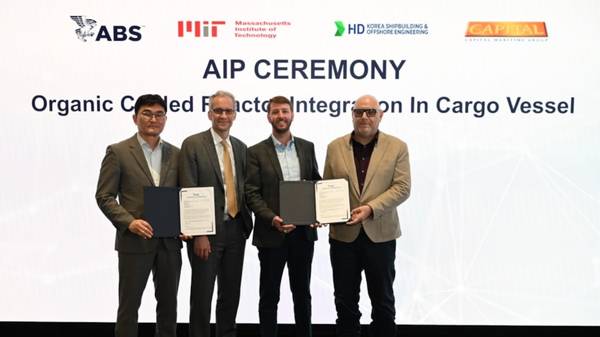
AiP award ceremony for nuclear reactor integration in cargo vessel design. ABS grants approval in principle for nuclear reactor integration in cargo vessel design  

ABS, HD KSOE, Capital Maritime Group and MIT have received approval in principle for a nuclear-powered cargo vessel propulsion system.

Green e-fuel export corridor consortium partners logos. Green e-fuel export corridor between Brazil and Belgium advances to feasibility stage  

A consortium has been formed to develop a green e-fuel corridor linking Porto do Açu to Antwerp-Bruges.

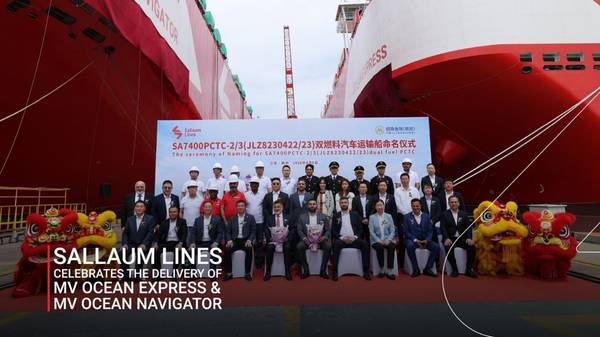
Naming ceremony of Ocean Express and Ocean Navigator vessels. Sallaum Lines takes delivery of two LNG-fuelled PCTCs in simultaneous handover ceremony  

RoRo carrier receives MV Ocean Express and MV Ocean Navigator from Chinese shipyard.

Person signing a document. Agastya Group signs MoU with Andhra Pradesh government for 1 MTPA green methanol hub at Mulapeta Port  

India-based Agastya Group plans a $6.5bn green methanol export facility on the country's east coast.


↑  Back to Top