Shell Western LNG B.V. (Shell) on Monday signed a framework agreement with
Carnival Corporation & plc to be its supplier of marine liquefied natural gas (LNG) to power the world's first fully LNG-powered cruise ships.
Under this framework agreement, Shell will initially supply Carnival Corporation's
AIDA Cruises and
Costa Cruises brands with fuel for two new LNG-powered ships expected to launch in 2019 with itineraries visiting ports in northwest Europe and the Mediterranean.
As part of the deal, these two ships, built with Carnival Corporation's next-generation 'green cruising' ship design, will utilize Shell's infrastructure in cruise ports to refuel with LNG throughout their itineraries. The vessels, equipped with dual-fuel engines, are the first of a new generation of cruise ships fully powered by LNG both while in port and at sea.
"We are committed to reducing our air emissions and improving air quality by evaluating new and established solutions such as LNG - an especially promising option because of its environmental and other benefits," said
Tom Strang, senior vice president of maritime affairs for Carnival Corporation. "We are proud to be on the forefront of advancing LNG as a fuel source for the cruise industry and creating an entirely new model for powering next-generation cruise ships. We look forward to a productive partnership with Shell, which has the experience and shared commitment to quality, safety and operational efficiency needed to help us bring this innovative LNG initiative to life with the first fully LNG-powered ships in the global cruise industry."
The ships will be the first in the cruise industry use LNG to generate 100 percent of the ship's power both in port and on the open sea - an innovation that will also support Carnival Corporation's sustainability goals.
"We have been working closely with Carnival to get to this point in our commercial partnership," said
Lauran Wetemans, Shell's General Manager Downstream LNG. "Working together from an early stage is critical in helping the transition to cleaner LNG cruising. This is a unique partnership that will contribute to a robust and reliable LNG fuel supply chain, along with opportunities for future growth."
The agreement builds on the partnership established between Carnival Corporation's AIDA Cruises brand and Shell in April of this year to supply its
AIDAprima ship with LNG to power the vessel while docked. The AIDAprima is the first cruise ship in the world to use LNG while in port. Additionally, the agreement furthers the realization of Carnival Corporation's LNG efforts that began in 2015 with
AIDAsol becoming the first cruise ship in the world to be supplied with power by an LNG hybrid barge.
Today's announcement was made on the heels of the company's order in September of three additional next-generation cruise ships that will be fully powered by LNG, bringing its fully LNG-powered ship orders total to seven across four of its 10 global cruise lines. Two of the new LNG-powered ships are designated for
Carnival Cruise Line, with delivery dates expected in 2020 and 2022, and one is designated for
P&O Cruises UK, with an expected delivery date in 2020. The remaining two vessels will also be built for the
Costa Cruises and
AIDA Cruises brands and are expected to enter service in 2021.
As part of the framework agreement, Carnival Corporation and Shell also have the opportunity to partner together on supplying marine LNG fuel to future LNG-powered vessels or additional itineraries. The overarching agreement enables each Carnival Corporation brand to negotiate individual LNG supply contracts with Shell as new LNG-powered cruise ships begin to launch over the coming years.
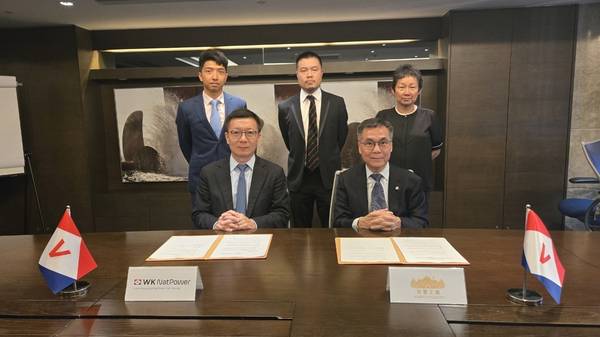
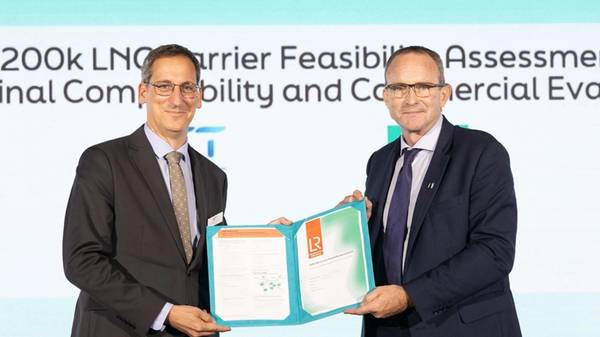
Image: Carnival Corporation signed an agreement with Shell Western LNG B.V. to be its LNG supplier. Representatives include Lauran Wetemans, Shell's General Manager Downstream LNG (front left), and Michael Thamm, CEO of Carnival's Costa Group (front right)