This is a legacy page. Please click here to view the latest version.
Fri 12 Aug 2016, 07:53 GMT

ExxonMobil launches second accredited MFM in Hong Kong


Development follows the launch of Hong Kong's first independently accredited MFM in December.


ExxonMobil has introduced its second independently accredited mass flow meter (MFM) system in Hong Kong on board the bunker vessel Anelly. It follows the introduction of the first independently accredited MFM in Hong Kong, fitted on the barge Anshing.

Both metering systems are fully accredited by Lloyd's Register, in partnership with A*STAR's National Metrology Centre (NMC), the national measurement institute of Singapore, and Metcore International, a consultancy with expertise in MFMs for bunkering.

In line with industry best practice, the technology directly measures fuel mass - instead of volume - to provide an accurate measurement for vessel operators. The system's seals are validated by independent third parties that enhance traceability and help to ensure system integrity.

MFMs are designed to provide various benefits for vessel operators, suppliers and regulatory bodies. These include enhanced accuracy as a result of measuring fuel mass, increased efficiency and reduced uncertainties related to variables, including density and temperature.

Citing the example of a purchase and delivery of 1,000 metric tonnes at $300 per tonne, ExxonMobil calculates that an MFM can save an estimated US$5,0001 and up to three hours per delivery alongside, improving transparency as measurement data is logged throughout the process. The savings calculation is based on: surveyor costs (up to $2,000), a temperature measurement delta of 10 degrees centigrade (up to $2,100) and a 3-kilogramme-per-cubic-metre (kg/cbm) density delivery range (up to $1,000).

ExxonMobil introduced the first independently accredited mass flow metering system in Hong Kong in December 2015. Following accreditation by Lloyd's Register, the MFM was installed on the time-chartered bunker vessel Anshing to deliver ISO 8217:2012 bunker fuel grades RMG 380 and RMK 500.

"Our first mass flow metering system in Hong Kong received a very positive response from customers and has proved to be a great success. This second barge will help to ensure the majority of ExxonMobil fuel deliveries will be supplied via mass flow metering and also cater for larger stem sizes," said Deepankar Banerjee, ExxonMobil's Asia Pacific marine fuels sales manager.

"ExxonMobil and Lloyd's Register continue to work together to increase access to fully accredited mass flow metering system fuel delivery services in Hong Kong," said Douglas Raitt, Lloyd's Register Marine's regional consultancy manager. "Both ExxonMobil systems are independently validated and sealed, which underlines the security of the system versus other non-accredited meters in the market."

The expansion of independently accredited mass flow metering bunker fuel delivery services into Hong Kong follows its pioneer introduction in Singapore four years ago; an ExxonMobil-chartered bunker tanker was the first in Singapore to use a mass flow metering system approved by the Maritime and Port Authority of Singapore (MPA) for the commercial transfer of bunker fuel. The MFM-aided fuel transfer between the bunker tanker MT Emissary and Kota Layang took place on 11th July 2012.

In February of this year, the world's first National Technical Reference [TR] for Bunker Mass Flow Metering (TR48 : 2015) was launched in support of the Maritime and Port Authority of Singapore (MPA)'s initiative to use the MFM system for marine fuel oil deliveries in Singapore with effect from 1st January 2017.

According to the MPA, the TR "sets out clear requirements measurement and system integrity that provides a fair basis for custody transfer between the bunker supplier and bunker buyer in Singapore".


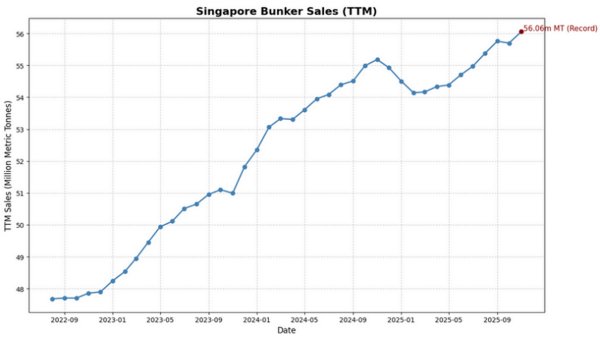
Chart showing Singapore TTM bunker sales, November 2025. Singapore bunker sales break new ground as TTM volumes surpass 56m tonnes  

Trailing 12-month bunker sales rise to new all-time record at Asian port.

Bow Leopard vessel. Odfjell launches operational green corridor between Brazil and Europe using biofuel  

Chemical tanker operator establishes route using B24 sustainable biofuel without subsidies or government support.

United LNG I vessel. Somtrans christens 8,000-cbm LNG bunker barge for Belgian and Dutch ports  

United LNG I designed for inland waterways and coastal operations up to Zeebrugge.

Photograph of a red container vessel. BIMCO adopts FuelEU Maritime and ETS clauses for ship sales, advances biofuel charter work  

Documentary Committee approves regulatory clauses for vessel transactions, progresses work on decarbonisation and emerging cargo contracts.

ABS, Eneos, NYK Line and Seacor Holdings logos side by side. Four companies launch study for US methanol bunkering network  

ABS, Eneos, NYK Line, and Seacor to develop ship-to-ship methanol supply operations on Gulf Coast.

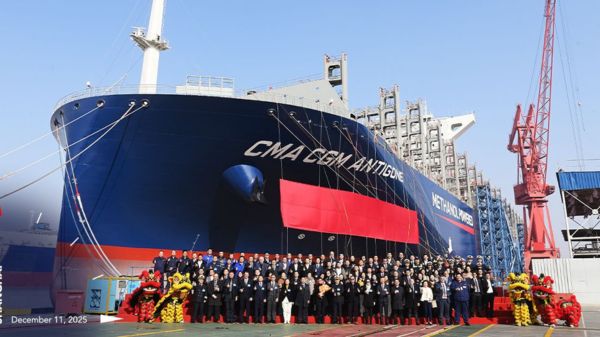
CMA CGM Antigone naming ceremony. CMA CGM names dual-fuel methanol vessel for Phoenician Express service  

CMA CGM Antigone to operate on BEX2 route connecting Asia, the Middle East and Mediterranean.

Capt. Kevin Wong, Golden Island. Golden Island appoints Capt Kevin Wong as chief operating officer  

Wong to oversee ship management and low-carbon fuel development at Singapore-based marine fuels company.

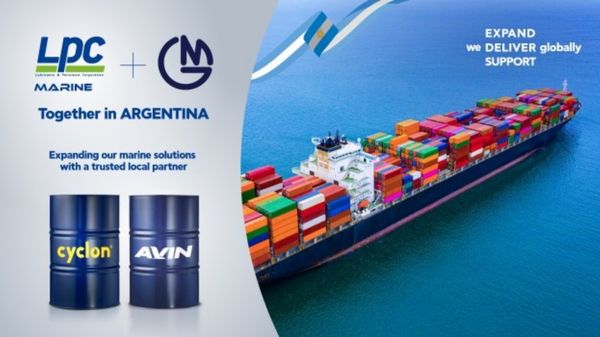
LPC and Gram Marine launch operations in Argentina graphic. LPC launches Argentine marine lubricants hub with Gram Marine  

Motor Oil Hellas subsidiary partners with maritime services provider to supply products to regional ports.

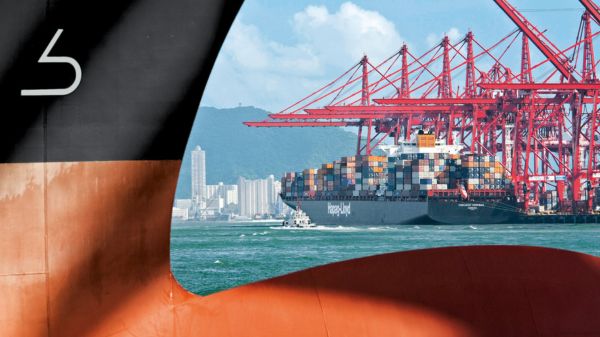
Chicago Express vessel. Hapag-Lloyd orders eight methanol-powered container ships worth over $500m  

German carrier signs deal with CIMC Raffles for 4,500-teu vessels for 2028-29 delivery.

Global Ethanol Association (GEA) and Vale logo side by side. Vale joins Global Ethanol Association as founding member  

Brazilian mining company becomes founding member of association focused on ethanol use in maritime sector.


↑  Back to Top