This is a legacy page. Please click here to view the latest version.
Wed 24 Sep 2008, 08:01 GMT

Norwegian firm develops fuel-saving system


New sensor technology aims to increase vessel fuel efficiency.


As part of the company's new Green Ship strategy, Kongsberg Maritime has announced that it is working with Austrian firm AVL to create a continuous engine performance monitoring system that aims to increase vessel fuel efficiency whilst also reducing fuel costs.

In a statement released by Norway-based Kongsberg Maritime, the company said that the increasing cost of marine fuel, combined with taxation charges for CO2, NOx and SOx emissions, has meant that demand from the shipping industry for ways to analyse and, in turn, improve an engine's performance has increased.

According to Kongsberg, the ability to create fuel savings of even a few per cent have been limited up until now as current sensor technology cannot provide optimal engine efficiency through continuous monitoring.

AVL's new sensors however, which the company developed as part of its engine performance & optimisation system (AVL EPOS) are based on gallium orthophosphate crystals, which the company claims can operate in temperatures up to 600 °C, as opposed to traditional quartz crystal sensors that can only operate up to around 275 °C.

"This makes it possible for the first time to provide continuous engine performance monitoring," according to the Norwegian firm.

Kongsberg Maritime says that it will be offering continuous engine performance monitoring through its integrated systems, such as the K-Chief automation system, MBB VDR and the FleetMaster electronic logbook.

Commenting on the monitoring capabilities of the new system, Dr. Ruediger Teichmann, AVL's global business segment manager, combustion measurement division said "Unlike previous systems, our sensors are fitted to points on the engines and remain there throughout their lifetime. This means that they are able to continuously monitor the engine's performance and constantly provide detailed analysis of the situation whenever required.

"We are very proud of the work we have done in being able to develop these new crystal sensors and Kongsberg Maritime's knowledge of the shipping sector means they understand the value of such a technology," added Teichmann.

The AVL EPOS with the new sensor technology and Kongsberg Maritime's integrated systems are currently working together onboard Hoegh Autoliners' 6,100 vehicle capacity car carrier, the Hoegh Detroit [pictured].

Kongsberg claims that although the system is complex, the interface is simple, meaning that a broader range of crewmembers can use it. It uses a practical 'traffic light' system to notify crew of any performance problems.

This information is currently used onboard and sent manually to the shore office. However, as the trial continues Kongsberg aims to implement automatic reporting to the shore office via Inmarsat.

Speaking about the partnership with AVL, Morten Olsen, Sales & Marketing Manager of Kongsberg Maritime Europe and America, said "Our two companies have worked extremely well in a short timeframe to bring our complementary skills to bear on a challenging problem. With environmental concerns and fuel savings being at the top of every shipowner's agenda, I believe together we have swiftly created a product that can have a major positive impact on any vessel's green performance."

Norway 

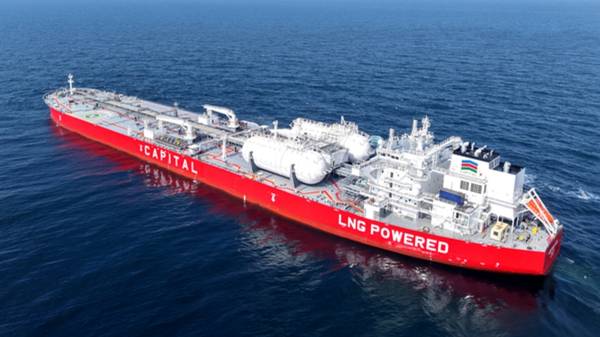
Capital's LNG-powered vessel. Chinese shipbuilder delivers 155,500-dwt LNG dual-fuel crude oil tanker  

Vessel handed over to Capital Ship Management Corp in China.

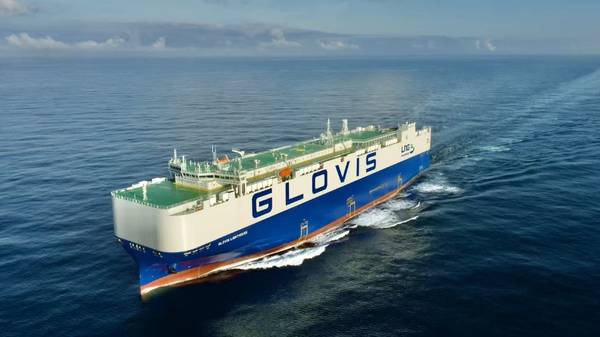
Glovis Lighthouse vessel. Seaspan takes delivery of first 10,800-ceu dual-fuel LNG car carrier  

Glovis Lighthouse enters service as one of a handful of vessels globally to exceed 10,000 CEU capacity.

Port of Rotterdam, Maersk, Core Power and Lloyd's Register logos. Rotterdam study maps pathway for nuclear-powered commercial ship port calls  

A joint study by Lloyd's Register, the Port of Rotterdam, Core Power and Maersk examines the feasibility of nuclear vessel port calls.

Hakata waterfront. Kinkai Yusen conducts first biofuel demonstration on domestic ro-ro vessel at Hakata Port  

Japanese shipping company to trial B24 biofuel blend aboard the vessel Nanotsu on 16 June.

Norwegian Energy Trading (NET) AS logo. Norwegian Energy Trading renews ISCC certification for biofuel trading  

Norwegian bunker trader says renewal reflects growing biofuel volumes and commitment to verifiable sustainability standards.

Ivy Cove vessel. Jiangnan delivers VLAC with LPG dual-fuel main engine  

Vessel is claimed to be the world’s first 93,000 cbm very large ammonia carrier.

BIMCO logo. BIMCO adopts biofuel clause for time charter parties  

Shipping body has introduced a new contractual clause to govern the use of biofuels under time charter agreements.

Prince Madog hydrogen fuel cell retrofit receives LR certification. UK research vessel Prince Madog wins LR certification for hydrogen fuel cell retrofit  

Lloyd’s Register certifies what is claimed to be the first sea-going, manned hydrogen retrofit of its kind.

World Fuel logo. World Fuel seeks marine lube operations and sales executive in Greece  

US firm is recruiting for a commercial role focused on marine lubricants, based out of its Glyfada office.

ECSA Parliamentary Breakfast event. European Shipowners calls for fuel supplier mandates and ETS revenue investment ahead of policy revision  

Industry body urges EU policymakers to redirect carbon revenues into clean marine fuel production.


↑  Back to Top


 Recommended