This is a legacy page. Please click here to view the latest version.
Wed 10 Sep 2008, 11:28 GMT

Maersk announces new BAF formula


BAF for dry and refrigerated containers to come into effect in October.


Leading ocean carrier Maersk Line has announced that it is introducing a new Bunker Adjustment Factor (BAF) for its Far East to Europe, Intra European, and Europe to Middle East and South Asia trades as of 1st October 2008.

The BAF for dry and refrigerated containers will be as follows:

Far East – Europe (Westbound):

* USD 720 per 20’ container
* USD 1440 per 40’ container

Far East – Europe (Eastbound):

* USD 240 per 20’ container
* USD 480 per 40’ container

Intra Europe - North Europe to Mediterranean and Black Sea:

* EUR 270 per 20’ container
* EUR 540 per 40’ container
* USD 400 per 20’ container (to and from Israel)
* USD 800 per 40’ container (to and from Israel)
* GBP 215 per 20’ container (to and from United Kingdom)
* GBP 430 per 40’ container (to and from United Kingdom)

Intra Europe - Mediterranean and Black Sea to North Europe:

* EUR 270 per 20’ container
* EUR 540 per 40’ container
* USD 400 per 20’ container (to and from Israel)
* USD 800 per 40’ container (to and from Israel)
* GBP 215 per 20’ container (to and from United Kingdom)
* GBP 430 per 40’ container (to and from United Kingdom)

Intra Europe - Mediterranean Sea and Black Sea to Mediterranean and Black Sea (Intra Med and Intra Black Sea):

* EUR 135 per 20’ container
* EUR 270 per 40’ container
* USD 200 per 20’ container (to and from Israel)
* USD 400 per 40’ container (to and from Israel)

Intra Europe - North Europe to North Europe:

* EUR 135 per 20’ container
* EUR 270 per 40’ container
* GBP 110 per 20’ container (to and from United Kingdom)
* GBP 220 per 40’ container (to and from United Kingdom)

Europe - Middle East and South Asia

Eastbound and Westbound:

* USD 465 per 20’ container
* USD 930 per 40’ container

With the launch of the Maersk Line bunker formula and the phase out of the Far East Freight, EMTA, EMERA and IPBCC Conferences, Maersk Line says it will apply the formula on a revenue neutral basis for tariff & contracts with floating BAF. This means that any reduction/increase in BAF will be offset by and equivalent increase/decrease in the Base rate.

The company says it will revise the BAF for both dry and refrigerated containers on a monthly basis.

Commenting on the new BAF Maersk Line said "Our aim is to provide a simple, fair and transparent BAF for our customers - allowing us to share the risks and opportunities from the fluctuating bunker prices".

Maersk's BAF Calculator can be found at http://baf.maerskline.com or www.maerskline.com/baf. This online tool uses a formula developed by Maersk Line to calculate the BAF for any given trade. The user simply selects the load and discharge country and the container type. The BAF Calculator then works out the bunker charge in USD per unit for each container type.

The website also includes an online simulator so users can see how the BAF will fluctuate according to changes in the bunker price.


VPS logo. Fuel quality management for vessels in extended idle: Arabian Gulf, Gulf of Oman and adjacent anchorages | Rahul Choudhuri, VPS  

Managing fuel quality deterioration following the closure of the Strait of Hormuz.

Person signing a document. Agastya Green Fuels signs 250,000 t/yr e-methanol offtake deal with Sri Lanka’s SAR Group  

Indian producer and Sri Lankan maritime firm agree long-term green methanol supply partnership.

Bunker Holding logo. Bunker Holding seeks risk specialist for Copenhagen internal pricing desk  

Danish bunker group is expanding its internal pricing team to meet growing demand for fixed-price solutions.

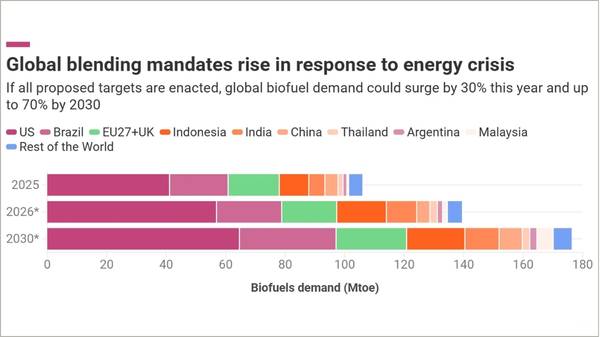
Global biofuels demand chart. Biofuel demand could surge 70% by 2030 as food price fears mount  

T&E warns governments risk trading an oil crisis for a food crisis as biofuel targets strain vegetable oil and fertiliser markets.

Shore power illustration. Shore power shifts from voluntary measure to compliance requirement, DNV white paper finds  

Shore power is moving from an optional emissions tool to a regulatory obligation for shipowners in key trades.

Giosuè Vezzuto and Ahmed Eldemerdash. Baker Hughes’ NovaLT 16 gas turbine receives RINA type approval for marine propulsion on hydrogen and natural gas  

Certification covers operation on natural gas and blends up to 100% hydrogen for marine use.

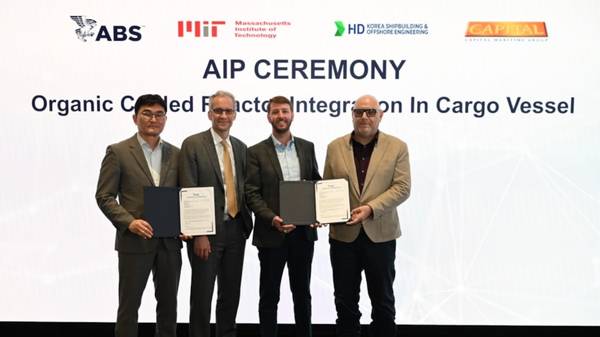
AiP award ceremony for nuclear reactor integration in cargo vessel design. ABS grants approval in principle for nuclear reactor integration in cargo vessel design  

ABS, HD KSOE, Capital Maritime Group and MIT have received approval in principle for a nuclear-powered cargo vessel propulsion system.

Green e-fuel export corridor consortium partners logos. Green e-fuel export corridor between Brazil and Belgium advances to feasibility stage  

A consortium has been formed to develop a green e-fuel corridor linking Porto do Açu to Antwerp-Bruges.

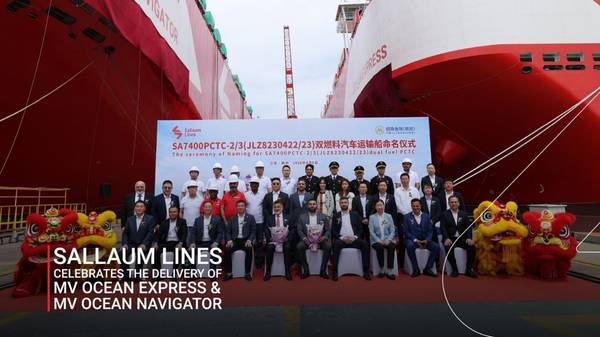
Naming ceremony of Ocean Express and Ocean Navigator vessels. Sallaum Lines takes delivery of two LNG-fuelled PCTCs in simultaneous handover ceremony  

RoRo carrier receives MV Ocean Express and MV Ocean Navigator from Chinese shipyard.

Person signing a document. Agastya Group signs MoU with Andhra Pradesh government for 1 MTPA green methanol hub at Mulapeta Port  

India-based Agastya Group plans a $6.5bn green methanol export facility on the country's east coast.


↑  Back to Top