This is a legacy page. Please click here to view the latest version.
Wed 10 Sep 2008, 09:51 GMT

Study: More soot from tugs than any other vessel


Researchers reveal conclusions from comprehensive soot emission study.


Tugboats puff out more soot for the amount of fuel used than other commercial vessels, and large cargo ships emit more than twice as much soot as previously estimated, according to the first extensive study of commercial vessel soot emissions.

Scientists from the National Oceanic and Atmospheric Administration (NOAA) and the University of Colorado conducted the study and presented their findings in the journal Geophysical Research Letters.

In the study, the researchers said the primary sources of soot, or small particles of black carbon, are fossil fuel combustion, wildfires, and burning vegetation for agricultural purposes. They claimed an increase in soot in the Arctic may contribute to climate change if shipping routes expand.

“Commercial shipping emissions have been one of the least studied areas of all combustion emissions,” said lead author Daniel Lack, of the NOAA’s Earth System Research Laboratory (ESRL) and the NOAA-CU Cooperative Institute for Research in Environmental Sciences. “The two previous studies of soot emissions examined a total of three ships. We reviewed plumes from 96 different vessels.”

Lack and his colleagues observed emission plumes from commercial vessels in open ocean waters, channels, and ports along the southeast United States and Texas. From the NOAA research vessel, Ronald H. Brown, the team measured black carbon emitted by tankers, cargo and container ships, large fishing boats, tug boats, and ferries, many of them in the Houston Ship Channel.

Commercial shipping releases roughly 130,000 metric tons of soot per year, or 1.7 percent of the global total — much of it near highly populated coastlines, the authors estimate. In the coming years global shipping is expected to grow two to six percent annually.

Tugs emit nearly a gram of soot per kilogram of fuel burned — twice as much as any other vessel type, the authors found. They said the high levels of soot point to the type of fuel being used and indicated that engine age and maintenance also play a role. Tugboats have a disproportionate impact on air quality because they travel within ports, emitting potentially harmful particles near populous urban areas, according to the authors.

“Tugboats are a huge source of black carbon that may be under-reported or not reported at all in emissions inventories compiled by ports,” said Lack.

Oceangoing tankers and container ships emit half a gram per kilogram of fuel burned when at dock and slightly less when traveling, according to the study. That’s more than twice as much as previously estimated.

A 2007 study by American and German scientists linked particle pollution from shipping to tens of thousands of premature deaths each year, most of them along coastlines in Europe, East Asia, and South Asia. "Soot makes up a quarter of that pollution", said Lack.

On a global scale, soot currently traps about 30 percent as much heat as does carbon dioxide, the most important greenhouse gas, according to the latest assessment of the Intergovernmental Panel on Climate Change.

The small dark particles absorb sunlight, create haze, and affect how clouds form and make rain, further altering a region’s heat balance, according to the new study. The NOAA scientists said that if commercial shipping extends new routes through Arctic waters as they become navigable, soot emissions there could increase.


VPS logo. Fuel quality management for vessels in extended idle: Arabian Gulf, Gulf of Oman and adjacent anchorages | Rahul Choudhuri, VPS  

Managing fuel quality deterioration following the closure of the Strait of Hormuz.

Person signing a document. Agastya Green Fuels signs 250,000 t/yr e-methanol offtake deal with Sri Lanka’s SAR Group  

Indian producer and Sri Lankan maritime firm agree long-term green methanol supply partnership.

Bunker Holding logo. Bunker Holding seeks risk specialist for Copenhagen internal pricing desk  

Danish bunker group is expanding its internal pricing team to meet growing demand for fixed-price solutions.

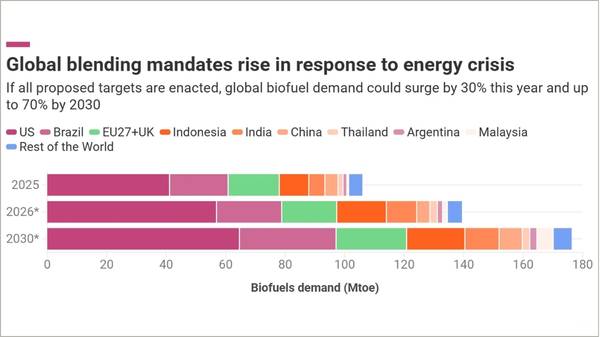
Global biofuels demand chart. Biofuel demand could surge 70% by 2030 as food price fears mount  

T&E warns governments risk trading an oil crisis for a food crisis as biofuel targets strain vegetable oil and fertiliser markets.

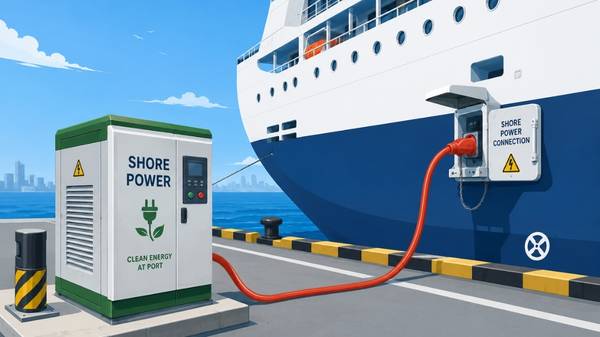
Shore power illustration. Shore power shifts from voluntary measure to compliance requirement, DNV white paper finds  

Shore power is moving from an optional emissions tool to a regulatory obligation for shipowners in key trades.

Giosuè Vezzuto and Ahmed Eldemerdash. Baker Hughes’ NovaLT 16 gas turbine receives RINA type approval for marine propulsion on hydrogen and natural gas  

Certification covers operation on natural gas and blends up to 100% hydrogen for marine use.

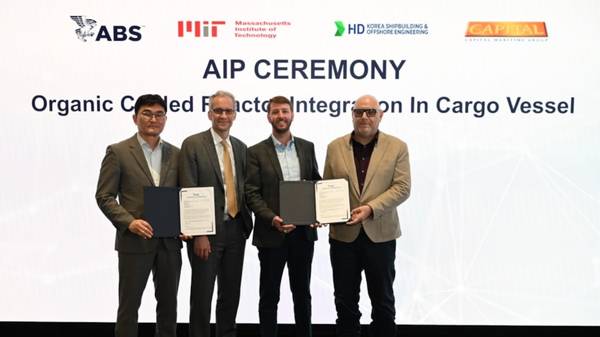
AiP award ceremony for nuclear reactor integration in cargo vessel design. ABS grants approval in principle for nuclear reactor integration in cargo vessel design  

ABS, HD KSOE, Capital Maritime Group and MIT have received approval in principle for a nuclear-powered cargo vessel propulsion system.

Green e-fuel export corridor consortium partners logos. Green e-fuel export corridor between Brazil and Belgium advances to feasibility stage  

A consortium has been formed to develop a green e-fuel corridor linking Porto do Açu to Antwerp-Bruges.

Naming ceremony of Ocean Express and Ocean Navigator vessels. Sallaum Lines takes delivery of two LNG-fuelled PCTCs in simultaneous handover ceremony  

RoRo carrier receives MV Ocean Express and MV Ocean Navigator from Chinese shipyard.

Person signing a document. Agastya Group signs MoU with Andhra Pradesh government for 1 MTPA green methanol hub at Mulapeta Port  

India-based Agastya Group plans a $6.5bn green methanol export facility on the country's east coast.


↑  Back to Top