This is a legacy page. Please click here to view the latest version.
Tue 9 Sep 2008, 11:12 GMT

Low fuel consumption engines to be developed


Manufacturers to construct engines with low fuel consumption that comply with emissions regulations.


Mitsubishi Heavy Industries, Ltd. (MHI) and Wärtsilä Corporation of Finland will jointly develop new small, low-speed marine diesel engines with cylinder bores of 350 and 400 millimeters (mm), which the companies claim will reduce fuel consumption and comply with IMO Tier II emissions regulations.

The new engines, set to have a power range of 3,500–9,000 kW, will be developed in collaboration, taking advantage of the strengths of the two companies. For both the 350 mm and 400 mm cylinder bore models, MHI will develop the mechanically controlled UEC-LSE series, and Wärtsilä will develop the Wärtsilä RT-flex electronically controlled common-rail engines and Wärtsilä RTA mechanically controlled engines. The first of the 350 mm bore engines will be available in the first quarter of 2011 and the 400 mm bore engines a year later.

The new engines will extend the low-speed engine range available for many types of small and medium-sized commercial vessels. They are being designed to provide the optimal power and speed for a wide variety of ship types, such as small handysize bulk carriers of less than 30,000 deadweight tonnage (DWT), product tankers, general cargo vessels, reefers, feeder container ships, and small LPG carriers. The market for the new engines in such vessels is world-wide, though there is said to be a greater volume of such new constructions at shipyards in East Asia, especially China, Korea, Japan and Vietnam.

The key benefits of the new engines are said to be their compliance with IMO Tier II emissions regulations, low fuel consumption, a low cylinder oil feed rate, high reliability, and long times between overhauls. They will also be able to provide optimum fits to ships in terms of power, propeller speed, dimensions, weight, and electrical power consumption, as well as being competitive in manufacturing costs.

The Mitsubishi UEC35LSE, Wärtsilä RT-flex35 and Wärtsilä RTA35 engine types will have cylinder dimensions of 350 mm bore by 1,550 mm piston stroke, and a maximum continuous power of 870 kW/cylinder at 167 rev/min.

The Mitsubishi UEC40LSE, Wärtsilä RT-flex40 and Wärtsilä RTA40 will have cylinder dimensions of 400 mm bore by 1,770 mm piston stroke, and a maximum continuous power of 1,135 kW/cylinder at 146 rev/min. All these engine types will be available with five to eight cylinders, so that the UEC35LSE, RT-flex35 and RTA35 will cover an overall power range of 3,475 to 6,960 kW at 142–167 rpm, while the UEC40LSE, RT-flex40, and RTA40 will cover an overall power range of 4,550 to 9,080 kW at 124–146 rpm.

The Wärtsilä RT-flex35 and RT-flex40 engines will incorporate the latest common-rail technology with full electronic control of fuel injection and exhaust valve operation. The RTA35, UEC35LSE, RTA40 and UEC40LSE will have traditional mechanically driven camshafts with fuel injection pumps, exhaust valve actuator pumps, etc. Otherwise both versions will have the same principal characteristics and design features.

The Wärtsilä RT-flex and RTA engines will be manufactured by Wärtsilä’s licensees while the Mitsubishi UEC-LSE engines will be produced by Mitsubishi and its licensees.


VPS logo. Fuel quality management for vessels in extended idle: Arabian Gulf, Gulf of Oman and adjacent anchorages | Rahul Choudhuri, VPS  

Managing fuel quality deterioration following the closure of the Strait of Hormuz.

Person signing a document. Agastya Green Fuels signs 250,000 t/yr e-methanol offtake deal with Sri Lanka’s SAR Group  

Indian producer and Sri Lankan maritime firm agree long-term green methanol supply partnership.

Bunker Holding logo. Bunker Holding seeks risk specialist for Copenhagen internal pricing desk  

Danish bunker group is expanding its internal pricing team to meet growing demand for fixed-price solutions.

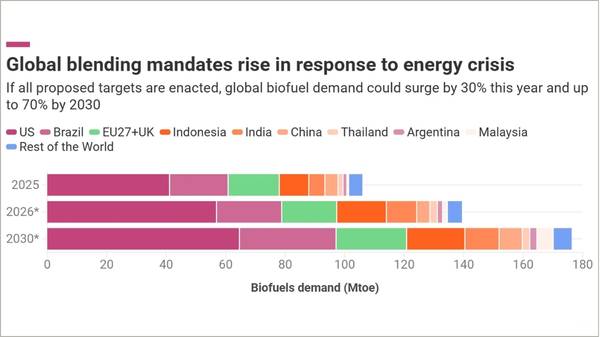
Global biofuels demand chart. Biofuel demand could surge 70% by 2030 as food price fears mount  

T&E warns governments risk trading an oil crisis for a food crisis as biofuel targets strain vegetable oil and fertiliser markets.

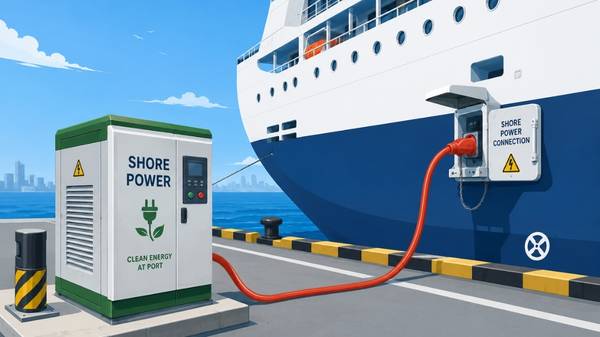
Shore power illustration. Shore power shifts from voluntary measure to compliance requirement, DNV white paper finds  

Shore power is moving from an optional emissions tool to a regulatory obligation for shipowners in key trades.

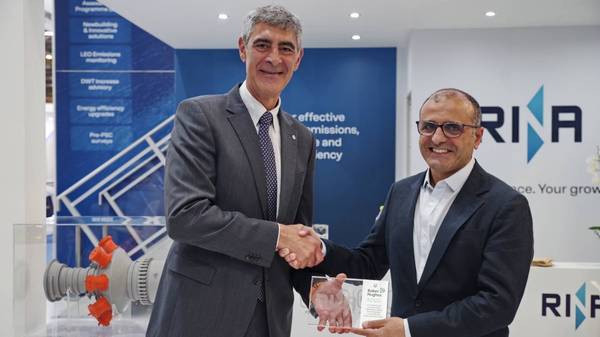
Giosuè Vezzuto and Ahmed Eldemerdash. Baker Hughes’ NovaLT 16 gas turbine receives RINA type approval for marine propulsion on hydrogen and natural gas  

Certification covers operation on natural gas and blends up to 100% hydrogen for marine use.

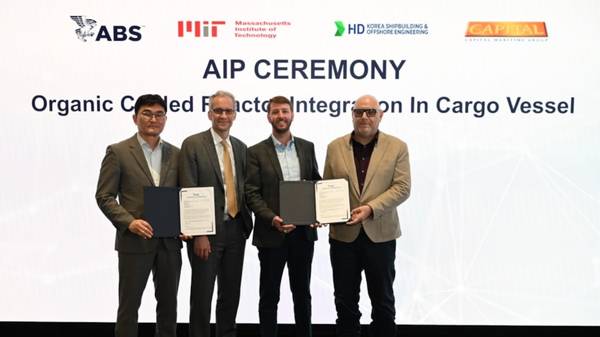
AiP award ceremony for nuclear reactor integration in cargo vessel design. ABS grants approval in principle for nuclear reactor integration in cargo vessel design  

ABS, HD KSOE, Capital Maritime Group and MIT have received approval in principle for a nuclear-powered cargo vessel propulsion system.

Green e-fuel export corridor consortium partners logos. Green e-fuel export corridor between Brazil and Belgium advances to feasibility stage  

A consortium has been formed to develop a green e-fuel corridor linking Porto do Açu to Antwerp-Bruges.

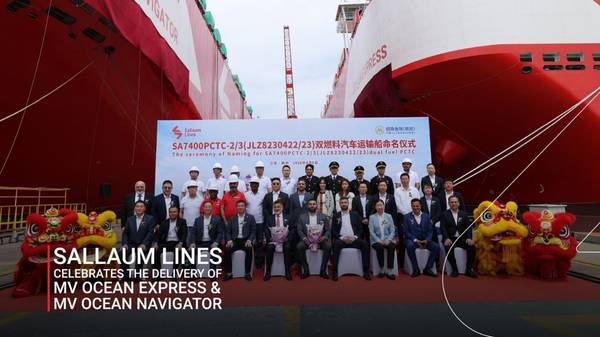
Naming ceremony of Ocean Express and Ocean Navigator vessels. Sallaum Lines takes delivery of two LNG-fuelled PCTCs in simultaneous handover ceremony  

RoRo carrier receives MV Ocean Express and MV Ocean Navigator from Chinese shipyard.

Person signing a document. Agastya Group signs MoU with Andhra Pradesh government for 1 MTPA green methanol hub at Mulapeta Port  

India-based Agastya Group plans a $6.5bn green methanol export facility on the country's east coast.


↑  Back to Top