This is a legacy page. Please click here to view the latest version.
Tue 9 Sep 2008, 08:03 GMT

Study: Cleaner fuels have zero GHG impact


Researchers claim use of cleaner fuels has a net zero impact on greenhouse gas emissions.


A new study carried out in the United States claims to demonstrate that the production and distribution of "cleaner" marine fuels creates a net zero impact on greenhouse gas emissions.

James Winebrake, Professor and Chair of the Department of Science, Technology and Society/Public Policy at Rochester Institute of Technology, and James Corbett, associate professor in the College of Marine and Earth Studies at the University of Delaware examined "Emission Tradeoffs among Alternative Marine Fuels: Total Fuel Cycle Analysis of Residual Oil, Marine Gas Oil, and Marine Diesel Oil," in a recent issue of Journal of the Air & Waste Management Association.

According to Winebrake and Corbett, reducing fuel sulphur content is an essential component of any strategy aimed at reducing sulphur oxide emissions from marine vessels - especially since global concerns have caused policy makers to accelerate the introduction of emission control technologies and cleaner fuels into the international marine sector. These tactics aim to improve air quality and human health and mitigate climate change.

"Cleaner fuels are expected to reduce sulfur and particulate emissions, however, greenhouse gas (GHG) emissions may increase because of the additional refining energy required to produce these fuels - residual oil, marine gas oil and marine diesel oil," Winebrake explained. "Our study provides a total fuel cycle emissions analysis to help quantify these emissions tradeoffs."

In the study, the two professors applied a jointly developed model called the Total Energy and Emissions Analysis for Marine Systems (TEAMS) model, which was developed to explore what are called "upstream" emissions associated with fuel production and distribution. Using the model, the authors reportedly demonstrated that although cleaner fuels increase GHG emissions during their production, they reduce GHG emissions during vessel operation, creating almost a net zero GHG impact.

The result was counter to claims which suggested that the use of cleaner fuels in the marine sector would exacerbate GHG problems.

"Given that the GHG impacts associated with cleaner fuels are almost nil, and given the tremendous advantages of these fuels with respect to other pollutants, policies that encourage cleaner fuels seem warranted," said Winebrake, who also published a paper last year with Corbett reportedly demonstrating significant premature human mortality across the globe due to emissions from ships.

"The global shipping sector is one of the last unregulated emissions sources, and our study will provide useful information to the ongoing international debate surrounding cleaner marine fuels," said Winebrake.


VPS logo. Fuel quality management for vessels in extended idle: Arabian Gulf, Gulf of Oman and adjacent anchorages | Rahul Choudhuri, VPS  

Managing fuel quality deterioration following the closure of the Strait of Hormuz.

Person signing a document. Agastya Green Fuels signs 250,000 t/yr e-methanol offtake deal with Sri Lanka’s SAR Group  

Indian producer and Sri Lankan maritime firm agree long-term green methanol supply partnership.

Bunker Holding logo. Bunker Holding seeks risk specialist for Copenhagen internal pricing desk  

Danish bunker group is expanding its internal pricing team to meet growing demand for fixed-price solutions.

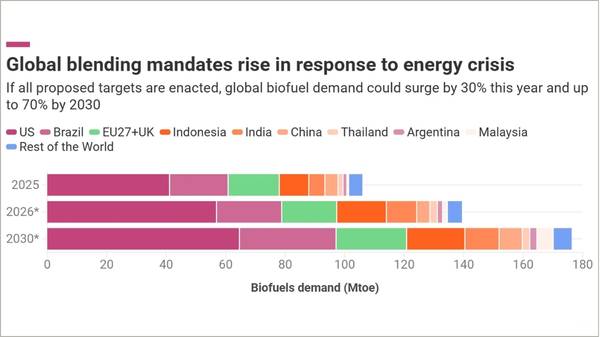
Global biofuels demand chart. Biofuel demand could surge 70% by 2030 as food price fears mount  

T&E warns governments risk trading an oil crisis for a food crisis as biofuel targets strain vegetable oil and fertiliser markets.

Shore power illustration. Shore power shifts from voluntary measure to compliance requirement, DNV white paper finds  

Shore power is moving from an optional emissions tool to a regulatory obligation for shipowners in key trades.

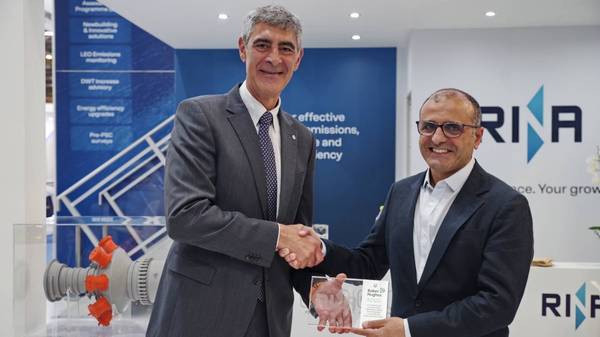
Giosuè Vezzuto and Ahmed Eldemerdash. Baker Hughes’ NovaLT 16 gas turbine receives RINA type approval for marine propulsion on hydrogen and natural gas  

Certification covers operation on natural gas and blends up to 100% hydrogen for marine use.

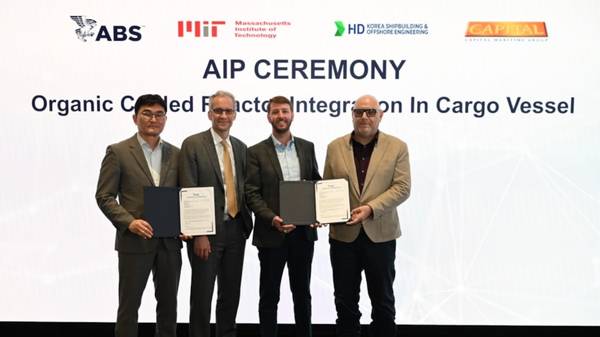
AiP award ceremony for nuclear reactor integration in cargo vessel design. ABS grants approval in principle for nuclear reactor integration in cargo vessel design  

ABS, HD KSOE, Capital Maritime Group and MIT have received approval in principle for a nuclear-powered cargo vessel propulsion system.

Green e-fuel export corridor consortium partners logos. Green e-fuel export corridor between Brazil and Belgium advances to feasibility stage  

A consortium has been formed to develop a green e-fuel corridor linking Porto do Açu to Antwerp-Bruges.

Naming ceremony of Ocean Express and Ocean Navigator vessels. Sallaum Lines takes delivery of two LNG-fuelled PCTCs in simultaneous handover ceremony  

RoRo carrier receives MV Ocean Express and MV Ocean Navigator from Chinese shipyard.

Person signing a document. Agastya Group signs MoU with Andhra Pradesh government for 1 MTPA green methanol hub at Mulapeta Port  

India-based Agastya Group plans a $6.5bn green methanol export facility on the country's east coast.


↑  Back to Top