This is a legacy page. Please click here to view the latest version.
Fri 29 Aug 2008, 09:42 GMT

Fuel costs hit CSCL first-half profit


Profit plunges 44% on surging costs and a fall in demand.


China Shipping Container Lines Co., Ltd. (CSCL), has reported a 44 percent drop in profit for the first half of the year due to a fall in demand and surging fuel costs.

The second largest box line in China recorded a profit of 637.2 million yuan (US$102 million) for the first six months, despite revenue growth of just over 5 percent to 18.4 billion yuan (US$2.7 million).

CSCL recorded turnover at 18.231 billion yuan (US$ 2.67 billion) for the six months ended 30 June 2008, up 4.8 percent as compared with the same period in 2007. Loaded container volume reached 3.57 million TEUs, 7.3 percent higher than that in the last corresponding period.

However, the company said a fall in demand in US and European trades had caused the fall in profit. Transpacific trade recorded the largest drop in income with revenues dropping 17 percent to 5.7 billion yuan and trade volume falling 12 percent to 680,000 TEU.

Volume on the Asia-Europe trade also decreased, falling from 716,000 TEU to 701,00 TEU, a drop of 2 percent. However, trade revenue still rose by 10.8 percent to 6 billion yuan.

Commenting on the results, the CSCL said "Having triumphed over the negative impacts from the shipping industry downturn and the macroeconomic environment, CSCL managed to achieve steady business development with our Asia Pacific and China Domestic routes, thus reporting satisfactory overall results in the first half of 2008. On top of that, through exercising stringent cost control measures, we managed to minimize impact of surging operating and fuel costs on our operations.”

CSCL's operating costs had increased as a result of the deployment of new shipping capacity and surging fuel costs. The company said it had implemented a series of measures to control its marine fuel consumption and, as a result, its oil consumption rate was down by 108,000 tonnes and oil consumption of average revenue per TEU dropped by 15 percent compared with the previous corresponding period.

The Group also reportedly saved US$9.48 million in fuel expenses due to the bulk purchase of fuels at discounted prices, thus minimizing the effect of soaring fuel costs.

Looking ahead, the company said it will continue to strengthen its fleet and shipping capacity to prepare for the industry traditional peak season in the second half of the year and also the future cyclical upturn.

CSCL said it was fully prepared for the upturn of the shipping cycle, and had expanded and optimized its fleet in the first half of the year. In the six months ended 30th June 2008, the company added shipping capacity in equivalent to 5,991 TEUs increasing the total to 452,000 TEUs, of which 82.8% were large container vessels of capacity over 4,000 TEUs.

In addition to an order with Samsung Heavy Industries Company Limited for eight large container vessels of total capacity of 13,300 TEUs, CSCL acquired and ordered 13 vessels from China Shipping Development and China State Shipbuilding Corporation in the first half year to boost the size of its fleet.

The company said it will also actively adjust the shipping capacity allocation by devoting more shipping capacity to routes with good performance and make timely adjustment based on changes in demand for domestic and international routes.


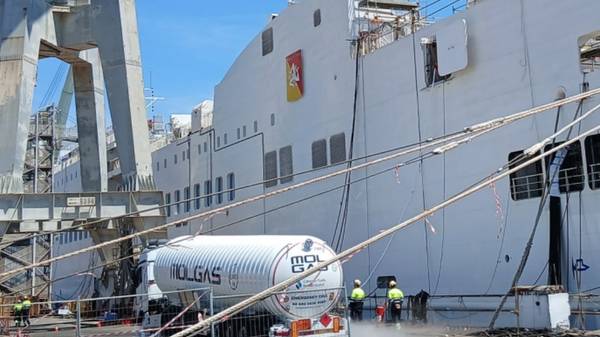
Truck-to-ship (TTS) LNG bunkering at Port of Palermo. Molgas completes first LNG bunkering operation at Palermo  

Spanish energy firm carries out maiden LNG delivery at Sicilian port.

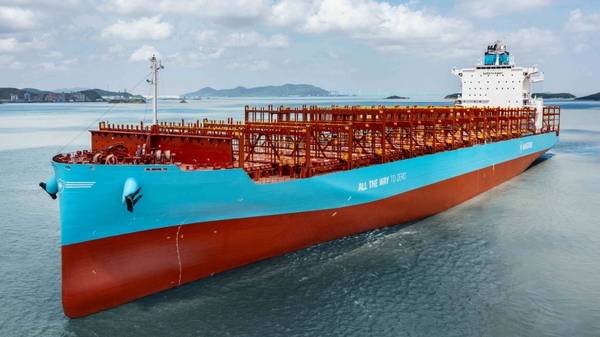
Maersk 5,900-teu vessel. Tsuneishi China delivers third methanol dual-fuel boxship in series  

Zhoushan shipbuilder hands over another 5,900-teu Maersk container vessel.

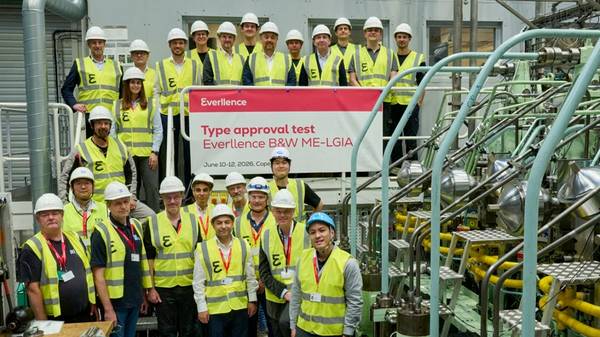
Type approval test (TAT) for ME-LGIA ammonia engine. Everllence completes type approval test for ammonia engine ahead of sea trials  

Eight classification societies oversee testing of ME-LGIA ammonia engine at Copenhagen research centre.

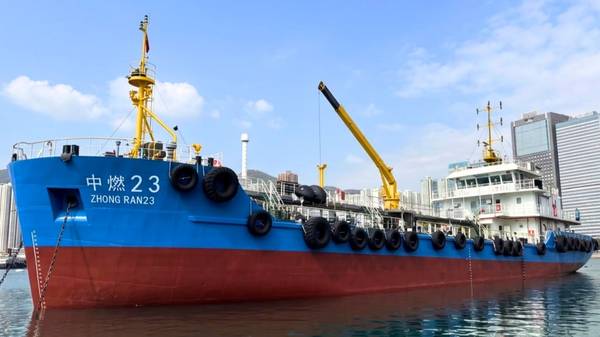
Zhong Ran 23 vessel. CPN bunker barge becomes first vessel listed under Hong Kong’s new quality bunkering scheme  

Zhong Ran 23 achieves listing under the Marine Department’s voluntary mass flow metering initiative.

Peder Moller, Bunker Holding. Bunker Holding posts $73m pre-tax profit amid geopolitical headwinds and board overhaul  

Marine fuels exceeds its own expectations despite 4% revenue decline.

Oilmar Board of Directors graphic. Oilmar formalises governance structure with establishment of board of directors  

Dubai-based marine fuels trader Oilmar appoints three-member board.

Henrik Andersen, Vestas Wind Systems A/S. Vestas Wind Systems CEO appointed vice chair of Bunker Holding  

Henrik Andersen joins the board of the marine fuels group with more than two decades of international business experience.

Tina Revsbech, Maersk Tankers. Maersk Tankers CEO Tina Revsbech joins Bunker Holding board  

Danish USTC Group appoints shipping veteran to subsidiary’s board of directors.

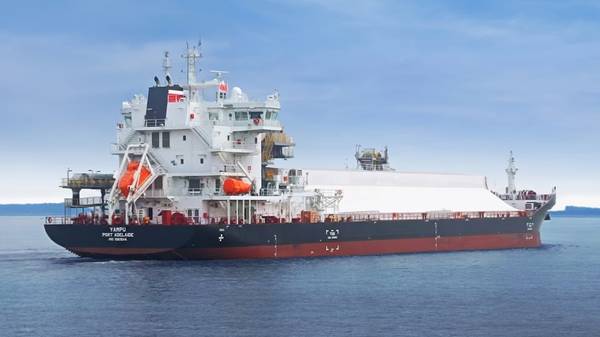
Yampu vessel. CSL delivers world’s first battery-powered self-unloading bulk carrier  

MV Yampu will transport limestone for Adbri in Australia, with full electric operation targeted by 2031.

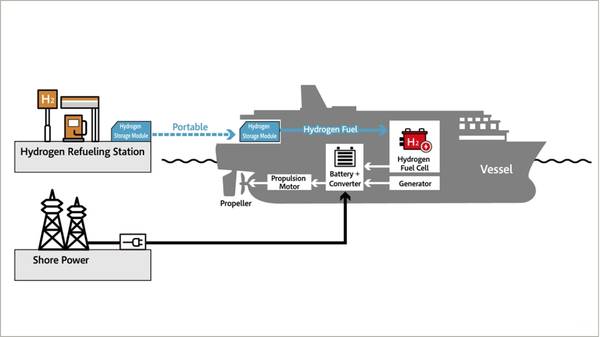
Illustration of hydrogen fuel cell system. NYK, Yanmar and Eneos to install hydrogen fuel cell system on new Tokyo dining cruise vessel  

Three Japanese companies are collaborating to bring hydrogen propulsion to a dining cruise ship due to enter service in 2027.


↑  Back to Top