Source: Engie
The Antwerp Port Authority and ENGIE have signed a 30-year concession agreement for the development of an Alternative Energy Hub at Quays 526 and 528 in the Port of Antwerp.
The Alternative Energy Hub will consist of a bunker and filling station with liquefied natural gas (LNG) for inland navigation and road transport. The site will also feature a compressed natural gas (CNG) filling station and rapid chargers for electric vehicles.
With the development of the Alternative Energy Hub, the Port of Antwerp and ENGIE are taking a major step forward in the energy transition and promoting sustainable energy consumption in the transport sector. The concession takes effect on 1 October 2016 and the first phase of the hub will be operational by the end of 2017.
Port of Antwerp – a green port
The Port of Antwerp aims to remain a leader in creating a sustainable and green port. Through its efforts it is seeing the number of environmentally friendly seagoing vessels rise with every passing year. In taking the initiative to appoint a concession holder for the development of an Alternative Energy Hub it is demonstrating its commitment to becoming more environmentally friendly.
The Port Authority has been an LNG pioneer for some years now. With the LNG Masterplan for Rhine-Main-Danube, the Port of Antwerp is working with 32 partners from across Europe to make cleaner LNG fuel a reality in inland navigation. The aim is to encourage the inland navigation sector to use LNG as a fuel and to provide opportunities for inland vessels to bring LNG to inland European ports. With the construction of an LNG bunkering station, LNG will be permanently and continuously available in the Port of Antwerp starting in 2017.
ENGIE aims to play a leadership role in the energy transition and is accelerating its worldwide investments in green mobility solutions
The energy sector is changing. It faces many climate-related challenges. To address these challenges we must change how we consume and generate energy. This is called the energy transition.
The transport of people and goods entails emissions of large quantities of greenhouse gases. In Europe, for example, 30% of CO2 emissions come from road transport while motorised travel accounts for 18% of total greenhouse gas emissions. Ever growing urbanisation also requires new solutions for traffic circulation, environmental impact and energy consumption.
ENGIE wants to be part of addressing that challenge in order to strengthen its position as a leader and partner in the energy transition. It aims to be more than an energy supplier; it wants to become the benchmark in offering its customers sustainable mobility solutions.
For some time now the Group promotes the use of natural gas (LNG and CNG) and biogas, effective in reducing emissions of polluting gases, and has developped sustainable mobility solutions for its customers. It is a clean, relatively cheap and safe fuel, and is ideal for complying with increasingly stringent environmental requirements. Using natural gas means significant reductions in CO2, SOx, NOx and particulates.
With the development of the Alternative Energy Hub in the Port of Antwerp, ENGIE is contributing toward making the transport sector sustainable. It will build the first shore-to-ship LNG bunkering station in Europe for inland and coastal navigation, dredgers and tugboats. There will also be an LNG and CNG filling station for road vehicles – to be developed in collaboration with partner G&V Energy – and fast chargers for electric vehicles. The project is a cooperative venture between multiple ENGIE Group subsidiaries. ENGIE LNG Solutions is the concession holder and commercial operator. Construction, maintenance and management will be handled by ENGIE Fabricom and ENGIE Cofely respectively. ENGIE is also the driving force behind a consortium bringing together innovative solutions, fuel supply and fuel demand in the Alternative Energy Hub within the INtoLNG project. The consortium comprises the following companies: Antwerp Port Authority; Anglo Belgian Corporation (ABC); Somtrans NV (tanker shipping company); Fockedey Truck; Flemish Institute for Agricultural and Fisheries Research (ILVO); Vlaams LNG Platform (Flemish LNG Platform) and Danser Groep.
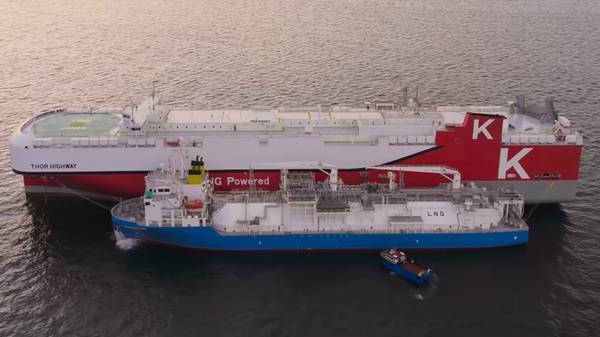
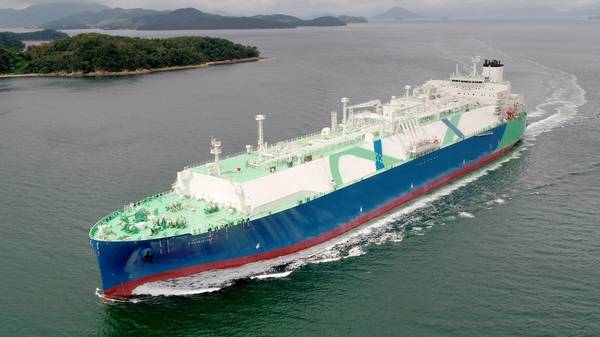
To further deliver on its ambitions, ENGIE Group aims to speed up the development of natural gas-powered mobility solutions. By 2020 it will invest €100 million in LNG and CNG filling stations for road transport. The development of the hub in the Port of Antwerp is a fine example of this. The Group also launched the construction of an LNG bunkering vessel in partnership with NYK and Mitsubishi. By developing infrastructure and making it more accessible, ENGIE can facilitate the transition to alternative fuels for its customers and encourage the future development of environmentally friendly modes of transport.