This is a legacy page. Please click here to view the latest version.
Thu 28 Aug 2008, 11:20 GMT

Titan records half-year loss


Restructuring plan aims to focus resources on storage and shipyard businesses.


Oil logistics provider and shipyard operator Titan Petrochemicals Group Limited has announced its interim results for the period ended 30th June 2008, with group revenue increasing 62% to HK$5,471 million, and most business segments showing improved earnings year-on-year.

Increasingly higher oil prices, however, led to a loss of HK$304 million (US$38.9 million) for the supply chain – trading operations, which the Group is scaling down. For continuing operations, earnings before interest, tax, depreciation and amortization (EBITDA) increased from HK$320 million (US$41 million) to HK$412 million (US$52.7 million), while operating profit increased to HK$36 million (US$4.6 million) compared to a loss of HK$93 million (US$11.9 million) in the first half of last year.

This resulted in a profit before tax on continuing operations of HK$18 million (US$2.3 million). Including the discontinued trading operations, the loss attributable to shareholders was HK$292 million (US$37.4 million), compared to a profit of HK$153 million (US$19.6 million) in the first half of 2007. No dividend was declared.

“On June 25 we announced a restructuring plan to increase our focus on storage and the shipyard and scale down supply chain operations. We have successfully brought in a strategic partner to Titan Quanzhou Shipyard, validating our investment and advancing our business plan. We have also continued to rationalize our assets to improve liquidity by selling three vessels, with sales of two more VLCCs announced just recently,” said Mr. Tsoi Tin Chun, Chairman and Chief Executive of Titan.

The restructuring of the Group’s business is expected to be completed by the end of 2008 with the divestment of the trading business. As part of the process, headcount has been reduced, and although incurring a one-time cost of HK$11.7 million (US$1.5 million), this is expected to yield annual cost savings of around HK$26 million (US$ 3.3 million). Once complete, the restructuring is expected to improve Titan’s balance sheet considerably, with the elimination of about US$140 million (HK$1,092 million) of trading-related debt and banking facilities, together with an improvement to cash flow of about US$50 million (HK$390 million).

Revenues for Titan Quanzhou Shipyard were HK$352 million and segment EBITDA was HK$22 million. During the six months, the shipbuilding operation delivered two vessels, started construction of a further four and launched another two, all of them 7000 deadweight ton (dwt) tankers. With the second slipway now complete, the yard plans to deliver eight to ten ships in 2008. Construction of two 300,000 dwt ship repair dry docks is on schedule for operations to begin in the first half of 2009.

In August, the Group signed agreements with Kawasaki Kisen Kaisha (K Line) of Japan, one of the world’s largest ship-owners, for K Line to purchase US$25 million (approximately HK$195 million) of notes, which are exchangeable for up to a 5% share in Titan TQSL Holding Company Limited, which holds Titan Quanzhou Shipyard. K Line is also appointing Titan Quanzhou Shipyard as its primary ship repair partner in China, and will provide a specified volume of ship repair business. In return, Titan Quanzhou Shipyard will make available specified ship repair capacity to K Line.

Revenues from the Group’s storage operations increased 46% to HK$307 million and segment EBITDA increased by 37% to HK$118 million. Revenues came mainly from the floating storage unit (FSU) operations off Singapore, with FSU revenues rising following an increase in average capacity. In the second quarter, two FSUs were redeployed to transportation to capitalize on the upturn of freight rates.

External revenues from Titan's China terminals increased threefold to HK$25 million and segment EBITDA also increased 20% to HK$20 million. The 410,000 cubic meter facility in Nansha recorded a monthly utilization of 87% in June compared to 7% in January this year, with average utilization at 53% over the six-month period. Higher freight rates saw revenues from transportation increase by 30% to HK$1,016 million and segment EBITDA rise by 18% to HK$301 million. The Group sold two VLCCs and one coastal tanker for a total of HK$478 million, resulting in a total net book loss of HK$6.6 million. At the end of the first half, capacity stood at 2.14 million dwt compared to 2.43 million dwt twelve months ago.

Commenting on the outlook, the Group said it would continue to improve the balance sheet by making asset impairment charges, selling the remaining inventory from the supply/trading business and recognizing the net book value loss from the disposal of vessels.

“While the environment remains challenging with high oil prices, shrinking liquidity and slowing economic growth, we have taken several initiatives to strengthen Titan's position. Going forward, the restructured Titan will be able to give greater focus and resources to our storage and shipyard businesses, paving the way to generate increasing stability and growth in earnings, and in the future, to achieve a breakthrough with the successful development of the Group’s strategic investments,” said Mr. Tsoi.


TMS Tankers logo. Lloyd’s Register delivers fleet-wide energy transition roadmap for TMS Tankers  

LR Advisory maps vessel-level compliance risk and decarbonisation pathways across the Greek owner’s tanker fleet.

Dr Prapisala Thepsithar, GCMD. GCMD shares biofuel assurance and green finance insights at Hong Kong shipping decarbonisation forum  

The Global Centre for Maritime Decarbonisation presented pilot findings on biofuels and energy efficiency financing.

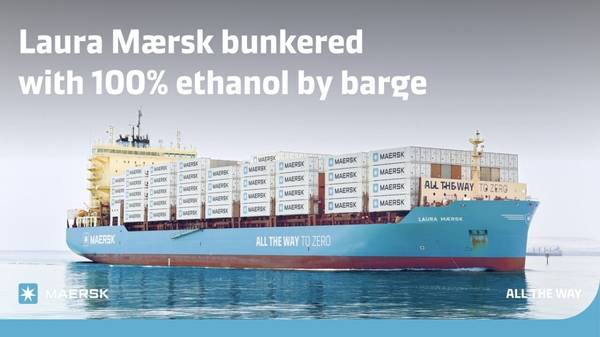
Laura Maersk ethanol bunkering graphic. Maersk conducts large-scale ethanol bunkering trial on Laura Maersk in Rotterdam  

A.P. Moller – Maersk has conducted a barge-delivered ethanol bunkering operation as part of ongoing fuel trials.

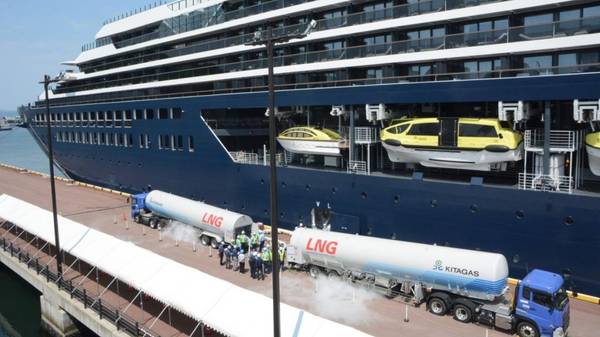
Luminara vessel truck-to-ship bunkering. MOL Techno-Trade completes first LNG bunkering for international cruise ship in Hokkaido  

Truck-to-ship LNG operation at Hakodate marks first such supply to an international cruise vessel in Hokkaido.

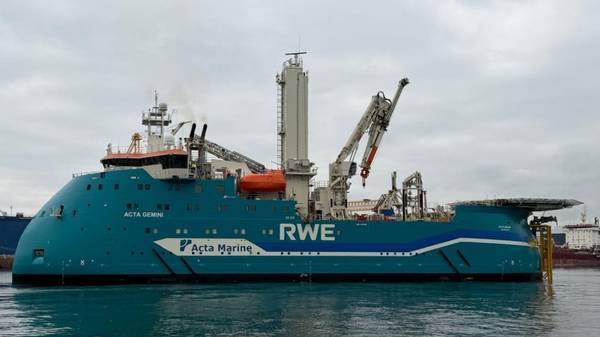
Acta Gemini vessel. Acta Marine takes delivery of methanol dual-fuel CSOV Acta Gemini for RWE wind farm charter  

The vessel will support operations at the Sofia Offshore Wind Farm at Dogger Bank.

Yeva Wood and Kirsten Møller Jørgensen. Malik Supply expands Danish team with bunker trader and finance hire  

Danish bunker supplier Malik Supply adds two new staff across its Fredericia and Aalborg offices.

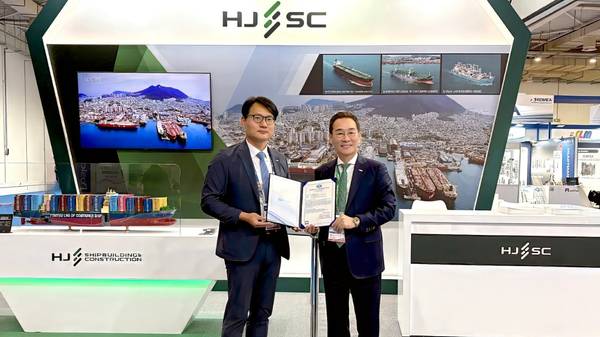
AiP award ceremony for a 10,000-teu biofuel-powered container ship. HJSC wins AiP for 10,000-teu biofuel-powered container ship design  

South Korean shipbuilder HJ Shipbuilding & Construction receives classification society approval for its biofuel vessel design at Posidonia.

Active vessel. Capital Clean Energy Carriers takes delivery of LNG carrier and dual-fuel gas carrier, secures five new charters  

Athens-based CCEC expands its fleet and pushes contracted revenue backlog to $3.1bn.

VPS logo. Fuel quality management for vessels in extended idle: Arabian Gulf, Gulf of Oman and adjacent anchorages | Rahul Choudhuri, VPS  

Managing fuel quality deterioration following the closure of the Strait of Hormuz.

Person signing a document. Agastya Green Fuels signs 250,000 t/yr e-methanol offtake deal with Sri Lanka’s SAR Group  

Indian producer and Sri Lankan maritime firm agree long-term green methanol supply partnership.


↑  Back to Top