This is a legacy page. Please click here to view the latest version.
Thu 28 Aug 2008, 08:02 GMT

Cargo ships to submit oil spill response plans


Coast Guard begins enforcement of oil spill response plans for "nontank" vessels.


The U.S. Coast Guard has announced the beginning of enforcement of the requirements for owners and operators of large cargo vessels, or "nontank" vessels, to prepare and submit plans for responding to a worst case oil spill from their vessels.

Should a nontank vessel be found operating in a U.S. port or waterway without a properly submitted response plan, the Coast Guard Captain of the Port will exercise authority under the Ports and Waterways Safety Act of 1972 and impose operational controls, as necessary, on the vessel to safeguard the port.

"Oil carried as fuel in large cargo ships can result in a major oil spill in the event of an accident," said Rear Adm. Brian M. Salerno, assistant commandant of the U.S. Coast Guard's Marine Safety, Security and Stewardship Directorate.

"Although we work to prevent accidents in the first place, this enforcement policy will make sure that cargo ships, such as tankers, have pre-identified and arranged for the resources needed to respond effectively, should an accident occur."

A nontank vessel is described by the U.S Coast Guard as a self-propelled vessel of 400 gross tons or greater that operates on the navigable waters of the U.S., carries oil of any kind as fuel for main propulsion and is not a tank vessel. Tank vessels are required to have response plans under 33 CFR part 155, subpart D, and are already screened by the Coast Guard for compliance prior to port entry.

In a statement released this week, the U.S Coast Guard said the oil spill of the container ship Cosco Busan in San Francisco Bay on November 7th 2007 showed that the risks associated with oil spills from large nontank vessels are significant.

The Coast Guard Maritime Transportation Act of 2004 amended the Federal Water Pollution Control Act and required owners and operators of nontank vessels to prepare and submit by August 9, 2005, plans for responding to a worst case discharge and to a substantial threat of such a discharge of oil from their vessels.

The Coast Guard published a Federal Register Notice on June 23, 2008, informing nontank vessel owners and operators that the Coast Guard will begin actively enforcing the 2004 Act by screening all nontank vessels prior to their port arrival for plan submission.

Each plan will need to ensure by contract or other approved means the availability of private personnel and equipment necessary to remove to the maximum extent practicable a worst case discharge (including a discharge resulting from a fire or explosion), and to mitigate or prevent a substantial threat of such a discharge. It also describes the training, equipment testing, periodic unannounced drills and response actions of the crew.

In an effort to devote resources to those nontank vessels that pose the greatest risk in the event of a worst case oil spill, the Coast Guard's screening and enforcement efforts will focus on those nontank vessels of 1,600 gross tons or greater. Nontank vessels of less than 1,600 gross tons are considered to pose less of a threat, but will still be required to submit response plans.


TMS Tankers logo. Lloyd’s Register delivers fleet-wide energy transition roadmap for TMS Tankers  

LR Advisory maps vessel-level compliance risk and decarbonisation pathways across the Greek owner’s tanker fleet.

Dr Prapisala Thepsithar, GCMD. GCMD shares biofuel assurance and green finance insights at Hong Kong shipping decarbonisation forum  

The Global Centre for Maritime Decarbonisation presented pilot findings on biofuels and energy efficiency financing.

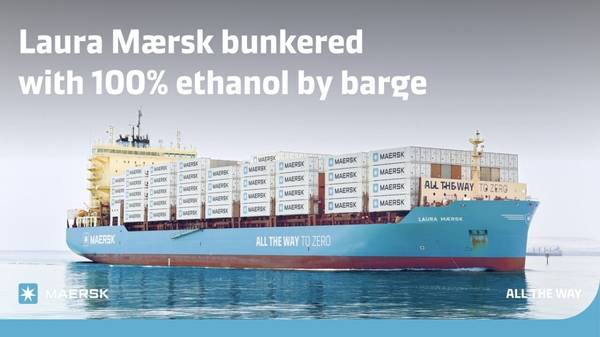
Laura Maersk ethanol bunkering graphic. Maersk conducts large-scale ethanol bunkering trial on Laura Maersk in Rotterdam  

A.P. Moller – Maersk has conducted a barge-delivered ethanol bunkering operation as part of ongoing fuel trials.

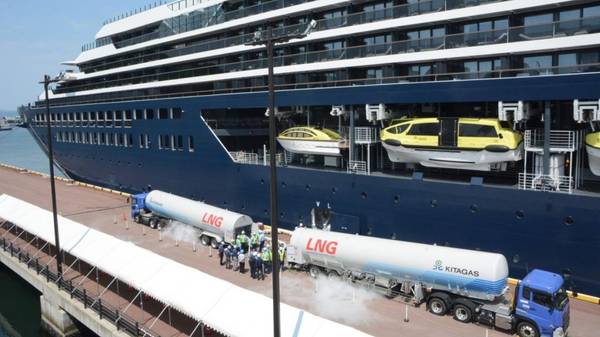
Luminara vessel truck-to-ship bunkering. MOL Techno-Trade completes first LNG bunkering for international cruise ship in Hokkaido  

Truck-to-ship LNG operation at Hakodate marks first such supply to an international cruise vessel in Hokkaido.

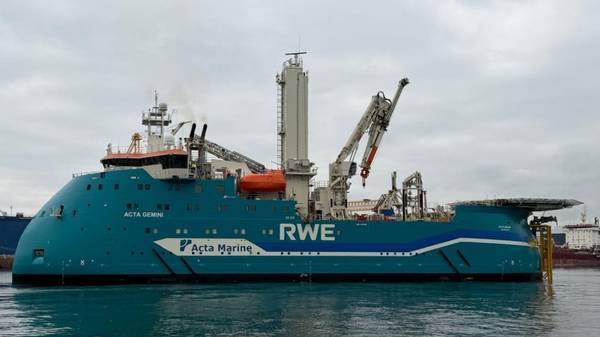
Acta Gemini vessel. Acta Marine takes delivery of methanol dual-fuel CSOV Acta Gemini for RWE wind farm charter  

The vessel will support operations at the Sofia Offshore Wind Farm at Dogger Bank.

Yeva Wood and Kirsten Møller Jørgensen. Malik Supply expands Danish team with bunker trader and finance hire  

Danish bunker supplier Malik Supply adds two new staff across its Fredericia and Aalborg offices.

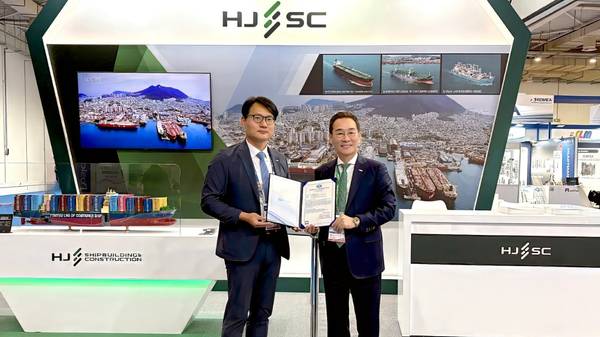
AiP award ceremony for a 10,000-teu biofuel-powered container ship. HJSC wins AiP for 10,000-teu biofuel-powered container ship design  

South Korean shipbuilder HJ Shipbuilding & Construction receives classification society approval for its biofuel vessel design at Posidonia.

Active vessel. Capital Clean Energy Carriers takes delivery of LNG carrier and dual-fuel gas carrier, secures five new charters  

Athens-based CCEC expands its fleet and pushes contracted revenue backlog to $3.1bn.

VPS logo. Fuel quality management for vessels in extended idle: Arabian Gulf, Gulf of Oman and adjacent anchorages | Rahul Choudhuri, VPS  

Managing fuel quality deterioration following the closure of the Strait of Hormuz.

Person signing a document. Agastya Green Fuels signs 250,000 t/yr e-methanol offtake deal with Sri Lanka’s SAR Group  

Indian producer and Sri Lankan maritime firm agree long-term green methanol supply partnership.


↑  Back to Top