This is a legacy page. Please click here to view the latest version.
Fri 22 Aug 2008, 10:52 GMT

Frontline posts 69% rise in profit


Rental rates could rise as ships run slower to reduce bunker costs.


Frontline Ltd, the world's largest independent oil tanker shipping group, has posted a 69 percent rise in profit for the second quarter of 2008.

The Bermuda-based company recorded an all-time high net income of $318.4 million, or $4.25 per share, compared with net income of $187.9 million, or $2.51 per share, in the prior-year quarter. Analysts had expected the company to make $339 million.

For the six months ended June 30th 2008, Frontline achieved a record profit of $539.4 million, or $7.21 per share, compared with $346.7 million for the first half of 2007.

Record oil production from the Organization of Petroleum Exporting Countries (OPEC) helped boost profits for the oil tanker owner. OPEC pumped a record average of 32.3 million barrels of crude a day during the months of April, May and June. However, fleet supply was curtailed by Iran using its vessels as floating oil storage rather than for deliveries as demand for Iranian crude reportedly dropped.

Voyage expenses, which also include bunker costs, rose by 51 percent in the second quarter of 2008 to $139.5 million from $87.8 million the previous year. First half-year voyage expenses increased by 54 percent from $177.4 million to $273.7 million in 2008.

Frontline has predicted its financial results for the third quarter will be negatively influenced by seven scheduled dry dockings. The company said its performance will also depend on the progress of the rental rate market over the coming months.

'The board expects good results for the third quarter, however the strength of the results will be dependent on the direction of the market in the remaining part of the quarter,' Frontline said.

Commenting on the decline in the cost of chartering tankers, Frontline said it was a "temporary negative development" which had been caused by lower U.S. oil demand, fewer West African cargoes and a drop in crude imports into China before the Olympic Games.

The company said demand for tankers could rise as ships decide to run their ships more slowly to conserve fuel and reduce bunker costs, which in turn would increase the need for ships. Higher crude oil production and build-ups in oil inventories would also help push up chartering rates.


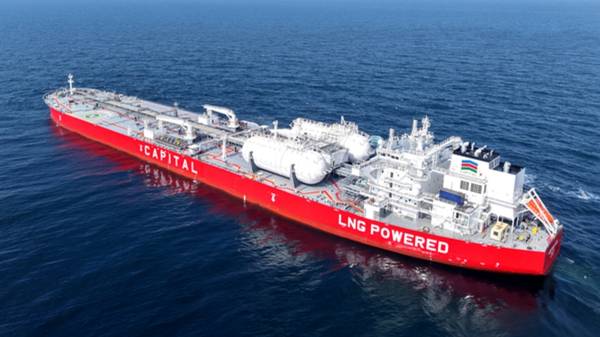
Capital's LNG-powered vessel. Chinese shipbuilder delivers 155,500-dwt LNG dual-fuel crude oil tanker  

Vessel handed over to Capital Ship Management Corp in China.

Glovis Lighthouse vessel. Seaspan takes delivery of first 10,800-ceu dual-fuel LNG car carrier  

Glovis Lighthouse enters service as one of a handful of vessels globally to exceed 10,000 CEU capacity.

Port of Rotterdam, Maersk, Core Power and Lloyd's Register logos. Rotterdam study maps pathway for nuclear-powered commercial ship port calls  

A joint study by Lloyd's Register, the Port of Rotterdam, Core Power and Maersk examines the feasibility of nuclear vessel port calls.

Hakata waterfront. Kinkai Yusen conducts first biofuel demonstration on domestic ro-ro vessel at Hakata Port  

Japanese shipping company to trial B24 biofuel blend aboard the vessel Nanotsu on 16 June.

Norwegian Energy Trading (NET) AS logo. Norwegian Energy Trading renews ISCC certification for biofuel trading  

Norwegian bunker trader says renewal reflects growing biofuel volumes and commitment to verifiable sustainability standards.

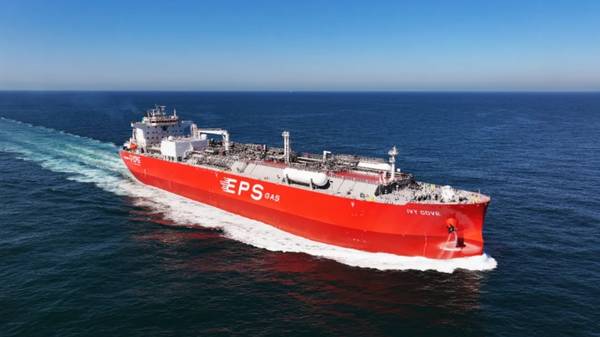
Ivy Cove vessel. Jiangnan delivers VLAC with LPG dual-fuel main engine  

Vessel is claimed to be the world’s first 93,000 cbm very large ammonia carrier.

BIMCO logo. BIMCO adopts biofuel clause for time charter parties  

Shipping body has introduced a new contractual clause to govern the use of biofuels under time charter agreements.

Prince Madog hydrogen fuel cell retrofit receives LR certification. UK research vessel Prince Madog wins LR certification for hydrogen fuel cell retrofit  

Lloyd’s Register certifies what is claimed to be the first sea-going, manned hydrogen retrofit of its kind.

World Fuel logo. World Fuel seeks marine lube operations and sales executive in Greece  

US firm is recruiting for a commercial role focused on marine lubricants, based out of its Glyfada office.

ECSA Parliamentary Breakfast event. European Shipowners calls for fuel supplier mandates and ETS revenue investment ahead of policy revision  

Industry body urges EU policymakers to redirect carbon revenues into clean marine fuel production.


↑  Back to Top


 Recommended