This is a legacy page. Please click here to view the latest version.
Tue 5 Apr 2016, 15:05 GMT

Green InfraPort project grant approved


Grant to be used to implement a number of sustainable solutions in the Baltic Sea region.


The Green InfraPort project has been approved by the EU Strategy for the Baltic Sea Region (EUSBSR) Seed Money Facility to receive an EU grant for the implementation of a number of sustainable solutions in the Baltic Sea region.

The total value of the received grant is EUR 46,140.

The backbone of the project involves the planning and development of port reception facilities for sewage from passenger ships and waste from scrubbers, energy management in ports and terminals, and a liquefied natural gas (LNG) bunkering infrastructure.

Non-profit association the Baltic Ports Organization (BPO) will assume the role of the lead partner, while the Motus Foundation and SSPA Sweden AB will act as project partners.

Bogdan Oldakowski, BPO Secretary General, said: "Baltic ports have always been front runners when it comes to environmental initiatives. This project is another example of pro-active approach in the area of environmental management and investments in ports."

BPO added: "The seed money project Green InfraPort should be considered a preparation for coordinated action, enabling ports interested in cooperation to join forces and apply for EU funding from the Connecting Europe Facility or other available sources.

"Stimulating the use of LNG as fuel for ships is a topic that has already spent some time in the spotlight. Several EU co-financed projects addressed the planning and deployment of LNG bunkering facilities in Baltic ports. Green InfraPort presents more options for ports interested in joining forces and further development of LNG bunkering infrastructure."

The Green InfraPort project is due to officially start in April 2016 with completion scheduled for March 2017.

The last EUSBSR Seed Money Facility project approval was closed on February 18, 2016, resulting in 28 new seed money projects. In total, the Seed Money Facility has funded 97 projects.


BP   CEF   LNG  

Flag of Brazil. Petrobras resumes bunkering operations at Rio Grande Terminal after power restoration  

Brazilian supplier restarts marine fuel supply after completing an inspection following an electricity outage.

Stena E-Flexer vessel render. Stena RoRo orders battery-ready E-Flexer 2.0 ferries from Chinese yard  

Vessels include diesel engines capable of running on biodiesel and are methanol-ready.

BW Gemini vessel. Nord Gas Solutions to supply cargo and fuel systems for eight BW LPG VLGCs  

Gas-handling systems specialist awarded contract for new 90,000-cbm vessels.

Kingston Trader vessel. TFG Marine fits mass flow meter to Jamaica-bound bunker barge  

Kingston Trader becomes the first Caribbean bunkering vessel with mass flow metering as TFG Marine’s fleet coverage nears 90%.

Sebastian Vasquez and Camilo Angulo Ferrand, Monjasa. Monjasa announces full-chain marine fuel operations in Cartagena  

Monjasa says it now covers the entire marine fuel supply chain in Colombia, from oil wells to ship-side deliveries.

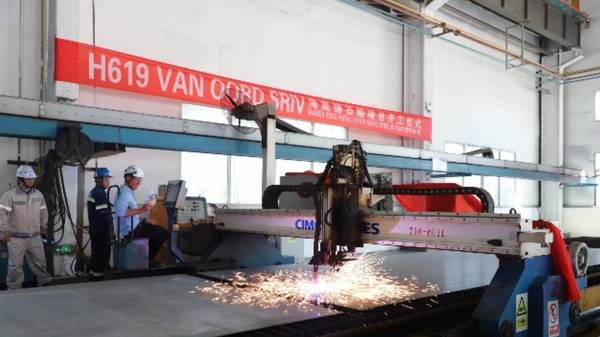
Steel-cutting ceremony for vessel with builder's hull no. H619. Ceremonies held for Van Oord’s methanol-hybrid rock installation vessels  

Two ships advance through parallel construction at China’s CIMC Raffles shipyard.

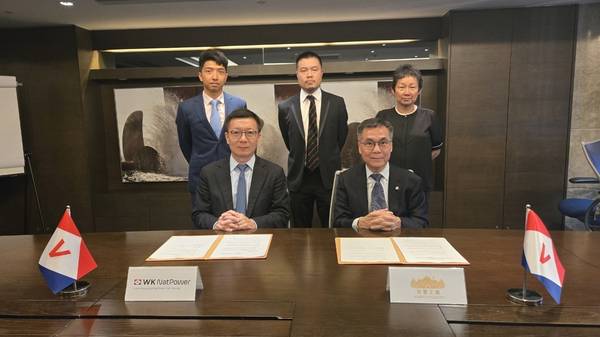
WK NatPower and AREL MoU signing. Wah Kwong NatPower signs MoU to explore Hong Kong marine electrification  

Venture will examine shore power, vessel charging and electric vessel deployment around Aberdeen’s waterfront.

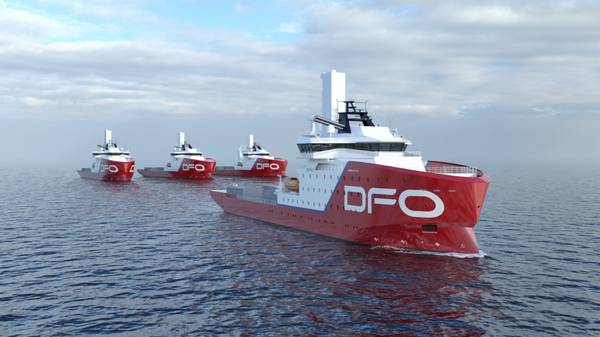
Vard 4 39 design render. Dong Fang Offshore orders CSOV with battery-hybrid propulsion  

Vard secures fifth newbuild contract from Taiwanese firm, with delivery scheduled for 2028.

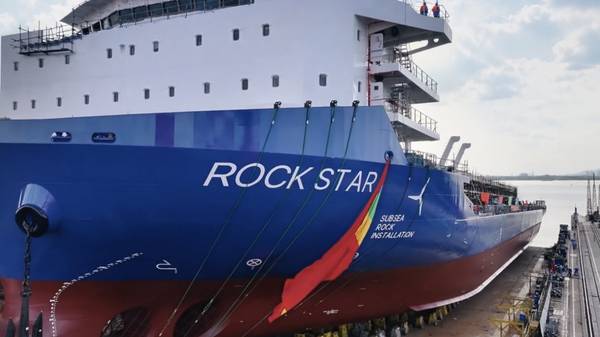
Rock Star vessel. CSL and OWL launch first subsea rock installation vessel for offshore wind  

MV Rock Star can run on MGO and methanol and is designed to support scour protection and cable burial for offshore wind projects.

François Michel and Andy McKeran. Lloyd’s Register study backs 200,000-cbm LNG carriers for fleet renewal  

Analysis finds larger LNG carriers could cut transport costs while retaining access to most major terminals.


↑  Back to Top