This is a legacy page. Please click here to view the latest version.
Thu 14 Aug 2008, 10:04 GMT

API: US oil demand at 5-year low


Weaker demand observed for the first six months continues in July.


The American Petroleum Institute (API) says U.S. oil demand for the first seven months of 2008 dropped to its lowest level in five years, according to a report released this week.

In its Monthly Statistical Report, the API said total petroleum deliveries fell by 3.6 percent compared to last year, whilst gasoline deliveries fell by more than 2 percent.

Total imports of crude oil were also down on a year ago, dropping by 3.9 percent for the January-to-July period.

“The weaker demand observed for the first six months of the year continued in July,” said API statistics manager Ron Planting.

“With less demand, we’re importing less oil. However, imports still represent the lion’s share of U.S. consumption. Canada is the largest of our diverse suppliers, providing us nearly as much oil as the total from all of the Persian Gulf nations,” added Planting.

Crude oil imports fell slightly for the first seven months of the year and were 7.4 percent higher in July compared to the same month a year ago. Meanwhile, product imports dropped steeply both in July and in the January-to-July period.

U.S. crude oil production rose by 2.1 percent in July compared to last year. The increase in July production helped bring output levels to within 0.5 percent of the figure reached over the same period in 2007. A rise in oil production in the lower-48 states was said to have been the main reason for the July increase. Output in the state of Alaska fell during the same period.

Total inputs to crude distillation (a measure of refinery activity) was less than 1 percent lower during the first seven months of 2008 compared to the previous year and 1.6 percent down on levels achieved in July 2007.

The report said that due to steady expansion and upgrading of refinery capacity, industry production of the four major products (distillate, residual fuel, gasoline and kerosene jet fuel) reached a record level of 16 million barrels per day, showing a particularly strong rise in distillate production.


TMS Tankers logo. Lloyd’s Register delivers fleet-wide energy transition roadmap for TMS Tankers  

LR Advisory maps vessel-level compliance risk and decarbonisation pathways across the Greek owner’s tanker fleet.

Dr Prapisala Thepsithar, GCMD. GCMD shares biofuel assurance and green finance insights at Hong Kong shipping decarbonisation forum  

The Global Centre for Maritime Decarbonisation presented pilot findings on biofuels and energy efficiency financing.

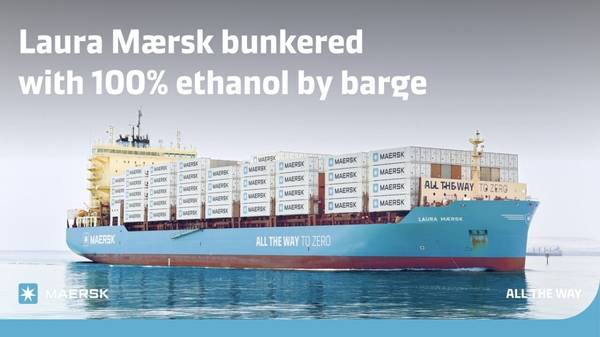
Laura Maersk ethanol bunkering graphic. Maersk conducts large-scale ethanol bunkering trial on Laura Maersk in Rotterdam  

A.P. Moller – Maersk has conducted a barge-delivered ethanol bunkering operation as part of ongoing fuel trials.

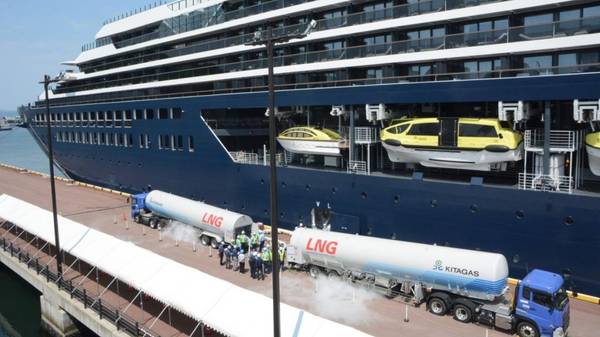
Luminara vessel truck-to-ship bunkering. MOL Techno-Trade completes first LNG bunkering for international cruise ship in Hokkaido  

Truck-to-ship LNG operation at Hakodate marks first such supply to an international cruise vessel in Hokkaido.

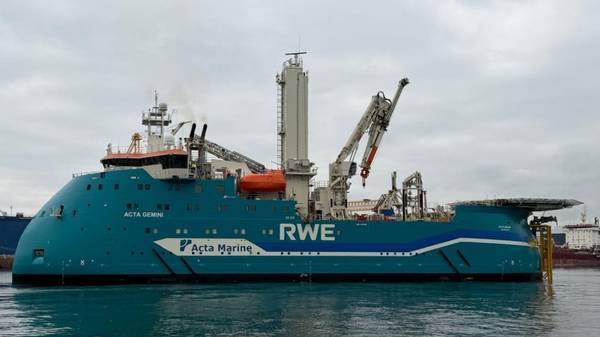
Acta Gemini vessel. Acta Marine takes delivery of methanol dual-fuel CSOV Acta Gemini for RWE wind farm charter  

The vessel will support operations at the Sofia Offshore Wind Farm at Dogger Bank.

Yeva Wood and Kirsten Møller Jørgensen. Malik Supply expands Danish team with bunker trader and finance hire  

Danish bunker supplier Malik Supply adds two new staff across its Fredericia and Aalborg offices.

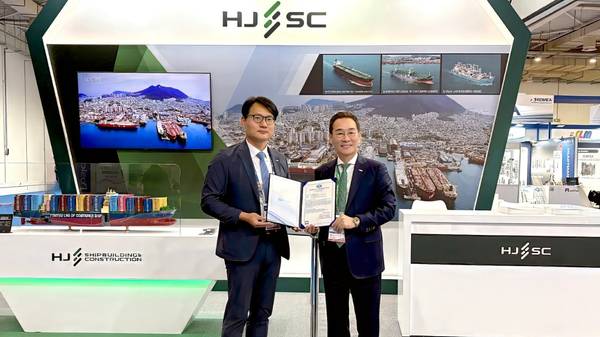
AiP award ceremony for a 10,000-teu biofuel-powered container ship. HJSC wins AiP for 10,000-teu biofuel-powered container ship design  

South Korean shipbuilder HJ Shipbuilding & Construction receives classification society approval for its biofuel vessel design at Posidonia.

Active vessel. Capital Clean Energy Carriers takes delivery of LNG carrier and dual-fuel gas carrier, secures five new charters  

Athens-based CCEC expands its fleet and pushes contracted revenue backlog to $3.1bn.

VPS logo. Fuel quality management for vessels in extended idle: Arabian Gulf, Gulf of Oman and adjacent anchorages | Rahul Choudhuri, VPS  

Managing fuel quality deterioration following the closure of the Strait of Hormuz.

Person signing a document. Agastya Green Fuels signs 250,000 t/yr e-methanol offtake deal with Sri Lanka’s SAR Group  

Indian producer and Sri Lankan maritime firm agree long-term green methanol supply partnership.


↑  Back to Top


 Recommended