This is a legacy page. Please click here to view the latest version.
Mon 4 Aug 2008, 10:19 GMT

W. Wilhelmsen raises profit by $6.5m


Q2 income and profit up vs 2007 despite higher bunker prices.


Strong demand for maritime services and increased cargo volumes contributed to a solid increase in profit for the Wilh. Wilhelmsen group during the second quarter of 2008.

Total operating income for the group in the second quarter of 2008 amounted to USD 894.8 million, up from USD 671.4 million in 2007, while operating profit came to USD 74.7 million compared with USD 68.2 million last year. Group profit before tax and minority interests amounted to USD 76.8 million, with a profit after tax and minority interests of USD 73.0 million, up 9.5% and 20% respectively from the same quarter of last year.

"This 33% increase in income stems from a growth in cargo volumes carried by a larger fleet, rising demand for maritime services and higher bunker cost compensation," says Ingar Skaug [pictured], group CEO at Wilh. Wilhelmsen.

"Although our operating profit has improved, the WW group would benefit from a less tight market. The maritime services and logistics segments delivered increased operating profit, but higher operating costs and bunker prices reduced the operating profit in the shipping segment. The operating margin was hurt by a weakened USD and a one-off provision of USD 21.9 million related to a global administration cost reduction programme in Wallenius Wilhelmsen Logistics."

Total operating income for the first half of 2008 totalled USD 1.7 billion as against USD 1.3 billion for the same period of 2007. Operating profit was USD 134.6 million, compared with USD 121.5 million in the same period of last year. Profit before taxes came to USD 81.3 million, compared with USD 112.0 million.

"Given bunker prices at the current level during the second half of 2008, we maintain the expectation that the group's operating profit for 2008 will exceed the level achieved in 2007," concluded Skaug.


Norway 

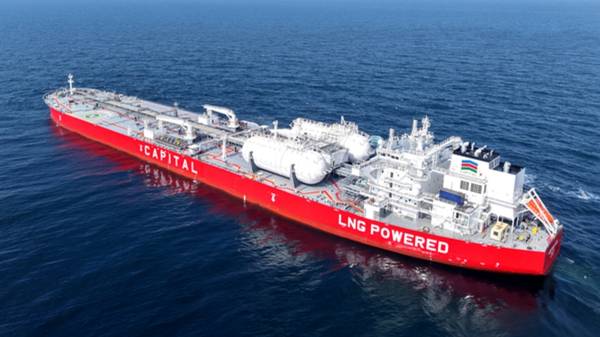
Capital's LNG-powered vessel. Chinese shipbuilder delivers 155,500-dwt LNG dual-fuel crude oil tanker  

Vessel handed over to Capital Ship Management Corp in China.

Glovis Lighthouse vessel. Seaspan takes delivery of first 10,800-ceu dual-fuel LNG car carrier  

Glovis Lighthouse enters service as one of a handful of vessels globally to exceed 10,000 CEU capacity.

Port of Rotterdam, Maersk, Core Power and Lloyd's Register logos. Rotterdam study maps pathway for nuclear-powered commercial ship port calls  

A joint study by Lloyd's Register, the Port of Rotterdam, Core Power and Maersk examines the feasibility of nuclear vessel port calls.

Hakata waterfront. Kinkai Yusen conducts first biofuel demonstration on domestic ro-ro vessel at Hakata Port  

Japanese shipping company to trial B24 biofuel blend aboard the vessel Nanotsu on 16 June.

Norwegian Energy Trading (NET) AS logo. Norwegian Energy Trading renews ISCC certification for biofuel trading  

Norwegian bunker trader says renewal reflects growing biofuel volumes and commitment to verifiable sustainability standards.

Ivy Cove vessel. Jiangnan delivers VLAC with LPG dual-fuel main engine  

Vessel is claimed to be the world’s first 93,000 cbm very large ammonia carrier.

BIMCO logo. BIMCO adopts biofuel clause for time charter parties  

Shipping body has introduced a new contractual clause to govern the use of biofuels under time charter agreements.

Prince Madog hydrogen fuel cell retrofit receives LR certification. UK research vessel Prince Madog wins LR certification for hydrogen fuel cell retrofit  

Lloyd’s Register certifies what is claimed to be the first sea-going, manned hydrogen retrofit of its kind.

World Fuel logo. World Fuel seeks marine lube operations and sales executive in Greece  

US firm is recruiting for a commercial role focused on marine lubricants, based out of its Glyfada office.

ECSA Parliamentary Breakfast event. European Shipowners calls for fuel supplier mandates and ETS revenue investment ahead of policy revision  

Industry body urges EU policymakers to redirect carbon revenues into clean marine fuel production.


↑  Back to Top